Doman Building Materials reported fourth-quarter revenue that missed expectations, as lower construction material prices and weak housing starts weighed on results.
BNN Bloomberg spoke with Amar Doman, CEO of Doman Building Materials, about the company’s growth strategy, market share gains and demand trends across North America’s building products sector.
Key Takeaways
- Fourth-quarter results were pressured by weaker pricing for lumber and other construction materials.
- Slower housing construction in North America continues to weigh on demand across the building products sector.
- Repair and renovation activity remains an important demand driver alongside new home construction.
- Companies are seeking growth through market share gains, acquisitions and expanding distribution networks.
- Regional demand differences and housing trends remain key factors shaping the outlook for building materials.
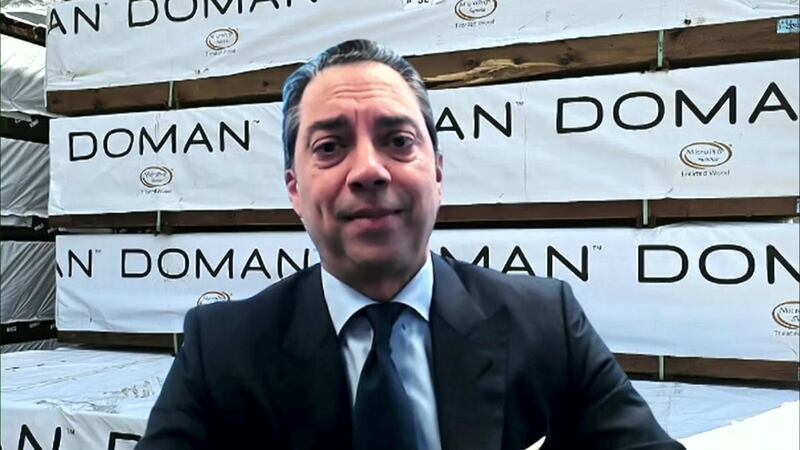
Read the full transcript below:
ANDREW: The revenue and profit at Doman Building Materials missed estimates in the latest quarter, and lower prices for construction materials and a slower pace of home construction weighed on the results. We’re joined by Amar Doman, CEO of Doman Building Materials. Amar, it’s great to see you once again.
AMAR: Great to see you. Thanks for having me.
ANDREW: Just remind us — you’re the emperor of pressure-treated lumber. Is that your entire business in North America? Do you have the pressure-treated stuff, or do you sell regular lumber as well?
AMAR: Yeah, we do a bit of both. But really pressure-treated — I wouldn’t say we’re the kings — but we’re getting up there. We’re about 70 per cent pressure-treated materials in North America, obviously very heavy in the U.S., and across Canada we have distribution of other materials as well.
ANDREW: What would your market share be? Are you among the big players?
AMAR: Absolutely. We have now become the second largest in North America. We’re producing close to three billion feet of pressure-treated lumber today, so very strong, with 37 plants now in North America.
ANDREW: What about your input costs? When oil goes up, does that increase the cost of the chemicals you use?
AMAR: No, Andy. We’re all water-based. We have zero oil-based chemicals in our materials. It’s all water-based pressure-treated products — mostly residential, your backyard stuff, fences, decks and the like, where we’re very heavy. Oil will affect trucking rates over time, but certainly not our core business.
ANDREW: Prices for construction materials were soft?
AMAR: Yeah, they were soft. In the fourth quarter, SPF and Southern yellow pine — which are the big two — were off five per cent on SYP and about 13 per cent on spruce. So yeah, a little bit softer. We had a wide range of analyst estimates from $31 million to $51 million on the quarter. We landed probably in a good spot for us. We had a good year, just a little softer at the end with pricing and all the volatility in the world. But 2026 has started off just fine, so we’re in good shape at Doman.
ANDREW: New home construction is a crucial driver for you?
AMAR: You know, repair and renovation and new homes. We do a lot of box-store business, so a lot of cash-and-carry. But we do a lot in the new home market as well, which has been soft for a couple of years and just hasn’t gained traction. Having said that, we’re gaining market share with our own products and organic growth inside the company. We don’t just point to housing starts to drive our future. We do a lot inside the company and force ourselves into the market, and we’re gaining market share all the time.
ANDREW: It looks like about two-thirds of your business is now in the United States?
AMAR: Correct. We’re almost at 70 per cent and growing in the U.S. We’re from Hawaii all the way to the Carolinas now with pressure-treated lumber, and we offer customers like BFS and Lowe’s a national strategy across the country, which is pretty special. We’re the only ones that have done that. Our strategy is working. We’ve reduced debt by about $130 million last year, so our balance sheet is looking really good for more M&A activity as well. The next couple of years we will continue to grow.
ANDREW: I’m showing a pretty healthy dividend yield here of about 5.5 per cent. Is that sustainable, Amar? Would you have to cut it in the foreseeable future?
AMAR: No, no. In fact, our dividend — just to clarify for viewers — I think it’s been almost 65 or 70 quarters of dividends. It’s very safe. Our payout ratio is in the 30s, Andy. So the dividend is safe and sound. In fact, we have shareholders calling us to increase the dividend. We’re in good shape.
ANDREW: Do you buy back stock, or do shareholders prefer the dividend?
AMAR: They do prefer the dividend. We were an income trust way back in the day — I think you and I remember those days. We came out of that and kept our dividend at a level. Of course there’s some fluctuation with commodity pricing and whatnot, but it’s very safe. We’ve had many quarters of dividend returns to shareholders.
ANDREW: One thing I’m curious about — if you sell in southern states such as Louisiana, do you have to sell a different product because of termites?
AMAR: In markets like Louisiana, Arkansas, Texas, the Carolinas and Florida — we’re in all those markets now. And yes, we do. It’s actually a bigger market for us because many components are pressure-treated. In some housing construction, sill plates have to be pressure-treated due to termites and humidity. So it’s a good long-term business. And of course, you don’t like to say it, but when storms happen in those areas our business can surge. Last year we actually didn’t have storms and still had a very strong year. We’re producing a lot of fencing now and investing in our sawmills. We have five sawmills in the U.S. South producing fencing products for our pressure-treated plants. Our business there is very strong. Some tariffs on South American products have also created barriers, and we’re actually turning down business in some fencing markets right now.
ANDREW: Apparently older water-based pressure-treated chemicals used to leak, but that has improved?
AMAR: Oh my goodness, that was decades ago. Things are very clean and safe now, and very affordable. Our product line continues to grow along with the rest of the construction category. It’s just a little slow and soft right now. People are being a bit more careful with their wallets today.
ANDREW: Copper is a key ingredient in what you use?
AMAR: Correct. Copper is an ingredient. We secure our pricing, and we’re glad we do because copper has gone through the roof. We will pass that on, but we secure contracts for our chemicals for multiple years to protect ourselves from those fluctuations.
ANDREW: Amar, thank you very much, as ever. Amar Doman, CEO of Doman Building Materials.
---
This BNN Bloomberg summary and transcript of the March 6, 2026 interview with Amar Doman are published with the assistance of AI. Original research, interview questions and added context was created by BNN Bloomberg journalists. An editor also reviewed this material before it was published to ensure its accuracy and adherence with BNN Bloomberg editorial policies and standards.

