Geopolitical tensions and travel disruptions are creating uncertainty across the travel sector, with ripple effects for the growing creator economy that relies on travel-related content.
BNN Bloomberg spoke with Andrew Lockhead, CEO and co-founder of Montreal-based Stay22, about how travel volatility is affecting creators and how the company plans to scale following a $122 million investment from Summit Partners.
Key Takeaways
- Travel disruptions tied to geopolitical tensions are creating softer-than-expected demand early in the year, though the travel sector is expected to rebound by summer.
- Creator revenue tied to travel content is vulnerable to sudden shocks such as wars, pandemics and supplier disruptions.
- Companies supporting creator monetization are expanding into new sectors such as retail to diversify revenue beyond travel.
- Platforms are increasingly focusing on social media distribution and AI-driven tools to improve how creators monetize content.
- Experience navigating previous crises, including pandemic-driven revenue declines, is shaping how companies respond to current travel volatility.
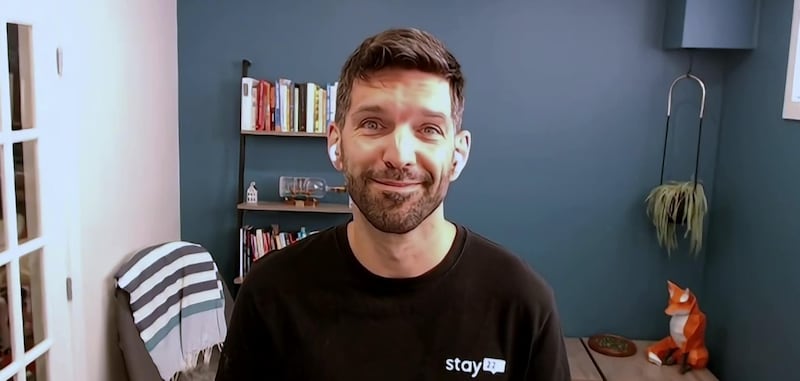
Read the full transcript below:
ROGER: Montreal-based travel monetization platform Stay22 recently announced a $122 million growth investment from Summit Partners. It plans to scale globally amid major travel disruptions due to geopolitical tensions.
Here to talk about this new chapter and the challenges facing the company is Andrew Lockhead, CEO and co-founder of Stay22. Andrew, thanks very much for joining us.
ANDREW: Good morning, Roger.
ROGER: Tell us a little bit, first of all, about what Stay22 actually does.
ANDREW: For sure. So what we do, in a nutshell, is we help content creators, publishers and digital platforms better monetize their content that might be on YouTube, on their blog or across social media.
ROGER: And with this new money, what drew this investment and what do you think landed that contract?
ANDREW: Mostly the team. I strongly believe that Summit Partners saw that the team has been through the ups and downs of the roller coaster. We survived COVID. We managed to make it through wars and geopolitical decisions as well. It’s a fast-growing company. We’ve been able to grow about 20 times in five years, and we’re profitable. So I believe all those things were the main reasons why Summit was interested in investing.
ROGER: And why go the institutional growth investor route?
ANDREW: Earlier-stage VC didn’t make as much sense. It’s not about risk anymore. It’s much more about scaling the business to new heights. For us, that’s the reason why we were looking to get a great private equity partner with an amazing portfolio of companies, and Summit were exactly the partners we were looking for from day one.
ROGER: And in 2025 you saw $1 billion in transactions. 2026 is starting out a little differently. How are you projecting the year? How are you dealing with what’s unfolding right now?
ANDREW: I was just looking at previous segments, and we already saw somewhat of a lower season than expected — not as much as what we see for airlines as well. That might be more relevant to fuel and costs, as you guys mentioned.
For us, obviously a war would not be ideal. The good thing is travel is probably one of the most resilient industries that exists. It’s going to come back, and it’s going to come back strong. So we’re confident that maybe not this quarter, but definitely for the next one, or at least for the year, the travel market will rebound right in time for summer.
ROGER: And how do you — I mean, you had the pandemic. How do you deal with situations like this? I wouldn’t say a moment. You came through the pandemic. How did you cope with that? Do you use that experience to apply to this situation too?
ANDREW: One hundred per cent, Roger. We’re supposed to only have one black swan event every couple of years. I’m pretty sure for us it seems like we already got a meaningful amount of them during the same decade.
We’ve got the experience. The team’s been through this as well. In the past we lost about 90 per cent of our revenue during the pandemic. Then we lost about 80 per cent when our suppliers went down. So we’ve been through the situation before, and we’re just more resilient because of it. The team believes we’ll be able to pull it through, and that’s the reason why we’re still here today.
ROGER: What did you do in the pandemic? What did you change, or how did you adapt to survive?
ANDREW: We almost changed the full business model, Roger. We used to be a map-based solution for eventgoers, and obviously during the pandemic events and travel were not the right place to be.
So we pivoted to work with content creators. For us, the product wasn’t making sense for content creators before, so that’s when we came up with new tools and solutions for them. This way we were able to provide them more freedom, so they can spend more time travelling and creating content instead of spending time behind their screens adding ads, monetization and affiliate links.
ROGER: And where do you see your growth coming from? How are you going to grow it?
ANDREW: Obviously we’re expanding more into the social media side of things, like everybody else. We’re taking advantage of what’s happening with AI as well.
We’ve been in travel for the past nine years, and now we’re expanding into retail as well. Stay22 will be able to offer the same links, monetization tools and human-touch approach to different segments of the industry — from household to gardening and lawn, for example — so there will be many more opportunities and markets.
ROGER: And how do you see retail benefiting from you?
ANDREW: Retail is doing pretty well for us. The reason is people tend to make more impulse purchases. When you purchase something on Amazon for $25, it’s much different than planning for a trip that you take twice a year where you spend hundreds of dollars.
For us the conversion rate is much higher, but obviously the commission is lower, so it’s more of a volume game.
ROGER: And are you still doing events?
ANDREW: We still do events, but it’s a small part of our business now.
ROGER: Out of curiosity, does the Live Nation ruling — is there any connection to that? Do you benefit from it at all, or is that completely separate?
ANDREW: It’s a bit different. We’re working with most of the largest ticketing platforms around the world today, which is great — except for the United States. So that ruling isn’t impacting us yet.
ROGER: Yet. Are you looking to the U.S.?
ANDREW: It might actually be a great time for us to expand into the event segment in the U.S. after that ruling. Obviously, the more companies there are, the less concentrated the market becomes, so yes, it could be a better time for us to look at expanding there.
ROGER: And then Montreal — Montreal is home. Are you staying there, or are you looking at another hub like Toronto or Vancouver?
ANDREW: Just like other great companies in Montreal, we love exactly where we are. We have four great universities here where we can recruit amazing talent. So we want to keep our headquarters here. We already have more than 100 people in the office.
ROGER: And how would you describe Montreal when it comes to tech? Is it becoming a hub?
ANDREW: I believe it is becoming a hub. Maybe we’ve been at a slower pace compared with Toronto, which isn’t a big surprise. But I think we’re slowly catching up, and it was about time.
ROGER: OK, Andrew, thank you very much for joining us today. We appreciate it.
ANDREW: Thanks, Roger. Good morning.
ROGER: Andrew Lockhead is the CEO and co-founder of Stay22.
---
This BNN Bloomberg summary and transcript of the March 10, 2026 interview with Andrew Lockhead are published with the assistance of AI. Original research, interview questions and added context was created by BNN Bloomberg journalists. An editor also reviewed this material before it was published to ensure its accuracy and adherence with BNN Bloomberg editorial policies and standards.

