Rising gold and silver prices helped push revenue and profit sharply higher in 2025, as production increased and precious metals markets remained strong.
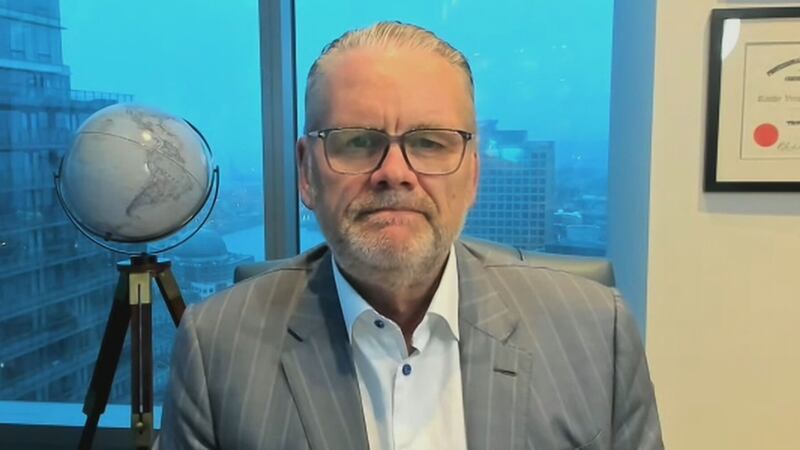
BNN Bloomberg spoke with Randy Smallwood, CEO of Wheaton Precious Metals, about the company’s latest earnings results and how its streaming model benefits from rising metal prices and growing production.
Key Takeaways
- Rising gold and silver prices helped drive strong revenue and earnings growth across the precious metals sector.
- Production growth from major mining assets contributed to higher gold equivalent output.
- The streaming model provides exposure to precious metals production without direct operating cost risks.
- Precious metals producers may face rising cost pressures as commodity prices remain elevated.
- Portfolio expansion and new projects are expected to support production growth through the end of the decade.
Read the full transcript below:
ANDREW: Vancouver-based Wheaton Precious Metals posted record $2.3 billion revenue in the fourth quarter of 2025 as gold and silver prices surged. Let’s get more on those results. We’re joined by Randy Smallwood, chief executive officer of Wheaton Precious Metals. Randy, great to see you. Talk about the year, if you would. It was a bumper period for anyone involved in gold and silver.
RANDY: Well, I can’t imagine a more perfect setting for us to have such a strong growth profile in, right? A time with such a strong increase in commodity prices. Both gold and silver climbed to record highs through the year and our production is continuing to grow. We’ve got a lot of new projects coming on stream and I think these higher prices have actually driven a lot of growth at our partners’ operations. So we’re really excited about where we are.
ANDREW: What are you producing the equivalent of in gold right now? Or what did you produce last year anyway?
RANDY: Last year’s overall production was just over 690,000 gold equivalent ounces, which beat guidance. I think our guidance was around 640,000, so we beat that healthily. Mainly outperformance from Salobo, which is our flagship asset, but also from Peñasquito and even Constancia down in Peru. So good, strong results. Of course, converted into the new GEOs, that was just over 800,000 ounces because of the silver-gold ratio changing. This year we’re expecting to be somewhere around 900,000 ounces of production. So good, strong growth again this year and, as I said, climbing to about 1.2 million gold equivalent ounces by 2030.
ANDREW: You and I talked about this a little while ago. Can you give us a ballpark estimate of how much of your cash flow is coming from silver now? Even a rough estimate?
RANDY: We were just under 40 per cent silver and close to 60 per cent gold in 2025. Of course, we just did a larger acquisition with BHP in terms of a new silver stream at Antamina. That will push us closer to even right now, but we’ve got a lot more growth on the gold side. The gold market is substantially larger, so we see more opportunities in that space. Long term, by 2030, we’ll probably be around 70 per cent gold and 30 per cent silver. Some of that depends on how each metal performs. I am a bit more bullish on silver because it has strong fundamentals behind it, but the size and demand in the gold market is something to respect.
ANDREW: When you sell your gold and silver, your business model is buying it at a discount or obtaining it at a discount from your partners. Do you get pretty close to the actual spot price, or how does that work?
RANDY: We’ve actually got a team that trades opportunistically. A metals sales team. Traditionally we beat the average spot price. I know we did really well in the fourth quarter just by holding some metal as we had that strong run and then selling towards the end of the quarter. It’s one of the reasons that helped us perform well. We’ve got a metals trading team that has definitely earned their salaries.
ANDREW: Do you ever stockpile gold thinking it’s going to go up further?
RANDY: I’ve always believed in the KISS principle — keep it simple. We provide access to profitable precious metals production. We never carry a balance over a quarter. Every one of our shareholders has the opportunity to go out and buy physical gold or silver if they want to. As soon as I do it, I’m forcing them all to do that. I’d rather keep our business model simple, focused purely on precious metals, focused on growth, top-quality assets, profitable production, high margins and low risk.
ANDREW: And your yield now — you just announced a dividend increase, did you?
RANDY: That’s right. We bumped it up by 18 per cent. We’re now at 19.5 cents per share per quarter. We’ve committed to a progressive dividend and we intend to stay near the top in the precious metals space. I’m always proud of what percentage of cash we return to shareholders through that dividend. Our shares have actually performed quite well, so the overall yield isn’t super attractive. We’re not really targeting yield investors. Our focus is to be that foundation stock in the precious metals space. Everyone needs a little bit of gold in their portfolio. We should be that foundation stock.
ANDREW: We just showed a one-year chart of you versus the TSX Global Gold Index, and you have been lagging, although you’ve caught up a bit lately. It looks as though investors were seeking more leverage over the past while, but you have beaten the global gold stock index over five years.
RANDY: There was a bit of a swing toward leverage last year as we saw a dramatic uptick in gold and silver prices. But one concern I would point out is that costs tend to follow commodity prices higher. It’s unusual to have such a large margin between the gold cost curve and the actual spot price. Lower-grade material will work its way into the mills and we’re going to see inflationary pressures. Oil and diesel costs will also have an impact. I think we’re going to see a shift back toward streaming companies because costs will increasingly challenge mine producers. The beauty of the streaming model is that there is no direct cost exposure to those inflationary pressures.
ANDREW: Governments can read the papers. They can see where the gold price has gone and they may seek a bigger share. Ghana, for example, is talking about revising royalties.
RANDY: That’s one reason we focus on staying in the first and second quartile of assets. About 85 per cent of our production comes from those top quartile assets. These are operations that are profitable enough that every stakeholder gets a good share. Everyone is happy. It’s such an important part of how we evaluate opportunities. The first question we ask is which quartile the asset falls into, because we want healthy margins across the board.
ANDREW: Thank you very much indeed. Really appreciate it. Randy Smallwood of Wheaton Precious Metals.
---
This BNN Bloomberg summary and transcript of the March 13, 2026 interview with Randy Smallwood are published with the assistance of AI. Original research, interview questions and added context was created by BNN Bloomberg journalists. An editor also reviewed this material before it was published to ensure its accuracy and adherence with BNN Bloomberg editorial policies and standards.