Tenaz Energy is seeing rapid production growth following major acquisitions in the Dutch North Sea, positioning Europe as the central driver of the company’s future expansion. The company is now focusing on organic growth through drilling, workovers and development of its offshore assets.
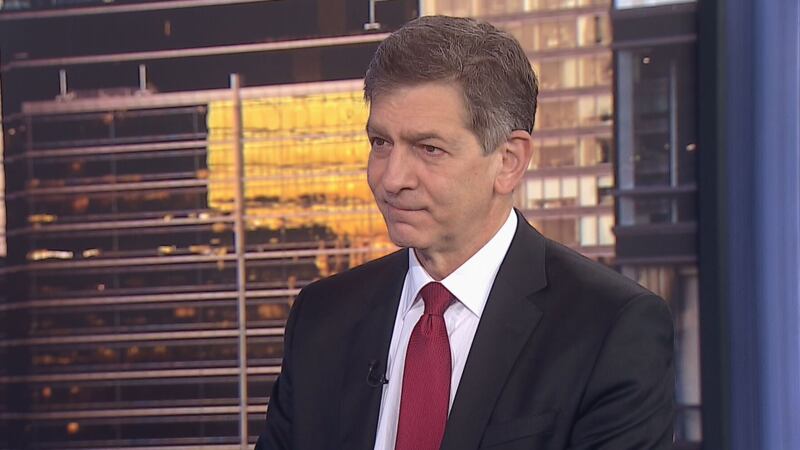
BNN Bloomberg spoke with Tony Marino, CEO of Tenaz Energy, about the company’s latest earnings results, the strategic importance of its European natural gas operations and how its capital program will support production growth in the coming years.
Key Takeaways
- European natural gas assets are expected to become the company’s dominant growth engine as development activity expands in the Dutch North Sea.
- Production surged in 2025 largely due to recently completed acquisitions, with additional growth expected from ongoing drilling and workover programs.
- The company forecasts further production growth in 2026 driven primarily by organic development rather than new acquisitions.
- A $250 million to $275 million capital program will focus on offshore drilling, well workovers and development activity in the Netherlands.
- Strong European gas prices linked to the TTF benchmark are boosting revenues and creating opportunities to hedge future production.
Read the full transcript below:
LINDSAY: Canadian company Tenaz Energy released its latest quarterly earnings report. Production and cash flow surged following major acquisitions in the Dutch North Sea. For more, we’re joined by Tony Marino, CEO of Tenaz Energy, who is in studio today. Welcome. Thanks for joining us.
ANTHONY: Thank you, Lindsay. Pleasure to be here.
LINDSAY: Tenaz has become the largest natural gas producer in the Dutch North Sea. Knowing that, how important is the European market compared with the North American market when it comes to long-term growth?
ANTHONY: It’s by far the most important one for us. Canada is a minor part of the company. We do have a Canadian asset, and it’s a good one. Today it’s about 10 per cent of the production base. It grows too, but it’s going to grow at a slower pace than our European operation in the Netherlands. With TTF gas pricing, European gas will become a bigger and bigger part of the company over time because we should have very strong growth going forward in the Netherlands.
LINDSAY: Why is that? What’s driving some of that growth, particularly in the Netherlands?
ANTHONY: The acquisitions we closed last year — two major ones — are a big part of it. One is an operated asset we bought from Shell and Exxon, and another is a non-operated deal we acquired from private equity. Both have very significant growth potential. The one we acquired from the majors was kind of a midlife asset, but it had very little development activity for a long period of time, so there are a lot of good opportunities there. For example, we just drilled what we think is quite a good well that we announced with this quarter and tested over the last couple of weeks.
The other asset is a very early-stage development project offshore on the Netherlands-German maritime border, and it’s just in the early stages of production. There are a lot of good locations to drill, numerous pools to develop and a lot of facility capacity, so that one should grow very rapidly too. When you put these two rapidly growing asset bases together, we should have very strong growth in the country.
LINDSAY: Tenaz reported production increased more than 250 per cent for 2025. That’s a lot of growth in a short amount of time. Is it those acquisitions that are fuelling that growth, or what else?
ANTHONY: It’s exactly that, first and foremost, because we only count the production after we close the acquisitions. One closed in May and one closed in October. So there’s this big increase in reported production coming out of those. But within each of them we have an organic growth component that we think will deliver steady growth over multiple years.
That contributed some to last year’s growth, and unless we complete another transaction, that organic growth will be the source of most of the growth this year. This year we expect to grow to about 21,000 boe/d at the midpoint — up roughly 5,000 boe/d from where we closed 2025. During the year there’s growth as well, so the exit rate should be substantially higher than that midpoint. The important message is that we have organic growth built in, and at quite a high rate.
LINDSAY: With everything happening in the Middle East right now and oil prices rising, is that a concern for you? What are you watching in terms of geopolitical tensions that might affect your sector?
ANTHONY: It’s certainly a pretty crazy and unsettling time. For us, it does lead to higher product prices and revenues because about 90 per cent of our product mix — and even more on a revenue basis — is Netherlands gas, which trades on the TTF index. Prices there have certainly surged.
That creates opportunities for us, including hedging further out on the curve at better prices. So the short- to medium-term revenue impact on the company is significant and results in higher revenues and higher cash flow.
LINDSAY: Are there any other headwinds you’re watching that investors should be aware of?
ANTHONY: These are complicated wells that we’re drilling. We operate one rig and have two other non-operated rigs in the Dutch North Sea right now. Each of them is a complicated operation, but it’s gone well to date. We’re really happy with the way the first well came in. It was a complicated well drilled very well, and it tested at about 23 million cubic feet a day.
We have a diversified set of opportunities, and we think we’ll do well with that organic growth over time. Pricing is always uncertain. Currently prices are strong, and we try to lock in a lot of that going forward. We’re about half hedged so far for this year, and we’ll continue to add to that hedging program as prices remain strong further out on the curve.
LINDSAY: I want to talk about spending. Your 2026 capital program is expected to be $250 million to $275 million. What are some of your priorities for that spending?
ANTHONY: That level of capital — $250 million to $275 million Canadian — is all organic. It will go toward drilling with our operated rig, which we plan to run throughout the year, as well as two non-operated rigs currently drilling on licences where we have an interest.
There will also be a workover program using a barge. Workovers are highly economic — they’re less expensive than drilling a new well and can yield strong results. Those two activities are the bulk of our program. We also have about a $10 million program in Canada, which should deliver roughly 10 per cent growth there, but that represents only about four per cent of the overall budget.
LINDSAY: We talked about the two big acquisitions this year that helped fuel a lot of that growth. Are there any other acquisitions on the horizon?
ANTHONY: We always maintain a strong transaction pipeline in the company, so there are a number of opportunities, but nothing immediately coming to fruition. We can’t be certain whether any of them will occur. They’re really upside opportunities.
We built the company through M&A activity, but that strategy was designed to put in place the organic growth we’re seeing now. If we make acquisitions, they’ll be above and beyond that. The current market, with such a strong run-up in prices, can sometimes lead to a less active acquisition market because sellers want higher valuations. We’re disciplined about what we’re willing to pay. So there’s no guarantee we’ll complete additional deals, but even without them we expect very strong growth from the organic drilling and workover projects underway.
LINDSAY: We’ll leave it there. Appreciate you coming into the studio. Thanks so much.
ANTHONY: Thanks so much.
LINDSAY: That was Tony Marino, CEO of Tenaz Energy.
---
This BNN Bloomberg summary and transcript of the March 16, 2026 interview with Anthony Marino are published with the assistance of AI. Original research, interview questions and added context was created by BNN Bloomberg journalists. An editor also reviewed this material before it was published to ensure its accuracy and adherence with BNN Bloomberg editorial policies and standards.

