Knight Therapeutics reported better-than-expected fourth-quarter results, driven by strength in key products and recent launches, while maintaining a cautious outlook as new treatments ramp up.
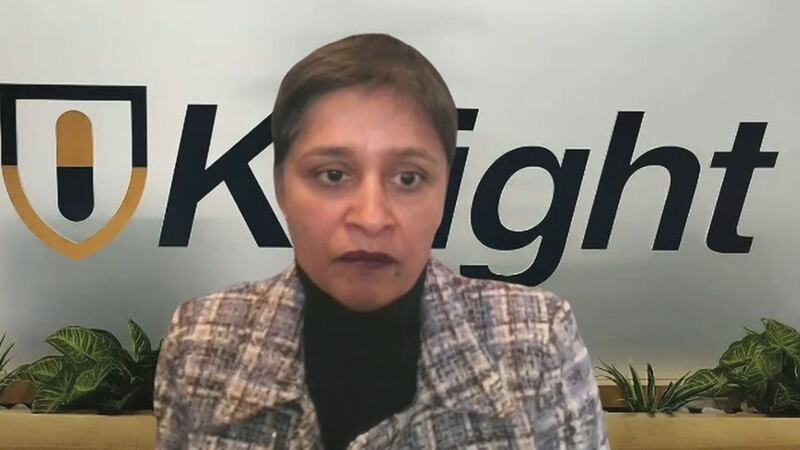
BNN Bloomberg spoke with Samira Sakhia, president and CEO at Knight Therapeutics, who said the company is focused on executing upcoming product launches and expanding its pipeline across Canada and Latin America.
Key Takeaways
- Product launches are a key driver of growth, but early-stage performance introduces uncertainty in forecasting.
- Companies are balancing strong recent results with cautious guidance as new therapies scale.
- Addressing unmet medical needs remains central to gaining traction with physicians and patients.
- Experience and execution improve performance over time, particularly for newly acquired products.
- Growth strategies prioritize deepening presence in existing markets before expanding globally.
Read the full transcript below:
LINDSAY: Canadian pharma company Knight Therapeutics posted better-than-expected fourth-quarter results, with revenue climbing on strength from some key products, but the company is striking a cautiously optimistic tone on its outlook. We’re joined now by president and CEO Samira Sakhia to elaborate. It’s good to have you with us. Thanks so much.
SAMIRA: Thank you. Thank you for inviting me.
LINDSAY: I want to get into some of these results, but first, for people who may not be familiar with Knight Therapeutics, can you tell us a bit about your company and what you do?
SAMIRA: Of course. Knight is a specialty pharmaceutical company. We focus on in-licensing and acquiring pharmaceutical products, mostly for Canada and Latin America. We have been reporting record revenue, record EBITDA this year and record cash flow from operations.
LINDSAY: You’re describing your guidance as cautiously optimistic. Why is that?
SAMIRA: Over the last two years — in 2024, we launched three products, and last year we had 10 launches. This year, we’re expecting another 10 launches. The reason for caution is that as these products come to market across our countries — Canada, Brazil, Mexico, Argentina — we need to make sure we are forecasting uptake curves correctly and executing on them.
In the last year, as I said, we had 10 new launches. All of these are in early stages, and we’re still learning. Some of our products actually outperformed last year, and we will continue to monitor performance. If we are doing better than expectations, we will update our guidance.
LINDSAY: Let’s talk about some of those key products. You’re launching 10 this year, and you say they address unmet medical needs. Tell us more about that.
SAMIRA: Last year, we had two acquisitions in Canada, which gave us critical mass in our Canadian business. Canada is now a major portion of our business. As part of that, we have three products in the early launch phase: Myfembree, for symptoms associated with endometriosis and fibroids; Orgovyx, for prostate cancer; and Excoriate, for epilepsy.
All of these address unmet medical needs where patients have limited options or more complex treatments. What we’ve seen in the last six months is that physicians are responding well and patients are benefiting. That is one of the reasons we are cautiously optimistic — as physicians become more familiar with these treatments, we expect broader adoption.
LINDSAY: Some of the products launched last year outperformed. What did you learn from that, and how are you applying it this year?
SAMIRA: Because we acquired these products, we took them over within about a year to a year and a half after launch, so we are still relatively new to them. Our teams are spending more time understanding what is working, what is not, and which physicians to engage with to accelerate adoption.
That is really the focus for our management and commercial teams — how we can do better. We have only been working with some of these products for about six months. As we gain more experience, we expect to improve execution.
In Latin America, where we have more experience from pre-launch, we have executed according to plan, and those products are on track. So it really comes down to timing and experience.
LINDSAY: When it comes to competition in Canada, what does the landscape look like for companies like yours?
SAMIRA: Every product has competitors. When we bring in a product, we assess how it will help patients in each market, how it is differentiated and what its unique value proposition is.
Sometimes it may be a similar product, but we may price it differently or offer additional value. We don’t need every product to be a home run — a portfolio of solid performers can continue to build the business and bring innovation to our markets.
LINDSAY: You mentioned Canada and Latin America. Are you looking to expand beyond those regions?
SAMIRA: We are already in growing markets across oncology, hematology, neurology and infectious disease. There is still significant room to expand within those categories.
As we grow, we can deepen our presence in existing markets and expand into new therapeutic areas. Longer term, we may look at opportunities in regions like Asia-Pacific or Australia, but for now, the priority is to build on the platform we have.
LINDSAY: We’ll leave it there. Samira Sakhia, president and CEO of Knight Therapeutics. Thanks so much for your time.
SAMIRA: Thank you so much.
---
This BNN Bloomberg summary and transcript of the March 20, 2026 interview with Samira Sakhia are published with the assistance of AI. Original research, interview questions and added context was created by BNN Bloomberg journalists. An editor also reviewed this material before it was published to ensure its accuracy and adherence with BNN Bloomberg editorial policies and standards.

