Attacks on Gulf energy infrastructure are raising new concerns about LNG flows, European gas supply and global energy security.
BNN Bloomberg spoke with Tony Marino, CEO of Tenaz Energy, about shifting supply dynamics, the growing role of LNG and how companies are positioning for long-term demand in Europe.
Key Takeaways
- Attacks on Gulf energy infrastructure are heightening risks to LNG supply and global energy security.
- Europe remains heavily reliant on imports, with about 70 per cent of gas demand sourced externally.
- LNG shipments, particularly from the U.S., are playing a growing role in replacing pipeline supply.
- Domestic production is becoming a priority as countries seek to reduce exposure to geopolitical shocks.
- Energy companies are focusing on organic growth and acquisitions to scale production in high-value markets.
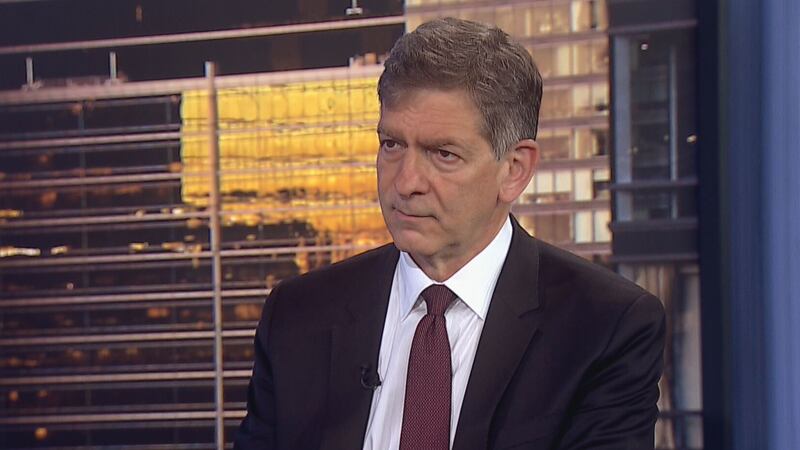
Read the full transcript below:
ANDREW: Attacks on Gulf energy producers, notably Qatar, have raised fears about the security of LNG flows and natural gas supplies worldwide. Here’s a player in the natural gas market internationally. He’s here for the BMO CAPP conference. Tony Marino, CEO of Tenaz Energy, thanks for joining us.
TONY: Thank you, Andrew. It’s great to see you.
ANDREW: So you’re now, according to CIBC, which just started coverage, the biggest natural gas producer in the Netherlands.
TONY: That is correct among natural gas producers. We believe we rank No. 1. Now, the state gas company, EBN, has a share of everything on a non-operated basis, but they’re not truly a producer. They’re a participant in the industry. Among industry producers, we believe we rank No. 1 in the Netherlands.
ANDREW: Your production is not gigantic. Right now you’re at about the equivalent of 21,000 barrels of oil a day.
TONY: That’s our midpoint for the year. We estimate we will produce 21,000 BOE/d, 90 per cent natural gas in the Netherlands.
ANDREW: How much of the Netherlands’ natural gas demand is supplied by domestic production?
TONY: About 30 per cent today. They used to be a big exporter when the Groningen field was still in production, but with that shut in, they import about 70 per cent of their needs. This is why the country is definitely trying to encourage additional offshore production.
ANDREW: Traditionally, where did they get their natural gas?
TONY: It would have mainly come from the onshore Groningen field, the biggest in Europe. It ran into seismicity concerns for residents and has been permanently shut in. There are a few other small onshore fields, but most of it now comes from offshore, and this is where all of our Netherlands production is.
ANDREW: But which nations did they import natural gas from? Was it Russia?
TONY: For them, it would come in through pipelines. They only recently became an importer in the last few years as Groningen was shut in. From the European network, it would have been mainly pipeline imports from Norway and generally from the broader European system. What has become much more important is LNG deliveries into the country, and most of that comes from the United States, with some from the Middle East.
ANDREW: It’s amazing how America has emerged in a few short years to become a huge LNG supplier.
TONY: Yes, it’s a big industrial achievement, no question about that.
ANDREW: Your stock is up more than fourfold in the past year. I guess there’s a premium being attached to companies that can offer security of energy supply.
TONY: That may well be true over time. We don’t feel we particularly get much of a premium valuation today. I think the increase has been driven by the company putting in place assets via acquisition that are now capable of very strong organic growth over a number of years. So now our company is really an organic production growth story in a very high-value market, probably 10 times the price we have in Canada. We still have M&A capability as upside, and we will pursue it, but what’s most important is this base level of organic production growth.
ANDREW: And will you stick to the Netherlands for now?
TONY: I think that’s accurate. We will pursue organic growth consistently. We will also pursue M&A in the Netherlands and potentially nearby regions such as the U.K., Norway and Germany. It’s less likely we would go further afield than Europe in our M&A efforts.
ANDREW: Do you have any production outside the Netherlands?
TONY: About 10 per cent of our production is in Canada. It’s an oil development project and has been very strong. When we started the company via recapitalization in 2021, it produced about 900 BOE/d and has nearly tripled since then. It’s a good asset that generates free cash while growing, and we think that can continue. It’s valuable, but still a minority of our production, which is largely leveraged to TTF pricing in the European market.
ANDREW: TTF being?
TONY: That’s the index in the Netherlands, the Title Transfer Facility. It’s similar to AECO in Canada or Henry Hub in the United States.
ANDREW: And where is that asset in Canada? In Alberta?
TONY: It is, just south of Edmonton in Leduc-Woodbend.
ANDREW: Do you think the LNG market has been transformed by these attacks in the Gulf?
TONY: These are unfortunate events, but they are transformational in the sense that, regardless of how the conflict evolves, there will be a recovery period. It will likely set back LNG growth out of the Middle East and the Persian Gulf. It underscores the need for as much domestic supply as possible for producers, governments and consumers. That’s what we’re trying to do in the Netherlands, and it could lead to more support for our capital program and organic growth there.
ANDREW: So your growth has been financed by debt or equity, or how have you managed that?
TONY: We have issued very little equity throughout the company’s history, despite growing from 900 BOE/d to an estimated 21,000 this year. We completed self-funded deals that were nearly paid off by closing. International assets tend to trade at lower multiples, and with long timelines between signing and closing, we’ve benefited from cash flow in the interim. One deal was almost paid off at closing, and another was financed with debt while maintaining reasonable leverage — about 0.6 times debt to EBITDA. Organic activities are largely self-financed, though that always depends on the price environment.
ANDREW: We’re out of time, Tony. I’m showing about 30 million shares outstanding, and that hasn’t increased much since 2020.
TONY: Exactly. We haven’t been much of an equity issuer.
ANDREW: Thanks very much. Tony Marino, CEO of Tenaz Energy.
---
This BNN Bloomberg summary and transcript of the April 14, 2026 interview with Tony Marino are published with the assistance of AI. Original research, interview questions and added context was created by BNN Bloomberg journalists. An editor also reviewed this material before it was published to ensure its accuracy and adherence with BNN Bloomberg editorial policies and standards.

