Savaria is betting on long-term demographic trends and growing demand for home accessibility to drive steady expansion over the next five years.
BNN Bloomberg spoke with Sébastien Bourassa, president and CEO at Savaria, about how the company plans to scale through organic growth, acquisitions and operational improvements under its Savaria One strategy.
Key Takeaways
- Aging populations and the shift toward aging at home are key drivers of long-term demand for accessibility products.
- The company is targeting 12 per cent annual growth, combining organic expansion with acquisitions.
- Operational improvements have lifted margins from 15 per cent to about 20 per cent in recent years.
- Tariff exposure remains limited, with most products exempt and manufacturing diversified across regions.
- Increased awareness and adoption of home elevators is seen as a major untapped growth opportunity.
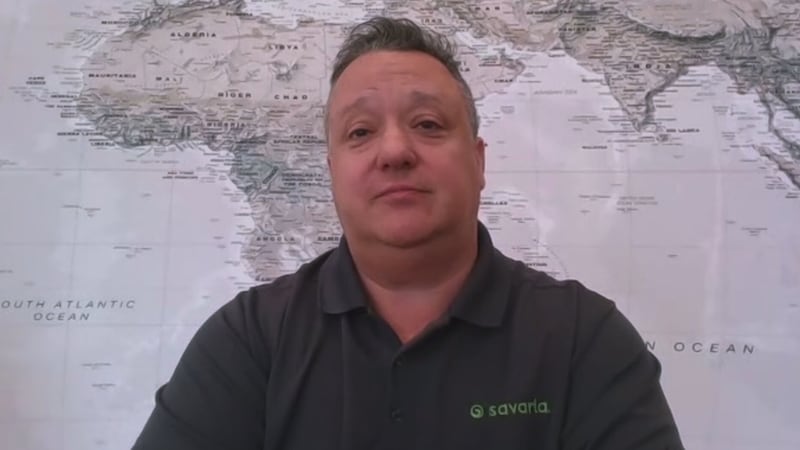
Read the full transcript below:
ANDREW: Savaria is a global maker of accessibility products. It just unveiled its five-year strategy at an investor day. The target is $1.6 billion in revenue by 2030. Last year, the company had revenue a bit more than $900 million. We are joined by Sébastien Bourassa, president and CEO of Savaria. Thanks very much for giving us the time.
SÉBASTIEN: Good morning, Andrew.
ANDREW: So the thing you’re best known for, and you were founded doing, were these home lifts for people who have trouble with stairs and stair lifts. So you’re still big in that, but then you sell stuff for hospitals for lifting patients. And then your third big business is converting vehicles.
SÉBASTIEN: Yeah, so basically, we are a leader in our accessibility division worldwide, where we sell stairlifts, ceiling lifts and incline platforms. And we’re very big in North America and in Europe. And we also do patient care, which is approximately 22 per cent of our business, very specialized with bed mattresses and sitting lifts. I will say the car business, we have exited that in the last two years, so that’s not part for us anymore. But yes, we’re lucky. We have an aging population, which is really playing in our favour. The demographic density of the population — people want to stay at home. So yes, we have a good future.
ANDREW: One analyst I know is saying that people are staying at home, partly because COVID raised fears about nursing homes and senior housing.
SÉBASTIEN: Yeah, definitely. People want to stay at home. They want to age at home. But also, we do a lot of effort to educate the population with designers, architects, contractors, because unfortunately, not enough people know about elevators. And you see that in big-city townhouses, three to four floors. So even if you’re 35, 40 years old, you want to bring your luggage up and down. You want to invite your parents. You want to create some added value to resell your house eventually to all kinds of population. So definitely, there is big work for us to do to educate the population to think about putting elevators, to have this as a standard. If we go back 20 years ago, people were not putting air conditioning, but they have to have the same thinking to put elevators as standard, like air conditioning.
ANDREW: That’s interesting, isn’t it? Maybe just build the elevator right into the house.
SÉBASTIEN: Yeah, for sure. When you work with architects and designers, they will find the right place to put the elevator in a corner to have access. Or they will put a glass elevator in the middle of the stairs to make it very spectacular. Or if you’re doing some retrofit model, we have a new model, a through-the-floor elevator called the LUMO, very easy to install and more affordable. So I think about all kinds of products.
ANDREW: Now you took over — your dad ran the company for years — but you took over as CEO. When was it? Was it last year?
SÉBASTIEN: I think already — I think three years ago already.
ANDREW: Okay, sorry.
SÉBASTIEN: And that was key. He gave me the pole, and it’s perfect. We’re going to do a big project, which is called Savaria One. So when I started, we started the Savaria One project. Basically, we have invested $40 million in the business to professionalize the organization, work with outside consultants. And since the end of last year, the consultants are out of the building, and you can really see the performance of the company improve a lot in the last two years, because we got better procurement, operations, sales excellence. In the last two years, we have implemented over 400 initiatives, and we have been able to bring the margins from 15 to 20 per cent of the business. So it has been a very good teamwork that we have done internally.
ANDREW: What is the story with you and tariffs? Is that going to hurt you? Because obviously, your products have a lot of metal in them.
SÉBASTIEN: For sure. Again, we are lucky, I will say, as of today, because things are always changing in the last year. But all our finished goods, all our products, there are no tariffs on that. So basically, all the HS codes that we use, they are tariff exempt. And many of our products are also for disabled people under Chapter 98, so again, they are really tariff free. The only small impact that we had in the last year or so is on spare parts. But again, we have our own projects to be able to cover that. And then one of the initiatives we did also last year is to discuss about tariffs. We have opened — we have a larger Greenville factory in the U.S. to start to make accessibility products. So right now, we manufacture in the U.S. 40 per cent of our home elevators in Greenville. The rest come from Canada, because there is no tariff. But again, just for additional protection, we decided to invest to be independent of that. Our business in Europe is not affected at all by tariffs, and the business of patient care — we have two factories in the U.S. that manufacture locally, so there’s no big impact for us.
ANDREW: So revenue — you’re telling investors you plan to get to $1.6 billion within — give us the timetable on that. But your revenue was a bit more than $900 million last year.
SÉBASTIEN: Yeah, exactly. We’re in the business for the mid to long term. My father has been there for many years. So basically, we want to grow the business at 12 per cent per year, which would be a mix of organic growth — we want to aim for seven to eight per cent — and the rest will be M&A acquisitions of four to five per cent per year. We have a good balance sheet. We have net debt slightly below one, so we can make M&A. And for sure, if we look at $1.6 billion, and we have said that we would have EBITDA margins of slightly over 20 per cent, that will bring us $320 million EBITDA in 2030. And that will help us to bring the adjusted EBITDA per share target to $4.25. So I think these are quite interesting and good targets that will allow us to continue to be better and to challenge the team to continue to do excellence.
ANDREW: Right. Thanks very much indeed. Really appreciate it. Sébastien Bourassa, president and CEO of Savaria.
---
This BNN Bloomberg summary and transcript of the April 17, 2026 interview with Sebastien Bourassa are published with the assistance of AI. Original research, interview questions and added context was created by BNN Bloomberg journalists. An editor also reviewed this material before it was published to ensure its accuracy and adherence with BNN Bloomberg editorial policies and standards.

