Intel shares are surging after strong earnings highlighted a sharp rise in demand for central processing units, as artificial intelligence workloads shift beyond training to real-world applications.
BNN Bloomberg spoke with Gil Luria, head of technology research at D.A. Davidson, about how evolving AI use cases are driving CPU demand and what risks remain for Intel despite the rally.
Key Takeaways
- Demand for CPUs is accelerating as AI shifts from training models to executing real-world tasks, increasing reliance on traditional processors.
- The ratio of CPUs to GPUs is rising as AI agents require more compute for everyday operations, not just model development.
- Intel is benefiting from a surge in demand, even selling previously written-down inventory amid supply shortages.
- Despite strong results, the company faces ongoing risks tied to losses in its foundry business and uncertain future profitability.
- Investor enthusiasm may be running ahead of fundamentals, with margins still lagging competitors and long-term execution uncertain.
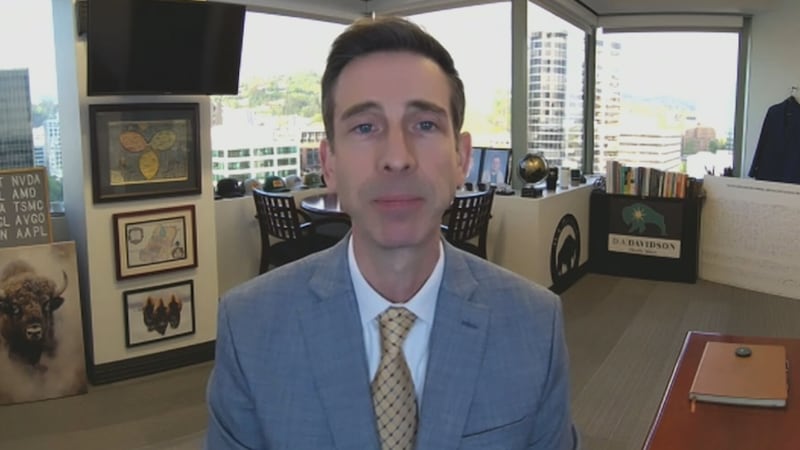
Read the full transcript below:
ANDREW: Shares in Intel on fire today. I’m kind of confused as to why this is only coming up now, but it seems the central processing units for computers that’s long been Intel’s specialty are also important to AI. Let’s get more from Gil Luria, head of technology research at D.A. Davidson. Gil, maybe you can help me with this. So are investors only finding out now that these CPUs are so important?
GIL: Things are moving fast, and it’s really just over the last few weeks that we’ve realized how much more we need CPUs. And the math around this is that when you’re doing pre-training for AI, when you’re just preparing the models, you need about one CPU for every eight GPUs. By the time you’re doing agentic tasks for AI, it’s more of a one-to-one ratio. So if we’ve just needed a lot of GPUs up until now, now we also need a lot of CPUs to execute the tasks that we’re setting these AI agents to do, and that’s just really over the last few weeks. Let’s not forget the big revolution around agents really just started in December with some of the Anthropic models. But now, as that’s happening, the demand for CPU is going off the charts. The most interesting anecdote from Intel yesterday was that they were selling previously written-down CPUs, which is to say they took them out of the trash in order to sell them, and they were still able to do that. So that tells you how much the demand has picked up over a matter of a couple of months, a few weeks.
ANDREW: That’s interesting. So training the AI takes vast amounts of these graphics processing units, but actually running the programs you do need lots of CPUs.
GIL: Yes. Now that doesn’t mean you don’t need the GPU. It’s just that for the actual actions, to make the compute efficient, you want to use CPUs. Think about it this way: what does an agent do? The agent is doing cognitive tasks that a human would otherwise do, and most of those tasks right now happen on a CPU. When we work on a computer, we’re using the CPU. So if a computer is doing a task that otherwise we would have been doing, it’s using the CPU. That doesn’t mean you don’t need the GPU for the actual inference or the actual computations that tell you what task to do. It just means that to carry out the task, you now need a CPU.
ANDREW: You are hiking your target price on Intel to $77 from $45 US, but you’re maintaining a neutral rating. Walk us through your thinking there, please.
GIL: There’s still so much risk with Intel. We’re all valuing Intel based on its product business, in spite of the fact that the foundry business, the fab, is losing a tremendous amount of money. So that means that we’re all implicitly saying we believe that the fab will at some point stop losing money, maybe even make money, but that’s a really big if statement. But by their own account, for their next node to work, they still need to sign up new customers. Even the deal with Elon about the Terra fab may not be enough to decide to invest in the next generation of a node, the 14A node. And so we don’t even know that that business will stop losing money, and that’s what we’re all assuming in order to value Intel. So the point is, there’s a lot of risk. If the fab side doesn’t turn around, they’ll continue to lose a lot of money there, and then the overall company will still lose money. Just to give you context how badly Intel is underperforming, Intel’s margins were 39 per cent this quarter. That was a big positive surprise. AMD’s are 55 per cent. Nvidia, Broadcom, TSMC, 75 per cent. Intel is still a very big underperformer, and it’s not clear that they can get out of that. All that’s clear, the demand for CPUs is so high, the tide is rising so fast that it’s even lifting Intel’s boat.
ANDREW: So you mentioned Terra fab. So that is a giant semiconductor plant that is apparently scheduled for Texas. Elon Musk is involved, Tesla, xAI, SpaceX and Intel. Give us a bit of background there. So Intel is partnered with Elon Musk in this thing.
GIL: Yeah, it’s unclear what their role is. What we do know is that Tesla intends to use the 14A technology, the next node technology from Intel, for the Terra fab. But it’s going to be an Elon plant. It’s not going to be an Intel plant. That’s what it looks like. The details still haven’t been worked out. This may not even happen until 2028, or at least not open until 2028, so we don’t know a lot of details. We just know that this is Elon scale, right? So it’ll be the biggest plant ever, and he’ll probably build it faster than anybody’s ever built a plant, or at least that’s his intention. And it is a big deal that they picked Intel’s technology to do that, yeah, but again, it may not be enough, because Lip-Bu Tan clarified again yesterday they are still not committed to building out the fabs for 14A. They still need more customers. They’re in the process of having customers test out the technology, and they may be able to sign large customers. Again, the hope is an Nvidia or an Apple or something like that that’s big enough to commit to the technology, to commit to building fabs. The Terra fab itself will use the technology. It’s not clear that it’ll be an Intel plant. It may be an Elon plant.
ANDREW: Gil, thank you very much indeed. Great hearing from you. Gil Luria, head of technology research at D.A. Davidson.
---
This BNN Bloomberg summary and transcript of the April 24, 2026 interview with Gil Luria are published with the assistance of AI. Original research, interview questions and added context was created by BNN Bloomberg journalists. An editor also reviewed this material before it was published to ensure its accuracy and adherence with BNN Bloomberg editorial policies and standards.

