Exxon Mobil posted better-than-expected first-quarter results, but profits fell sharply year over year as the Iran war disrupted production and hedging weighed on earnings. Higher oil prices supported revenue, while geopolitical risks continue to shape the outlook.
BNN Bloomberg spoke with Garnet Anderson, president and head of the portfolio management group at Tacita Capital, who discussed energy as an inflation hedge and shared views on Aritzia and Brookfield Asset Management ahead of earnings.
Key Takeaways
- Exxon beat revenue and adjusted earnings expectations, but profit fell 34 per cent year over year due in part to a roughly $4-billion hedging impact.
- About six per cent of production was affected by the Iran war, with future performance tied closely to geopolitical developments.
- Energy exposure remains a key inflation hedge, with elevated oil prices expected to persist amid prolonged uncertainty.
- Aritzia continues to show strong growth, but high valuation levels suggest investors may benefit from waiting for a pullback.
- Brookfield Asset Management’s diversification and fundraising strength support a long-term investment case despite concerns around private credit.
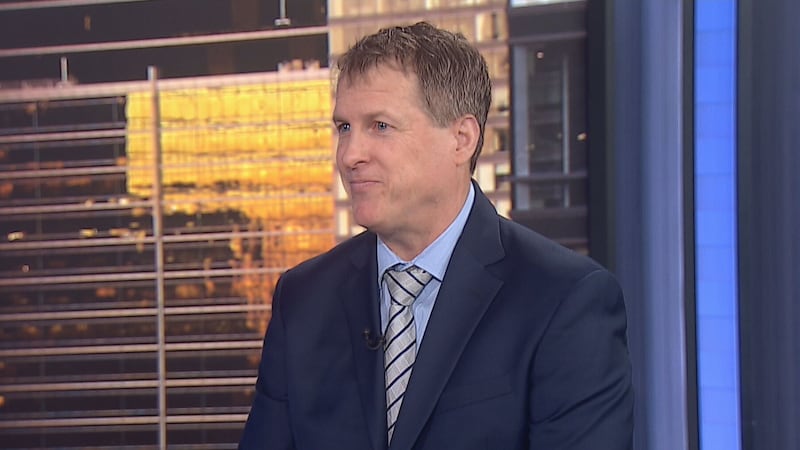
Read the full transcript below:
LINDSAY: ExxonMobil beat estimates for the first quarter of 2026 despite being impacted by the war in Iran, but profits fell dramatically compared with the same period last year. Let’s get more from Garnet Anderson, president and head of the portfolio management group at Tacita Capital. He joins us in studio. Great to have you.
GARNET: Thanks for having me.
LINDSAY: So I’m wondering what your takeaway is from this latest earnings report from Exxon. Is it a positive one, do you think, or if you’re comparing it, maybe not?
GARNET: First of all, I think management did a good job of managing expectations. They came out last month and said, “Look, we’ve been impacted.” About six per cent of their global production has been affected by the war in Iran. That set expectations. What we saw analysts do was pivot — they downgraded Q1 earnings expectations, which Exxon then beat, and upgraded Q2 expectations, which time will tell.
It’s kind of funny — for the accounting textbook folks out there, what is earnings per share in 2026? When you take a look at pure GAAP, the purest form, they certainly underperformed because they booked about $4 billion of hedging losses. They’ve been clear those losses will reverse over coming quarters as those energy products are delivered. It’s not speculative — they were hedging revenue lines — but from an accounting perspective, that was about a $4-billion hit, which drove down pure EPS.
On an adjusted basis, they did well. Refining spreads widened, so refining did well. Retail is not a massive needle mover for them. But because they hedged so much of the future, they didn’t get the full benefit of higher energy prices we saw from March onward. You would think in Q2 you’ll see more of that profit come through.
In the interim, they bought back a ton of shares and issued dividends. It shows their focus on returning capital to investors. That makes sense when oil is at $60. If they think oil is going to stay stickier — maybe not at $100-plus — then Venezuela goes from being uninvestable to something they may explore. That’s a shifting story.
LINDSAY: Right. I was going to ask you that because you say there’s a chance here for Exxon to maybe expand, and Venezuela could be a good spot for them.
GARNET: It could be from a production perspective, but you’re moving from one risky region to another. They’re not leaving the Middle East, but it’s already risky. I don’t think Venezuela would be considered safe. They own about 70 per cent of Imperial Oil and have oilsands exposure in Alberta, which is a much safer environment. But it does open up an opportunity that wasn’t there before, potentially with U.S. government support. With midterms coming up, the U.S. will want to drive down fuel prices, so that narrative may develop, and Exxon could be part of it.
LINDSAY: If Canada is a safer environment, do you think we could see a boost to the Canadian economy if Exxon takes note?
GARNET: Yes, but you have to be able to sell the product. We export a lot of energy to the U.S., and we have LNG on the West Coast. Higher energy exports can help support Canada’s GDP. But on the flip side, Canadian and U.S. consumers are still spending the same dollar — just more of it is going to energy instead of discretionary items.
LINDSAY: There are a couple of other companies we’re watching with earnings coming up. First, Aritzia reports May 7. What are you watching for?
GARNET: First, when people talk about Q1, Q2, Q3, they assume Jan. 1 to March 31, but this is really to a March 1 quarter, so it’s not really affected yet by consumers shifting spending toward energy. I don’t think we’ll see that yet.
Is there going to be messaging around early March and April showing consumers pulling back? Probably not yet. Their online business is doing very well, and they’re expanding in the U.S., which has stronger growth than Canada.
Unemployment hasn’t spiked in North America. If it did, that wouldn’t be good for Aritzia, which is a more premium brand.
LINDSAY: You mentioned about half of its revenue comes from the U.S. Could that help the company or provide some benefit in upcoming negotiations?
GARNET: Exactly. With CUSMA, it provides a natural hedge. For Canadian investors looking for a North American retail play, that helps. They’ve also been retooling their supply chain — where they source materials — and we’ll likely get more detail on that.
Fundamentally, they’re growing in the U.S., but there are pressures building, like student debt and credit constraints. Too early to impact Q1, but the stock is priced at a premium.
LINDSAY: The other company is Brookfield Asset Management, reporting May 8. What are you watching there?
GARNET: It comes down to capital raising, fee revenue and distributable earnings. Momentum has been good, but one concern is private credit — some of the shine has come off. There are questions about underlying credit quality, especially in software.
They have strong credit managers. If conditions worsen, they could become opportunistic. But that’s further out.
Right now, if they keep growing, it’s a good entry point for investors without a position. It has a global footprint, Canadian dividend treatment and long-term upside for patient investors.
LINDSAY: And on the AI threat to software companies, do you think Brookfield is protected?
GARNET: They’re highly diversified. Software exposure is minimal — less than one per cent of the book. They have real estate, infrastructure, private equity, credit and insurance-related earnings.
It’s a diversified platform. Over time, it comes down to management — can they recycle capital, generate returns and earn carried interest? It’s not a quarter-to-quarter story, but at these levels, it’s an entry point. I wouldn’t be selling here.
LINDSAY: We’re out of time, so we’ll leave it there. Great to have you in.
GARNET: Thank you.
---
This BNN Bloomberg summary and transcript of the May 1, 2026 interview with Garnet Anderson are published with the assistance of AI. Original research, interview questions and added context was created by BNN Bloomberg journalists. An editor also reviewed this material before it was published to ensure its accuracy and adherence with BNN Bloomberg editorial policies and standards.

