Suncor Energy reported higher first-quarter earnings and revenue, driven by record upstream production and refining throughput, even as its shares fell alongside weaker oil prices. The company also increased its share repurchase plans for 2026 while highlighting continued operational strength across its integrated business.
BNN Bloomberg spoke with David Trainer, founder and CEO at New Constructs, who said Suncor’s low-cost oilsands assets, vertically integrated operations and disciplined capital allocation continue to position the company as a core long-term energy holding.
Key Takeaways
- Suncor reported first-quarter net earnings of $2.1 billion, up from $1.69 billion a year earlier, as record production and refining throughput lifted results.
- David Trainer said the stock decline was driven mainly by falling oil prices rather than concerns about the company’s operational performance.
- Suncor’s integrated business model and lower-cost oilsands operations continue to support strong profitability despite commodity price volatility.
- The company raised its planned 2026 share repurchases and continues to return significant capital to shareholders through dividends and buybacks.
- Trainer said Suncor’s operational efficiency, capital allocation and long-life reserve base continue to make the stock attractive for long-term investors.
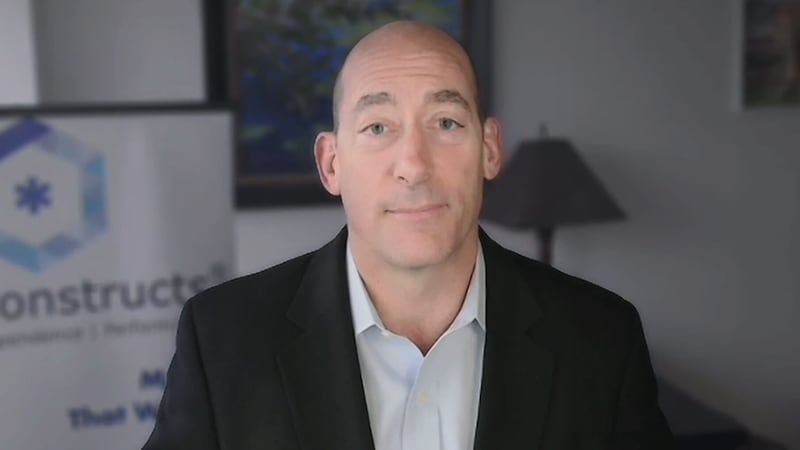
Read the full transcript below:
LINDSAY: Oil producer Suncor posted higher first-quarter earnings and revenue Tuesday after the market closed. The company reported record first-quarter upstream production and refining throughput, but cut its refinery utilization forecast. The stock is sliding today, down almost six per cent at the moment. For more on the results, let’s bring in David Trainer, founder and CEO of New Constructs. It’s great to have you join us. Thanks so much.
DAVID: Thanks for having me.
LINDSAY: What were some of the standout points in the first-quarter earnings report that you saw?
DAVID: Look, I think Suncor remains a very profitable business. It’s growing. It’s got great utilization and great operational efficiency. It’s a national treasure for Canada to have a company that’s able to productively utilize its rich natural resources. I think this is something people should be happy about. Look, the stock is dropping because oil prices are dropping, and it’s moving in sympathy with that. Otherwise, it was a very strong quarter and a very strong business.
LINDSAY: Okay, so I was going to ask you why you think the stock is down almost six per cent. You don’t think that has anything to do with the earnings report and more to do with oil prices?
DAVID: It’s almost entirely oil-related. Companies and stocks are going to drop when you see a big drop in oil prices, regardless of what happens. The earnings report wasn’t a blowout report. They beat expectations soundly, but the outlook was not as positive as it could have been. In my opinion, that’s inconsequential. When you look at the valuation of the stock and the real cash flows implied by the current stock price, it’s still very cheap. The growth and profitability we’re seeing today are more than enough to justify the current stock price, which is why our target is significantly higher, close to $85. We think that’s a no-brainer given the cash-flow strength in this business.
LINDSAY: We heard management on the earnings call today say March’s average WTI price was 50 per cent higher than it was in January. They’re obviously aware of the swings and volatility we’ve seen in oil prices as well. If we continue to see this, how do you think it would impact earnings for Suncor for the rest of the year?
DAVID: Look, I think prices are likely to go down from here. I think the issues with the Strait of Hormuz and Iran will mostly be resolved in the next few weeks, if not the next few months. But Suncor has a cost advantage with its oilsands capabilities, and it has a lower break-even point for profitability. This is going to remain a very profitable business. I don’t think markets have gotten overly exuberant around its existing profits because we know those profits were pushed higher based on what happened with WTI crude. Long term, it’s an excellent business and very well positioned. Again, I think it’s a treasure for Canada, and its ability to productively monetize these resources is something the country should support as much as possible.
LINDSAY: Suncor also reported record upstream production and refining throughput for the first quarter. Are Canadian companies still mostly selling to the U.S. and at a discount? What’s the capacity at this point to find new buyers in Europe or Asia?
DAVID: I think the global demand outlook for fossil fuels and energy in general is so strong that it really doesn’t matter who your clients are. They’re going to be there for a while, and demand is not going away anytime soon. As long as Suncor is selling into markets with strong demand, I’m not too worried about who the end customer is. I don’t think there’s a diversification issue here. I don’t think there’s any chance that demand for energy in the United States is going down anytime soon, so I think they’re safe having the U.S. as a major customer.
LINDSAY: It is interesting, though. The CEO said today that Suncor began producing jet fuel at a Montreal refinery in December and that it was intended for the domestic market, but instead the company has been selling that fuel overseas amid a tight market. What do you make of that? I thought the issue for most companies wanting to sell overseas was infrastructure and getting product to market.
DAVID: I think the infrastructure is getting much better. Obviously, the Strait of Hormuz throws a huge wrench into that. But I think ships are better, ports are better, and clearly when you’ve got the supply constraints we’ve had recently with jet fuel, companies are finding a way to sell it. Smart move. Hats off to Suncor for anticipating that and being in a position to profit from the extreme shortages in jet fuel and the pricing advantages that come with that. It’s another example of how this business is one of the most profitable energy companies in our portfolio. It’s one of our top recommendations. We think it’s a core holding with great returns on capital and strong margins because it has smart management making decisions quickly and efficiently. The business overall reflects intelligent long-term capital allocation, and that’s why we think it should be a core holding for any energy portfolio.
LINDSAY: If oil prices fall, which you think they will, does higher production and refining still make sense for companies like Suncor?
DAVID: When you’ve got utilization rates as high as Suncor’s, it’s not a big deal if they move marginally lower from here. You want the ability to make hay when the sun shines, and they’ve got that. If they need to back off a little bit, it’s not a big deal either. The fact that they’re vertically integrated allows them to be smart about how much they produce versus how much they sell. They have real-time feedback so they don’t end up with supply overages or demand gluts that could hurt profits long term. That’s why we’ve seen such steady margins, profits and returns on capital. They’re able to manage the full vertical stack, and that’s another advantage for a great business.
LINDSAY: You touched on this a bit, but how much capital spending is involved in adding capacity to raise output? Are they able to lower costs to compensate for additional expenditures?
DAVID: I think the question you’re asking is whether lower capacity utilization hurts margins, and yes, you always want 100 per cent utilization because that’s where you maximize scale. But you don’t see huge impacts on margins with these kinds of refiners when they operate at lower utilization. It’s not going to crush the business. They’re designed to handle that kind of thing. It’s not ideal, but Suncor’s margins can more than handle lower prices. Prices are just going back to more normal levels. This was a profitable business before the Strait of Hormuz issues, and it will continue to be a very profitable business after those issues are resolved.
LINDSAY: Okay, we’ll leave it there. David Trainer, founder and CEO of New Constructs, really appreciate your time today. Thanks so much for joining us.
DAVID: My pleasure. Thank you.
---
This BNN Bloomberg summary and transcript of the May 6, 2026 interview with David Trainer are published with the assistance of AI. Original research, interview questions and added context was created by BNN Bloomberg journalists. An editor also reviewed this material before it was published to ensure its accuracy and adherence with BNN Bloomberg editorial policies and standards.

