MDA Space maintained its full-year guidance after reporting stronger-than-expected first-quarter revenue and earnings, supported by growth across its satellite systems, robotics and geointelligence businesses. The company also pointed to rising demand for its CHORUS Earth observation constellation ahead of its planned launch later this year.
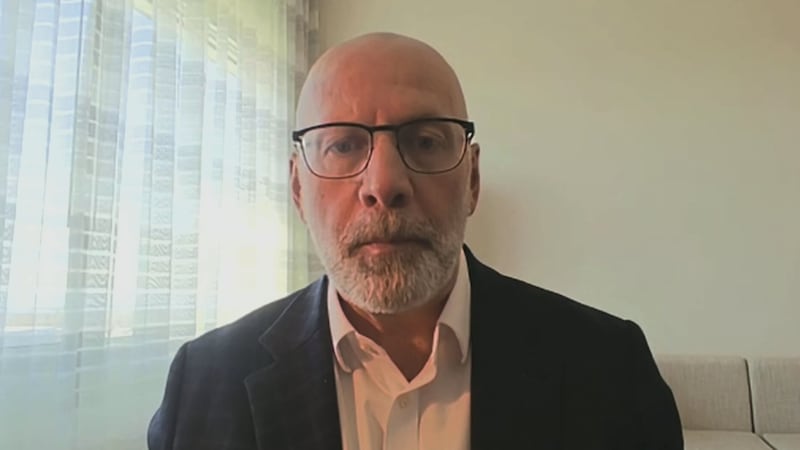
BNN Bloomberg spoke with Mike Greenley, CEO at MDA Space, about the company’s latest quarterly results, customer demand for CHORUS, the outlook for space-based data services and the future of the company’s work tied to NASA’s Artemis program.
Key Takeaways
- MDA Space reported first-quarter revenue of $464.1 million, up 32 per cent from a year earlier and ahead of analyst estimates.
- Adjusted earnings per share rose to 38 cents from 29 cents a year ago, while adjusted EBITDA increased 32 per cent to $90.6 million.
- The company maintained its 2026 guidance, saying revenue from its CHORUS satellite constellation is expected to ramp up in 2027 after launch and entry into service.
- MDA Space said it has secured 41 customer agreements tied to CHORUS, including signed contracts and letters of intent across industries such as national security, mining, energy and forestry.
- Greenley said robotics work tied to the Artemis mission continues despite NASA pausing Gateway-related work, with applications potentially shifting toward lunar surface operations.
Read the full transcript below:
LINDSAY: We are watching shares of MDA Space after it reported a beat in revenue for its first quarter. The Ontario-based aerospace company is also maintaining guidance after securing interest in its new MDA CHORUS program. So here to talk about that and more is Mike Greenley, CEO of MDA Space. Thanks so much for joining us. Great to have you.
MIKE: Thanks for having me.
LINDSAY: So a beat in revenue. What is lifting those numbers this time around, do you think?
MIKE: Really just strong execution against our backlog. We had a really strong backlog. Started the year almost $4 billion and the teams are doing a great job executing on a number of large programs, and so just got a little bit more work done than planned, so a bit higher revenue.
LINDSAY: I want to talk more about the new CHORUS program. I wonder, first of all, can you just tell our viewers who maybe do not know exactly what it is, what it is?
MIKE: Sure. One of the three things that MDA Space does is Earth observation. We are using radar-based satellites, and so this is our fourth generation of radar satellites in Canada, and CHORUS is going to be launched later this year. We have invested in it, our single largest investment we have ever made as a company, in our next-generation Earth observation satellites. And so there will be two satellites that work together as a team. The first is a broad-area surveillance radar satellite. They can look down at the Earth, like a 700-kilometre-wide swath of the Earth, and then about an hour-and-a-half behind it is a zoomed-in radar satellite, so that if you see things when you are scanning, you can say, “Oh, I want to look at that closer,” and then quickly get the following satellite to zoom in and look at that. We call that tipping and cueing, and it is a new world-first commercial service in the radar satellite business, and we are really excited about it.
LINDSAY: What data are you expecting by the end of this year when it comes to that program?
MIKE: Which data?
LINDSAY: Yeah.
MIKE: Right now we operate RADARSAT-2 in orbit, and so we deliver radar-based Earth observation data to customers around the world. We are now in the process of testing this CHORUS capability so that it can be launched in the fourth quarter of this year, at the end of this year, and so it will start to provide those data services to our existing customers and a number of new customers. We have announced that we have about 41 different agreements, nine of them signed contracts, the other 30-odd letters of intent that we are working on converting to contracts as we get towards launch at the end of the year.
LINDSAY: That seems like a pretty decent number of customer contracts moving forward. I am curious why you are maintaining guidance rather than increasing it with that in mind.
MIKE: Yeah, that will not really change revenue this year. When we launch the satellites at the end of the year, they will go into service. It will take a few months for them to go into service in early ’27 and then they will start generating revenue. So all these agreements get everybody ready to receive that service. In addition to, in some cases, us doing what is called ground station upgrades, updating their ground stations to send taskings to us and receive data back from us. So all these things get done in preparation for that launch and entry into service. And then as we go through 2027, we will build in our revenues on top of our current levels of revenue. So we would expect growth through 2027.
LINDSAY: On the flip side, just switching gears here, MDA Space was working on Canadarm3 for the Artemis mission. NASA has now decided not to use that arm. What will happen now with Canadarm3? Is it finished? Or what is the process now?
MIKE: No, Canadarm3 is for the Artemis mission, which you said. That is a great group of words there. And the Artemis mission continues. And so within the Artemis mission, there are a number of elements. One of them was, or is, a space station called Gateway that will orbit the moon. What NASA decided was to pause the work on Gateway, and so the robotic arms were to be targeted at Gateway to put robotics capability on that space station, in that part of the Artemis program. But they will not need that right now, but they will need a lot of robotics capability down on the lunar surface, on the moon, for rovers, for loading and unloading, logistics handling and other tasks. And so we are working, the Canadarm3 program continues. It is to develop robotics for the Artemis program. We need to have a series of discussions finalized to finalize exactly which applications those robotics will be targeted at as we complete the project. In addition, this project being delivered by Canada is also to ensure that we have a strong technology base for our commercial robotics offering, which we call MDA SKYMAKER, that we take to the rest of the global market. So Canadarm3 continues. It has got lots of application areas. We just have to have some discussions to be able to, in some cases, on the lunar side of the moon, pivot the robotics from the space station down to the lunar surface.
LINDSAY: Okay, I understand. So you do still have a partnership with NASA then, and that project does continue.
MIKE: With the Canadian Space Agency, and then they have a relationship with NASA.
LINDSAY: Okay, got it. Just speaking about the industry as a whole, because obviously there is a lot of talk right now about SpaceX with a potential IPO coming later this year. Do you think that will release more money into the industry? Will that impact MDA Space at all moving forward?
MIKE: Certainly, we would expect the SpaceX IPO to increase enthusiasm about space in the industry. We have seen a number of IPOs, including our own, on the New York Stock Exchange a few weeks ago. We even listed on the Toronto Stock Exchange, and now we are dual-listed on the New York Stock Exchange as well. That was a very strongly oversubscribed offering where we raised about $340 million, but could have raised a lot more should we have wanted to, or had a reason to. A number of other firms have gone public at really good valuations as we have gone through the years. So the interest in space continues to increase strongly in the market. The SpaceX IPO will be of the size, of course, that it will really cause everyone to be talking about space at a new level of intensity. And that can only be good for the sector. The space economy is maturing. It continues to open up and expand. And it is important for people to realize it is a persistent economy. There is not some blip here. We do not just do a stunt and go to the moon and come home. Space and the moon are now opening up as persistent economic activity areas for us to all continue our work on.
LINDSAY: So fascinating. Okay, we are going to have to leave it there. Mike Greenley, CEO of MDA Space, appreciate you joining us. Thanks so much.
---
This BNN Bloomberg summary and transcript of the May 7, 2026 interview with Mike Greenley are published with the assistance of AI. Original research, interview questions and added context was created by BNN Bloomberg journalists. An editor also reviewed this material before it was published to ensure its accuracy and adherence with BNN Bloomberg editorial policies and standards.

