Birchcliff Energy reported higher first-quarter profit and revenue year over year as the company raised its 2026 adjusted funds flow and free funds flow guidance while maintaining production targets. The company pointed to stronger cash flow, lower costs and diversified gas marketing exposure as key drivers behind the results.
BNN Bloomberg spoke with Chris Carlsen, president and CEO at Birchcliff Energy, about the company’s first-quarter earnings, exposure to stronger oil prices, natural gas market diversification and long-term LNG opportunities.
Key Takeaways
- Birchcliff Energy earned $70 million, or $0.25 per share, in the first quarter, up from $65.7 million, or $0.24 per share, a year earlier.
- The company increased its 2026 adjusted funds flow guidance to $455 million and raised free funds flow guidance to between $80 million and $130 million.
- Birchcliff said lower costs and diversified exposure to U.S. and Ontario gas markets helped support stronger first-quarter cash flow.
- The company maintained 2026 production guidance at 81,000 to 84,000 barrels of oil equivalent per day while targeting higher output in the second half of the year.
- Birchcliff said stronger oil and natural gas liquids pricing, along with future LNG export opportunities, could support longer-term cash flow growth.
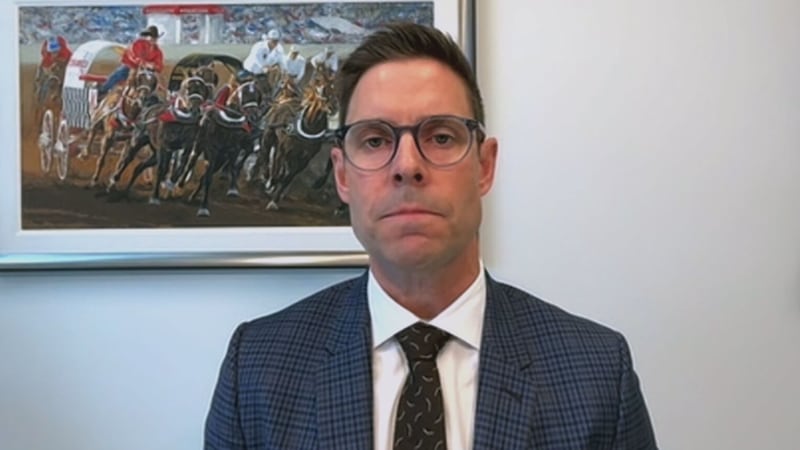
Read the full transcript below:
LINDSAY: We are looking at shares of Birchcliff Energy today after it reported first-quarter profit and revenue rose year over year. For more, let’s bring in Chris Carlsen, president and CEO of Birchcliff Energy. It’s great to have you join us again. Thanks so much.
CHRIS: Hey, thanks for having us, Lindsay.
LINDSAY: Birchcliff Energy earned $70 million in this quarter. That’s up from $65.7 million last year. What do you attribute this increase to?
CHRIS: Yeah, so our first-quarter cash flow was really strong. We actually had about $153 million of cash flow against spending of about $107 million. The cash flow was really driven by a few things. First is strong production, second being our gas market diversification. We have access to premium markets in Dawn and NYMEX that represent about 55 to 56 per cent of our gas, and also on the back of lower costs.
I think when you put those three things together, we were able to generate strong cash flow in the quarter. When we spent $107 million, we actually generated free cash flow, and we were able to use that $45 million of free cash flow to essentially pay our debt down by eight per cent. Our debt at the end of the year was $460 million. Today it’s $423 million. We also paid our dividend to shareholders, about $8 million.
So it was a strong quarter, largely on the back of our gas marketing diversification and lower costs. As we look forward, we’re really excited about what’s to come.
Unfortunately, with the war in Iran, that’s definitely an unfortunate situation. The reality, though, is when you close the Strait of Hormuz, you’re seeing oil prices increase significantly. So notwithstanding Birchcliff as a gas company, about 16 to 18 per cent of our production mix is oil, liquids and natural gas liquids. The reality there is we are benefiting from the strength in oil prices as well.
We’ve increased our cash flow guidance for the year to $455 million, and that means we’re going to generate more free cash flow as well this year. As we think about the back half of the year, we’re going to fill up our infrastructure that is sitting there today. We have all these fixed costs in our business. We get to utilize that infrastructure, and that will really drive down our per-unit costs and create a rate-of-change story when you think about the amount of margin expansion we can get by filling existing infrastructure and improving the cost structure into the end of the year and into 2027.
LINDSAY: As you mentioned, you flagged strong oil prices moving forward, but weak AECO gas prices. Given how much you’re weighted toward gas instead of oil, how concerned are you about that side of things?
CHRIS: Yeah, so AECO gas, there’s certainly disappointment there, us included, in terms of where the AECO price is. I think the reality for a lot of Canadian gas producers is we’ve had to diversify over a number of years away from AECO.
If you look at Birchcliff specifically, about 56 per cent of our gas production is sold in U.S. markets. So our exposure to AECO is about 40 to 45 per cent of our gas stream. On a gas basis, we’ve got significant diversification that reaches NYMEX-based pricing and Dawn pricing in Southern Ontario, which were really strong in the first quarter and look to be quite reasonable as you move into the back half of the year.
Dawn storage levels specifically were drawn down significantly because it was so cold in Eastern Canada during the winter. Storage levels at Dawn haven’t been this low for a number of years. So the demand for gas out east to fill that storage back up leading into next winter will continue to drive stronger prices out east, which is where we sell a good chunk of our gas.
In addition to that, you referenced liquids. I think it’s underappreciated that some of the Montney companies, us included, have 16 to 18 per cent of our production mix in liquids. So we will benefit from stronger oil prices, stronger propane prices, butane prices and all the other liquids we produce along with that gas.
LINDSAY: Your production guidance remains unchanged. Why not raise it?
CHRIS: Yeah, I think production is on track in terms of where we’re at. Today, we’re going through a turnaround at our major facility at Pouce Coupe that will be done by mid- to late May.
After that, just the way the capital program is laid out, we’re drilling wells throughout the year and adding production into the back half of the year to fill up that infrastructure. Today, we’re just starting on the liquids-weighted part of the program, and that’s historically because summer gas prices have notoriously been weak.
We’ll drill our more prolific drier gas wells at the beginning of the year, and then as we move into the summertime, we’ll move ahead with our liquids-rich and oil program into the summer. That will drive strong economics as we fill up that existing infrastructure in the back half of the year.
I think everything is going as planned, and we’ll see where we end up in the back half of the year with respect to production.
LINDSAY: You’re reducing debt, buying back shares and paying a dividend. Of those three, what’s the top priority? And what can shareholders count on if things become more challenging in the future?
CHRIS: For us, our goal this year is to fill up that existing infrastructure. We get a huge benefit in terms of our cost structure. We improve our netback by $1.15 to $1.25, which translates into 2027 free cash flow of an initial $50 million. We also improve our margins at that gas plant and through that infrastructure by about eight per cent.
So priority No. 1 in this intermediate period this year is filling up that infrastructure. We’ll continue to pay our debt down and pay that sustainable dividend. That’s been the mantra and the strategy moving forward.
However, we have been opportunistic with the NCIB, or share buyback. You saw subsequent to the first quarter, when institutional funds moved into oil companies because of the war in Iran, gas companies, us included, were left behind. Our multiple and our value fell well below our intrinsic value. That created an opportunistic time for us to step in and buy shares because we think they’re significantly undervalued.
LINDSAY: Do you have any plans to increase customers overseas or increase where you ship natural gas?
CHRIS: Yeah, we’re part of the Ksi Lisims LNG project. Today on the West Coast, we have the LNG Canada facility, where Phase 1 is up and running for about two Bcf a day. There are a couple of other smaller projects that are sanctioned and under construction.
Then there’s the Ksi Lisims project, which we’re part of, which is a 1.8-Bcf-a-day facility for Phase 1. We would be one of the founding members of that consortium. We’re working toward a final investment decision over the next while on that project.
That project is on the major projects list from the federal government, so there’s a lot of momentum behind the Ksi Lisims project, which would allow us and other Canadian producers to access world pricing. That’s the next evolution for us when you think about global pricing.
At the same time, we’re looking at further diversification of our gas in North America in general. We always want to have a portion of our gas at AECO, but we are also looking to have a portion at Dawn, NYMEX and other hubs such as Southern California that are of interest to us.
We want to continue moving gas from a supply basin in Western Canada to demand basins, whether that’s Ontario, the U.S. or California. We’re always looking for further market diversification.
LINDSAY: Okay, we are out of time, so we’re going to have to leave it there. Chris Carlsen, president and CEO of Birchcliff Energy, thanks so much for joining us today.
---
This BNN Bloomberg summary and transcript of the May 14, 2026 interview with Chris Carlsen are published with the assistance of AI. Original research, interview questions and added context was created by BNN Bloomberg journalists. An editor also reviewed this material before it was published to ensure its accuracy and adherence with BNN Bloomberg editorial policies and standards.

