Target delivered its strongest comparable sales growth in four years and raised its full-year sales outlook, adding to signs that the retailer’s turnaround strategy is beginning to gain traction despite ongoing consumer spending pressures.
BNN Bloomberg spoke with Arun Sundaram, senior vice-president at CFRA Research, about Target’s improving merchandising strategy, margin recovery efforts and whether the retailer can sustain momentum against competitors including Walmart and Costco.
Key Takeaways
- Target reported comparable sales growth of 5.6 per cent, marking its strongest same-store sales performance in four years.
- Arun Sundaram said Target’s turnaround is showing early progress through improved merchandising, expanded assortments and stronger execution.
- The retailer is increasing its focus on food, beverage and everyday essentials to drive more store traffic and compete more effectively with Walmart.
- Higher-margin revenue streams, including advertising and memberships, are helping support margin recovery efforts.
- Sundaram said Target’s turnaround remains in the early stages and warned that consumer weakness and discretionary spending risks could still pressure results.
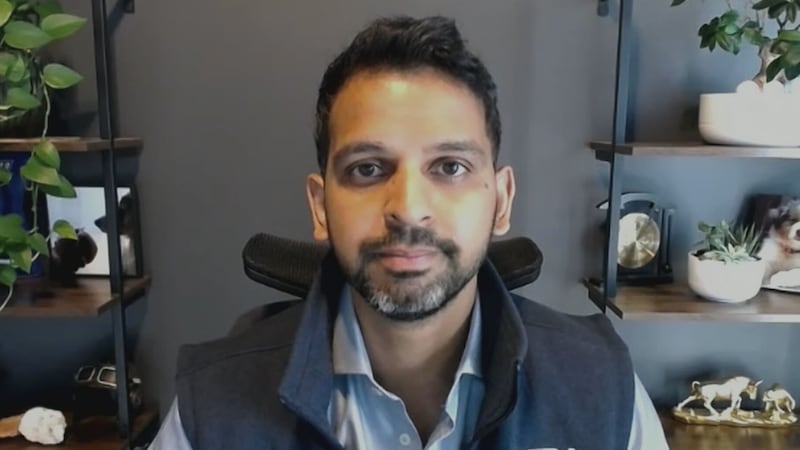
Read the full transcript below:
ROGER: Target is in focus after posting first-quarter results that topped expectations, with the retailer reporting its best comparable sales growth in four years. The company also raised its full-year sales outlook as it pushes a new turnaround strategy. Joining us now to discuss it is Arun Sundaram, senior vice-president at CFRA Research. Thank you very much for joining us. Can we say Target is back?
ARUN: I think it’s too early to declare victory, but yeah, clearly the turnaround is progressing well for Target. Solid top-line growth this quarter, also very solid bottom-line growth this quarter. You saw margins expand as well, but let’s see if they can replicate this, because Target has had good quarters in the past. One issue with them is that there’s been some execution issues, so let’s see if they can replicate this quarter going forward.
NATE: Arun, what are some of the reasons why Target seems to be in the early innings of a phased turnaround? Are you seeing evidence that some of the new strategy efforts they’re working on are actually starting to flow through to these earnings?
ARUN: Yeah, I think it’s early stages, but right now Target is really trying to establish its merchandising authority. Over the last three or four years, it’s safe to say that Target probably underinvested in its business. They kind of lost that Target magic they were known for in the past, but now they’re trying to introduce more new products into their stores. They’re refreshing some of their assortment, even in food and beverage. They’re trying to introduce more private-label newer products.
In areas like apparel, they’re now really trying to focus on women’s apparel because that’s a key category for them. They’re trying to increase the assortment in areas like denim, women’s tanks and tees, things like that, and I think that’s showing up early in these results.
But again, I think there’s a long way to go before Target returns to its historical standard, because if you look at their margins today, Target’s operating margin this quarter was about 4.5 per cent. That was up 80 basis points from last year, but historically Target’s operating margins used to be around six to seven per cent. There’s still a ways to go before Target returns to its historical financial profile, but again, I think Q1 results show that the turnaround is progressing well.
ROGER: And is that ambitious, or is it manageable?
ARUN: I think it is manageable, because the difference between Target and some of its retail peers is that Target sells a lot more discretionary items in its stores, which can be very cyclical, but a lot of these discretionary items carry higher margins, especially categories like home and apparel. They carry higher margins than selling groceries, for example.
So I think over time we will see Target’s margins expand, and then I think probably most importantly, Target is also growing some of these alternative revenue streams, things like advertising revenue. They also have subscription revenue with their membership model called Target Circle 360. They also have a third-party marketplace where they introduce more third-party sellers. These are high-margin revenue streams, especially advertising.
If these alternative revenue streams continue to grow — this quarter, their alternative revenue business grew about 25 per cent year over year — that’s good for overall margins as well. So I think over time we could see Target go back to that historical six to seven per cent margin, but it’ll take quarters or years before that happens. It won’t happen overnight.
NATE: And you mentioned margins. The retail space can be very brutal because the margins are just so slim in general. Do you think Target has the potential to hit the right balance between the haves and the have-nots in the consumer market? Right now, we all talk about how the consumer is under stress, and yet discretionary spending is kind of their focus, which tends to be the thing that people give up first when they have to sacrifice something. Are they hitting that balance between having the necessities to get people in the door while still trying to sell that discretionary aspect?
ARUN: Yeah, you’re right. Target is clearly more of a discretionary retailer than some of its peers, like Walmart. That’s one of the reasons why Target has been trying to focus on increasing its exposure to everyday essentials and food and beverage, because that’s the traffic driver.
Many people don’t go into a Target store necessarily to buy groceries. They go in there to buy some discretionary item, and then they might supplement that purchase with some groceries, whereas the average Walmart shopper is probably going into that store to buy groceries and then thinking, “Hey, maybe I buy some clothes or some other discretionary items.”
So there are differences in shopping habits between Target and Walmart, for example, but right now Target is really trying to increase its exposure to food and beverage and everyday essentials. In Target stores, they’re trying to expand the amount of selling space for food and beverage items because that’s the traffic driver, and I think that’s showing early results this quarter.
But let’s see if that can continue, because Target is also remodeling a lot of its stores as part of this new strategy. It takes a lot of effort to revamp these stores for this strategy. Like I said, it’s early days in this turnaround, but it’s going to take quarters and years before I think we can declare victory.
ROGER: And the new CEO, what kind of an impact is he having?
ARUN: Yeah, so far it’s been pretty good. Not just the CEO, but much of their executive team is brand new. They have a new merchandising officer. Yesterday, they also announced a new supply chain officer, which I think is a big hire because this individual is coming from Walmart and spent about 17 or 18 years there.
I think that’s a good sign because historically, Target’s supply chain has also been an area of weakness. They want to introduce new products into their stores, but if you have a weak supply chain and it’s taking too long to get these products into stores, that’s no good. So I think improving the supply chain will help various aspects of their business as well.
Again, they have a new management team and it’s early days in the turnaround. The stock has also done pretty well over the last year. I think there’s more investor optimism around Target today than there was a year ago. The stock is also trading at higher multiples than it was about a year ago, and again, there’s a lot of optimism around this turnaround strategy.
But turnarounds are often not linear. It takes time, and there could be some hiccups along the way. Target is more of a discretionary retailer, and there could have been some one-off items that helped their business this past quarter, like higher tax refunds, for example.
Right now, consumer sentiment is near an all-time low in the United States, so I think there’s still a lot of risk remaining for the rest of the year, but obviously Q1 was a solid start.
ROGER: Okay, we have to wrap it up there. Arun, thank you very much for joining us.
ARUN: Thank you.
ROGER: Arun Sundaram, senior vice-president at CFRA Research.
---
This BNN Bloomberg summary and transcript of the May 20, 2026 interview with Arun Sundaram are published with the assistance of AI. Original research, interview questions and added context was created by BNN Bloomberg journalists. An editor also reviewed this material before it was published to ensure its accuracy and adherence with BNN Bloomberg editorial policies and standards.

