Lightspeed Commerce shares fell after the company issued weaker-than-expected first-quarter guidance despite reporting fourth-quarter revenue that topped analyst estimates. The company highlighted accelerating growth in its core retail and hospitality operations as part of its multi-year transformation strategy.
BNN Bloomberg spoke with Dax Dasilva, CEO and founder of Lightspeed Commerce, about the company’s growth engines, competitive positioning in retail and hospitality, consumer spending trends and how artificial intelligence is shaping product development and merchant workflows.
Key Takeaways
- Lightspeed reported fourth-quarter revenue of $290.8 million, beating analyst expectations as transaction revenue rose 17 per cent year over year.
- The company said its core retail and European hospitality businesses generated 24 per cent growth and now account for most of its revenue following the Upserve divestiture.
- Management said customer location growth reached 11 per cent during fiscal 2026, while gross transaction volume growth also accelerated.
- Lightspeed said its AI investments are focused on automating complex merchant workflows, improving productivity and enhancing inventory and purchasing tools.
- Executives said consumer spending trends remained constructive across key retail categories and European hospitality markets during the fiscal year.
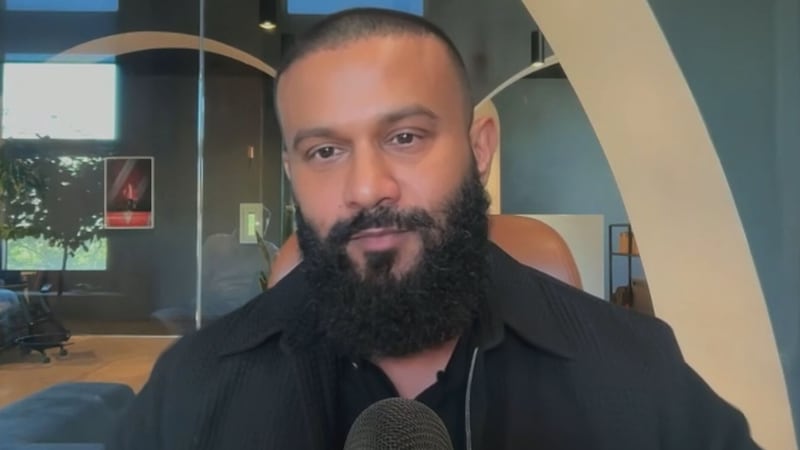
Read the full transcript below:
ROGER: Shares of Lightspeed are under pressure this morning after the ecommerce and point-of-sale company posted its quarterly results. Joining us now is Dax Dasilva, CEO and founder of Lightspeed. Dax, thanks very much for joining us.
DAX: Thanks for having me.
ROGER: You had a net loss of $28.6 million compared to last year, which was $575 million, but that included the goodwill impairment charge of $556 million, so a little more than last year. If you take away that big impairment charge, what are some of the reasons behind it?
DAX: Yeah, I mean, as a company, we’re looking at adjusted free cash flow for the year. We generated $18 million and $73 million in adjusted EBITDA, so we have some depreciation of formerly acquired assets that contributed to the net loss, and that should conclude at the end of this quarter. Looking at the year, we just finished our first fiscal year. We’re really, really excited about the results after that full year of transformation. We have a three-year transformation plan, so ending the year at $1.2 billion of revenue, crossing that threshold, as well as generating free cash flow. Location growth grew 11 per cent. That’s a high-water mark from five per cent in the first quarter of the fiscal year.
ROGER: So revenue grew 15 per cent year over year. With what you were just saying, how do you see that continuing? What’s going to drive it?
DAX: Yeah, so we’ve been doubling down on our true growth engines as a part of our transformation. That’s retail in North America and European hospitality. We grew in those two growth engines, which now post-divestment — we divested an asset called Upserve, which was U.S. hospitality, a non-core asset — and now those growth engines in fiscal 2026 make up 75 per cent of our business. They’ll trend to 80 per cent. In those growth engines, we grew 24 per cent, so really top-tier growth. The location growth is coming from those markets. That’s also an 11 per cent growth in GTV, that’s all the transaction volume, so that sets up the company to really win those markets where we have the right to win, where we have great product-market fit. We serve complex retail verticals in North America, and we’re the leader in full-service restaurants across Europe.
ROGER: What kind of competition are you facing in those two sectors? What gives you that confidence that you can grow those numbers?
DAX: European hospitality is very fragmented. It’s country by country. We’re the only pan-European solution, so if you’re opening a restaurant chain or switching from a legacy system, Lightspeed is the solution. We just closed a very popular chain in Europe called Gaucho. It’s an Argentinian steakhouse across the continent, but primarily in the U.K.
In North America retail, we’re very strong in our key verticals: sport and outdoor, which includes bike and golf, and running, ski shops, multi-brand apparel, jewelry, home and garden, because we integrate with the brands, we integrate with the suppliers in those key verticals. So we go beyond point of sale. We integrate with their key vendors and give them workflows that nobody else can offer.
Now with AI, we’re building agents that take on a lot of the challenges of those complex, tedious and labour-intensive workflows that are extremely time-consuming and human-intensive, offering agents that can give those folks doing that critical buying piece options for assortment negotiation. All of these elements are being built out, and we’ve got a rapid development velocity and pace of delivery. I’m excited about how that’s trending for the company.
ROGER: On software, your subscription revenue grew only 6.2 per cent, below your medium- to long-term targets, and your SaaS RPU decelerated as well. What’s happening there?
DAX: So we are lapping price increases from earlier in the year. Growth engines for the year grew 15 per cent, so in our non-core markets we’re cross-selling and upselling less than we are in our growth engines, where we’ve got much richer product suites. So we’re seeing a lot of vitality in the growth engines, which, as I said, in fiscal 2027 will make up 80 per cent of our revenue.
ROGER: And just bigger picture, a lot of what you do is connected to consumer spending. Any concerns about that slowing down?
DAX: We’ve had a very constructive macro environment for Lightspeed and its merchants and the consumers that buy generally high-value inventory this whole fiscal year, so that’s been positive. We see same-store sales in our key verticals, like golf, bike, home and garden. Some of those supplies were heavily purchased during the pandemic, so we’ve seen muted sales in the interim years, but now we’re seeing a lot of new purchases in those verticals, and we’re very heavily penetrated in those verticals, so that’s been constructive for the company as well.
And, of course, in European hospitality, they’ve had very strong seasons. I think tourism in Europe is widely regarded as very strong.
ROGER: Okay, Dax, we have to wrap it up there. Thank you very much for joining us.
DAX: Thank you.
ROGER: Dax Dasilva, CEO and founder of Lightspeed Commerce.
---
This BNN Bloomberg summary and transcript of the May 21, 2026 interview with Dax Dasilva are published with the assistance of AI. Original research, interview questions and added context was created by BNN Bloomberg journalists. An editor also reviewed this material before it was published to ensure its accuracy and adherence with BNN Bloomberg editorial policies and standards.

