Salesforce shares are under pressure after the software giant issued a softer-than-expected outlook, reinforcing investor concerns about how artificial intelligence could reshape the software industry. While the company highlighted growing momentum for its Agentforce AI platform, investors remain cautious about whether the technology can deliver meaningful long-term growth.
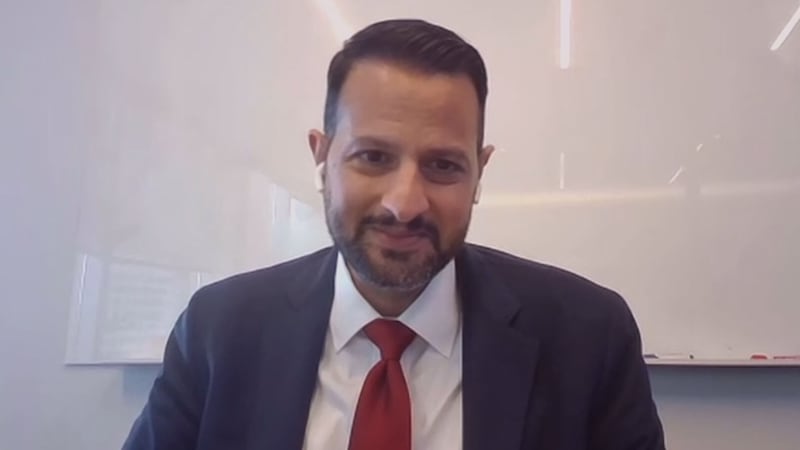
BNN Bloomberg spoke with Rishi Jaluria, managing director, software at RBC Capital Markets, about Salesforce’s latest earnings, the adoption of Agentforce and why investors remain in “wait-and-see” mode despite signs of accelerating AI demand.
Key Takeaways
- Investors remain cautious about whether AI tools such as Agentforce can drive sustainable long-term growth for software companies.
- Salesforce reiterated confidence in accelerating revenue growth in the second half of the year despite softer near-term guidance.
- Questions persist about whether growth from AI products could cannibalize Salesforce’s core software business.
- Analysts say enterprises may still favour established vendors such as Salesforce for AI adoption because of security and governance concerns.
- Some investors view Salesforce’s stock valuation as increasingly attractive after the shares fell more than 30 per cent this year.
Read the full transcript below:
MATT: Well, shares of Salesforce are seeing some pressure this morning after the company gave a lukewarm outlook that continued to fuel investors’ worries that AI will disrupt the software industry. The decline in the stock seen today adds to Salesforce’s plunge of more than 30 per cent since the start of the year. Here to tell us more is Rishi Jaluria, managing director of software at RBC Capital Markets. Rishi, thanks for being here.
RISHI: Thanks so much for having me.
MATT: As we get into it, Salesforce’s revenue outlook fell slightly short of analyst expectations. Take me through some of the reaction that we are seeing as a result of what we saw.
RISHI: Yeah, absolutely. And look, I mean, now the stock’s reversed course a little bit, so it’s up about two per cent this morning after being down in the aftermarket. And look, I would say generally the reaction is that a lot of investors are still in wait-and-see mode because, as you correctly kicked things off, we’re dealing with these existential fears around what AI means for software, and especially application software. We can get into the puts and takes of that debate, and while I think Salesforce had what I would say was a pretty good quarter — things were generally in line with what people expected to see — you saw really good momentum out of Agentforce. They reiterated their confidence in accelerating growth in the back half of the year and sticking to their long-term targets, which call for durable acceleration.
All those pieces are there, but I think a lot of investors are still in “I’ll believe it when I see it” sort of mode, especially given all the headlines we keep hearing with Anthropic, with OpenAI, with AI natives and what’s happening out there. So I think that’s why maybe the stock reaction is still muted, even if it’s more in the upward direction today. But if they can put up a few more quarters like this and actually deliver on what they’re saying, we might be having a different conversation six months from now.
MATT: And that’s the case. Let’s get into that a little bit more too. You touched on Agentforce as well, right? Some of the expectations are that it may be on track to contribute $1.2 billion of revenue. How significant is that? And could that be — assuming it does follow through, because we know there have been some issues with it?
RISHI: Yeah, look, I think it can be significant. Now, I think the question starts to become how much of that is cannibalizing the core, which candidly is the right decision. I think every company needs to do that, but there are going to be questions around that.
Ultimately, if this big growth in Agentforce leads to overall acceleration and growth at the company, it’s really hard to argue that it’s an AI loser. If they’re actually accelerating growth, not decelerating it, then they kind of have to work through the puts and takes of that and think about whether they can accelerate overall organic growth.
I’m still on the sidelines on this because I’m also in wait-and-see mode. But again, if Agentforce gets big enough that it becomes a needle mover on overall growth, that could be another factor that helps drive that acceleration and ultimately position Salesforce better for the next decade than it may be today.
MATT: Yeah, and can it do that, Rishi? Bloomberg reported just last week, and we talked about what is realistic — what their marketing says Agentforce can do and what it could be — but in actuality, when it comes to practical applications in pharmacies or otherwise, it’s not actually doing what the company says it’s doing yet in practice. So when you have that discrepancy, how tentative are you about that growth for it?
RISHI: Yeah, and I think you hit on one of my concerns, which is there’s the promise of Agentforce and there’s where it is today. That’s not to say that gap can’t narrow over time, and I think it fundamentally will, but I think we need to get there.
If we take a step back, though, what maybe starts to become a lot more important is, number one, are enterprises willing to use, adopt and pay for Agentforce if the technology gets meaningfully better? I think the answer to that can absolutely be yes, especially because Salesforce is already a trusted vendor within all these organizations.
If they want to use Agentforce, they don’t need major permissions to do that. If they want to go build their own custom agents using Anthropic, OpenAI, Replit and Lovable, that creates a whole security and governance nightmare. The answer to that is going to be absolutely not. So I think the technology needs to continue to improve. I’ve gotten the sense that Agentforce has gotten better over the past year, but there’s still a lot more work to be done.
MATT: So your target for Salesforce is $210 a share, right? We’re talking about roughly $40 a share higher. Is it mostly the growth of Agentforce that you like for that, or is there something else here that Salesforce can continue to improve upon for that growth?
RISHI: Yeah, look, I think the answer to that is two things. Number one, there is that potential for acceleration of growth with Agentforce, and maybe even just refocusing on the core, which we’ve seen them do.
But I think the second thing is the stock has pulled back to a point where it is actually, I think, unreasonably cheap. Even a year ago, someone would have called me a Salesforce skeptic. Now I’m in the camp where I actually have to say the stock is meaningfully cheaper than where I think fair value is.
I do think there are other opportunities in software that might be more attractive, and I’ve been steering investors in that direction. But when I see Salesforce trading at 10 or 11 times cash flow, it’s hard for me to say the stock should be trading lower than where it is today.
MATT: Okay, before I let you go, give us a sense of where you’re steering others to, if I can ask you about that. As we talk about this in software, at least for right now, maybe a couple of options.
RISHI: Yeah, absolutely. Look, the number one name I’m steering people to is Microsoft. I think the innovation they’re really starting to bring to Microsoft 365 Copilot is underappreciated, and we’re starting to see those early signs of momentum there. I think they’re making the right strategic moves for the long term, so I think they’re going to end up in a good position out of this.
One of the Salesforce competitors that’s more in the small- and medium-business space is HubSpot. I think that could be a long-term beneficiary of AI.
And then one name that I like a lot here is MongoDB, the next-generation database company. They report tonight. It’s one that I think has become the de facto platform for the development of new AI applications, especially those leveraging unstructured data. I think these are three names that I really like here and that are well-positioned for the next five to 10 years.
MATT: Okay, we’ll check in with you later once they actually report. No, I’m just kidding. Rishi Jaluria, managing director of software at RBC Capital Markets. Appreciate your time today, sir. Thanks for this.
---
This BNN Bloomberg summary and transcript of the May 28, 2026 interview with Rishi Jaluria are published with the assistance of AI. Original research, interview questions and added context was created by BNN Bloomberg journalists. An editor also reviewed this material before it was published to ensure its accuracy and adherence with BNN Bloomberg editorial policies and standards.

