Canada could be on the verge of its largest public market debut in years as Apotex seeks to raise up to $1.15 billion through an initial public offering. The proposed listing is drawing attention as investors look for signs of renewed activity in Canada’s IPO market after several years of limited large-scale offerings.
BNN Bloomberg spoke with Jay Bala, CEO and senior portfolio manager at AIP Asset Management, who said a successful Apotex listing would be a positive signal for Canadian capital markets and could help attract both domestic and international investment.
Key Takeaways
- A successful Apotex IPO could signal improving conditions for Canadian capital markets after a prolonged slowdown in large public listings.
- Future IPO performance and eventual index inclusion may be as important as the initial fundraising results in determining long-term investor demand.
- Large listings such as SpaceX, Anthropic and OpenAI could drive significant passive investment flows as they are added to major market indexes.
- Investors are increasingly focused on private markets as companies remain private longer and create more value before going public.
- Expanding retail access to pre-IPO investments reflects the growing convergence between public and private markets.
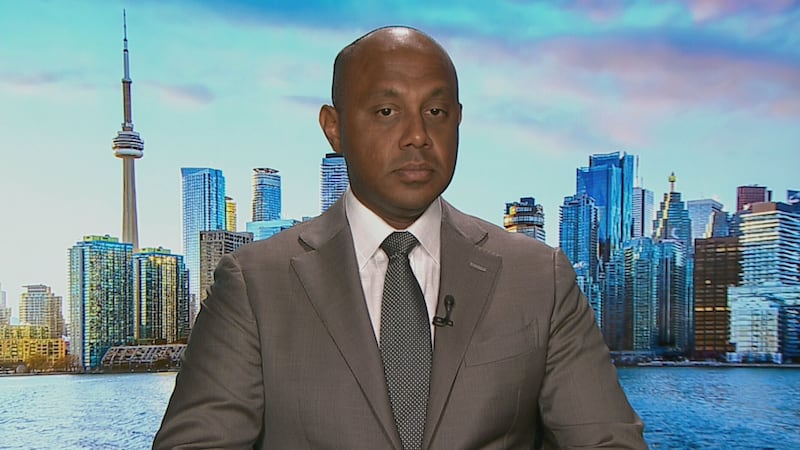
Read the full transcript below:
LINDSAY: Canadian drug maker Apotex is looking to raise as much as $1.1 billion in an IPO, marking the largest public market debut in Canada since 2021. Our next guest says a successful listing could help attract both domestic and international capital to Canada. Let’s get more now from Jay Bala, CEO and senior portfolio manager at AIP Asset Management. It’s great to have you join us. Good morning.
JAY: Good morning. Thanks for having me on.
LINDSAY: Why is Apotex choosing now to go public, do you think?
JAY: Yeah, I think a lot of it is being driven by the U.S. market. You’ve seen these blockbuster, monster-sized IPOs popping up in the U.S. SpaceX is supposed to go public in the next few weeks. Both Anthropic and OpenAI are also expected to go public, probably around the first quarter. I think the news came out yesterday that Anthropic had confidentially filed its S-1. The timing is right from a Canadian context. It’s great to see Canada participating as well, and our IPO drought that we’ve had for many years might finally be coming to an end. I see the Apotex IPO as a positive sign that there are green shoots popping up again.
LINDSAY: You have said a successful listing could help attract both domestic and international capital. What would a successful listing look like to you?
JAY: I think there has to be significant uptake in the capital raise and, obviously, the stock has to perform well over the next few quarters after it goes public. Ultimately, everything comes back to whether it will have good revenue and earnings growth and whether it will have the ability to join an index in the future.
LINDSAY: On the flip side, what are the risks if the Apotex IPO falls short of expectations?
JAY: Obviously, if they go out and do the roadshow and they’re not able to raise the capital, it’s a telltale sign that maybe the Canadian economy and regulatory system have to adapt a little bit to make the environment more competitive compared with the U.S.
LINDSAY: We’ve been talking a lot about some of the big IPOs coming up in the U.S. Anthropic just filed for an IPO. Would there be any significance to Anthropic beating OpenAI to an IPO?
JAY: I don’t know if there’s a particular issue there. At the end of the day, if you look at the three biggest pure-play AI companies right now, you’ve got SpaceX with Grok and xAI expected to go public soon, and then you’ve got Anthropic and OpenAI. Those are the big three behemoths. They’re the three that are going to be in that trillion-dollar range. I don’t know that it matters if one comes a few weeks before the other. What is clear is that there’s a very healthy IPO market in the U.S. We’re effectively living through history at this point. These are going to be some of the biggest IPOs ever.
LINDSAY: You say the real story is what happens after these companies go public. What exactly will you be watching for?
JAY: I think the key is that if people are looking at these companies only on a valuation basis, they’re missing part of the story. Over the past few decades, we’ve done a very good job of transforming the stock market from actively managed to passively managed through ETFs. These ETFs have become so large that they now influence valuations.
For something like SpaceX, which could go public in the next few weeks, the Nasdaq has already said it will fast-track its admission to the index. That means a 15-day window instead of 12 months. The index arbitrage strategy is becoming more relevant because, in the broader context, there are trillions of dollars in ETFs tracking the Nasdaq 100. Regardless of what company goes in, those funds have to buy it.
Even if SpaceX were to receive a one per cent allocation in the Nasdaq 100, that could translate into billions of dollars of forced buying once it’s added to the index. Money has to come out of the company that gets removed and flow into the company that gets added.
LINDSAY: With that in mind, and with index inclusion rules changing for some major U.S. indexes, should investors take a more passive approach or change their investment strategy?
JAY: I think you have to recognize the convergence between private and public markets. You need exposure to both and understand where each belongs in a portfolio. Owning an ETF as a passive instrument has a place in a portfolio, but if you don’t want to miss out on value creation, you need some allocation to private markets. You need to own some of these companies before they go public.
If you look at a company like SpaceX, people are talking about a valuation of $1.7 trillion to $2 trillion. Most of that value was created while it was private. Investors coming in after the IPO have already missed that massive run. What they’re getting afterward are the secondary effects of index inclusion.
LINDSAY: You mentioned owning companies before they go public. Wealthsimple has launched a new feature offering retail investors pre-IPO access. How significant is that change?
JAY: I think that’s been a growing trend for many years. We’re seeing the convergence of private and public markets, and I think that’s a good thing. Retail investors want the opportunity to participate in some of these IPOs. High-net-worth investors and institutions have had access to pre-IPO investments for a long time. A lot of retail investors are asking why institutions and wealthy investors get access to these opportunities while they don’t. There’s been a real push for broader access, and a number of companies are now offering it.
LINDSAY: What does that shift mean for retail investors compared with institutional investors?
JAY: It gives retail investors the opportunity to participate in some way. You still have to be an accredited investor or an institution to invest in many of these companies years before they go public. But I think this is the beginning of the door opening for regular retail investors to participate at least at the IPO stage before trading begins.
LINDSAY: Interesting stuff. We’ll leave it there. Jay Bala, CEO and senior portfolio manager at AIP Asset Management. Thanks so much for joining us.
JAY: No problem. Thank you.
---
This BNN Bloomberg summary and transcript of the June 2, 2026 interview with Jay Bala are published with the assistance of AI. Original research, interview questions and added context was created by BNN Bloomberg journalists. An editor also reviewed this material before it was published to ensure its accuracy and adherence with BNN Bloomberg editorial policies and standards.

