SpaceX shares have retreated after a strong start following the company’s public debut, but some investors argue the more important story is the demand that could emerge from passive funds, ETFs and benchmark indexes in the months ahead.
BNN Bloomberg spoke with Jay Bala, CEO and senior portfolio manager at AIP Asset Management, who said SpaceX’s next phase may be shaped more by index inclusion and capital flows than by traditional valuation metrics, while also discussing implications for future IPOs and the broader AI trade.
Key Takeaways
- SpaceX’s recent pullback may reflect normal post-IPO trading activity, with investors shifting focus toward potential demand from index inclusion and passive funds.
- Nasdaq-100 inclusion could generate significant buying pressure as index-tracking funds purchase shares to match benchmark weightings.
- Single-stock and leveraged ETFs may create additional demand for SpaceX shares and reduce available supply in the public float.
- SpaceX’s successful debut could encourage other large private companies, including OpenAI and Anthropic, to pursue public listings.
- While Jay Bala remains constructive on AI-related investments, he expects increased volatility and the potential for a broader market pullback during the summer months.
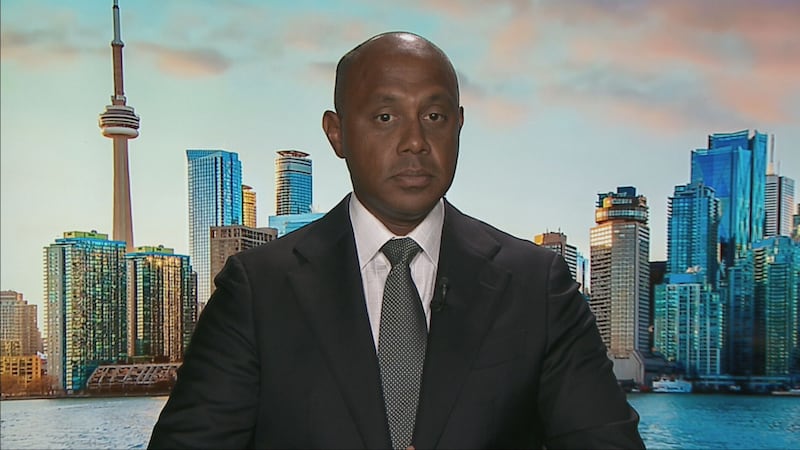
Read the full transcript below:
ROGER: Well, SpaceX is heading for its fourth day of losses amid a global selloff in tech stocks. The declines are set to push the company below its US$2 trillion valuation. Let’s get more from Jay Bala, CEO and senior portfolio manager at AIP Asset Management. Jay, thanks, as always, for joining us.
JAY: Hey, thanks for having me on.
ROGER: Okay, were we expecting this? Is this a natural progression for SpaceX?
JAY: I think so. I mean, look, the IPO price was $135 a share. No matter how you look at it, it’s been an incredible success story. They’ve raised $85 billion in their equity raise, which is effectively the single-largest equity raise in history, and they did it at a $1.7 trillion valuation.
People who bought into the IPO round are still doing well. People who came in during the pre-IPO rounds — some got shares at $50 a share, some at $100 a share — have also done incredibly well. So you have to bifurcate SpaceX into those two categories.
These are still the first few days of trading, and we’ve always said the bigger catalysts are likely to come 30, 60 and 90 days out, once the stock stabilizes and begins to be added to indexes, particularly the Nasdaq. The Nasdaq has already said SpaceX would become eligible for inclusion 15 days after its IPO.
Once that happens, you’re going to see a huge wave of buying power come into the market. So I would consider this pullback a great buying opportunity for people who weren’t involved in the original IPO. We still see an incredible success story for this company.
ROGER: Could anything change that Nasdaq invitation at this point?
JAY: We’re not seeing any particular reason why they would change it.
ROGER: It’s still holding strong. What are you going to be looking for over the next six months with SpaceX?
JAY: For the first six months, we’ve always said it’s more about mechanical flows than underlying valuations. Over the next six months, we’re looking at that index-arbitrage opportunity. How many indexes are you going to get added to? What’s your weighting going to be? How much passive buying pressure does that create?
One of the other things that has popped up recently is the emergence of single-stock ETFs, where firms offer leveraged exposure or option-based strategies tied to the stock. We’ll have to see how much capital flows into products like that, because that would also help drive the share price higher.
ROGER: How many indexes do you think it could be added to, and what kind of pressure would that put on the stock?
JAY: If you look at the Nasdaq in totality, it’s 100 stocks. The Nasdaq-100 has about $5 trillion in ETFs tracking that index. SpaceX, at close to a $2 trillion valuation, would likely fall into that top-tier category.
Let’s be conservative and assume it gets a one per cent weighting. One per cent of $5 trillion is $50 billion worth of buying pressure that would eventually enter the market once it’s added.
Historically, it takes about 60 days for ETFs to absorb a new stock. What we’ve seen is that a stock often experiences a 60-day run as those purchases occur. That’s what we’ll be watching going forward.
The other factor is seasonality. We’re entering the summer doldrums. There’s always that old saying, “sell in May and go away.” We’ll see how trading activity develops. If volumes come down during the summer, you’re likely to see elevated levels of volatility.
ROGER: It’s also SpaceX, though. You said about 60 days. SpaceX has been tearing up a lot of the rules. Could it tear up that rule as well?
JAY: It could. It’s very well anticipated, and it’s possible some ETFs have already taken stronger positions because of that expectation. But historically, when we’ve looked at many stocks, it usually takes 30 to 90 days for a company to become fully integrated into the ETF system. I don’t think that’s going to fundamentally change all that much.
ROGER: And then, of course, there are the other big names. We’re talking about OpenAI and Anthropic, whose IPOs may be coming up. Now that SpaceX is public, what kind of impact do you think that will have?
JAY: I think it’s a very bullish sign. If those companies decide to go public, it would likely happen after the summer, perhaps in the first quarter. By then, any correction we see over the next few months would likely have run its course.
SpaceX has proven the base case. The model is to grow as quickly as possible, raise capital in the private markets, build a company worth hundreds of billions of dollars, and then go public. Once you’re public, you’re eligible for inclusion in indexes, which ETFs can then track, creating a stable flow of capital.
I think SpaceX has been the moment everybody has been waiting for before the floodgates open for the IPO market.
ROGER: All right. Bigger picture, how is the market looking to you?
JAY: At this point, I think the underlying fundamentals are still very strong, and I think AI is here to stay. I think it’s as impactful as the Industrial Revolution for society, and I think it’s going to be with us for many years to come.
In the shorter term, though, we are heading into summer. It’s June, and I think you could see a correction. The Nasdaq, for example, has risen about 20 per cent over the past three months. I wouldn’t be surprised to see some pullback over the next few months, and I think those would be attractive entry points for investors.
ROGER: Okay, we’ve got to wrap it up there, Jay. Thanks, as always, for joining us.
JAY: Absolutely. Thanks for having me on.
ROGER: Jay Bala, CEO and senior portfolio manager at AIP Asset Management.
---
This BNN Bloomberg summary and transcript of the June 23, 2026 interview with Jay Bala are published with the assistance of AI. Original research, interview questions and added context was created by BNN Bloomberg journalists. An editor also reviewed this material before it was published to ensure its accuracy and adherence with BNN Bloomberg editorial policies and standards.

