Micron shares surged after the memory chip maker delivered stronger-than-expected results and guidance, reinforcing confidence that demand for AI infrastructure remains robust despite recent volatility in technology stocks.
BNN Bloomberg spoke with Alexander MacDonald, portfolio manager at Focus Wealth Management, about what Micron’s earnings reveal about the durability of AI spending, why investors are focusing on long-term demand and where he sees value beyond semiconductor stocks.
Key Takeaways
- Micron’s stronger-than-expected earnings and guidance reinforced expectations that AI-driven demand for memory chips remains exceptionally strong.
- Investors focused on Micron’s growing number of long-term customer agreements as evidence that elevated demand could continue for several years.
- The key question for semiconductor investors has shifted from peak earnings to how long supply shortages and pricing strength can persist.
- While AI-related companies dominate major stock indexes, investors should also consider businesses that benefit indirectly from AI infrastructure spending.
- WSP Global could benefit from growing demand for power infrastructure and Canadian infrastructure investment despite concerns AI may disrupt engineering work.
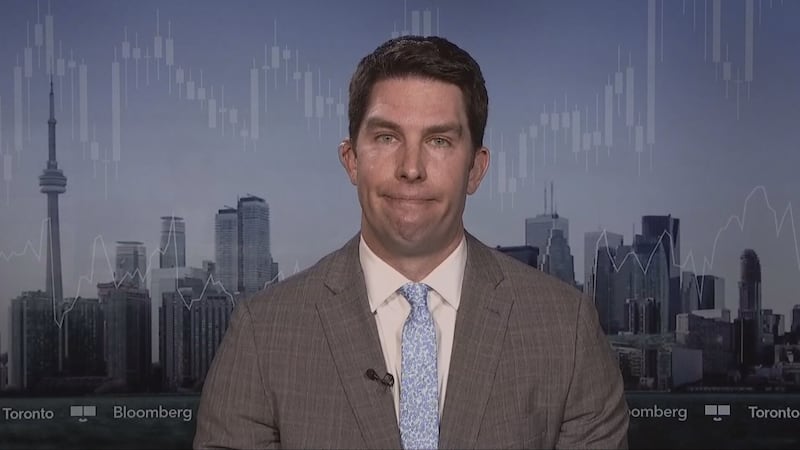
Read the full transcript below:
LINDSAY: Micron is soaring today in the premarket after the U.S.’s largest maker of computer memory chips posted a quarterly sales forecast that crushed Wall Street’s expectations. Joining us now is Alexander MacDonald, portfolio manager at Focus Wealth Management, to break down what we’ve heard. It’s great to have you join us. Good morning.
ALEXANDER: Morning, Lindsay.
LINDSAY: So, I guess first of all, what are some of your key takeaways from Micron’s recent earnings?
ALEXANDER: Yeah, Micron has had an undue influence on the market so far this year. I think it’s responsible for about 20 per cent of the S&P 500’s move, so that’s why, when you reference the futures, you’re seeing broader markets move as much as they are on the back of Micron’s reporting here.
If we get into the nitty-gritty of what Micron does, just to backtrack, it makes memory for computers. It has two main types. It has DRAM memory, which is faster memory, but it only works when electricity is being supplied to a computer. Then there’s NAND memory, which has higher capacity and is a little slower, but it works without an electricity supply going into the computer.
It’s that DRAM that has been in very high demand from the hyperscalers, the AI firms that are ramping up very, very quickly. More specifically, a type of DRAM called HBM, or high-bandwidth memory, has been in very high demand among these hyperscalers.
It takes a longer time to ramp up production of memory and, as a result, the few companies that produce it — Micron, SK Hynix and Samsung in Korea — have been disproportionately benefiting from it.
People knew this going into Micron’s quarter. They knew business had been good, and Micron showed that with its quarterly results. Revenue beat by 16 per cent. Gross margin came in at 85 per cent versus 83 per cent expected and, as you mentioned earlier, the company also increased its outlook for the fourth quarter.
It’s interesting to see what actually drove that outperformance. The physical shipments, or volume of memory sold by Micron, were only up low- to mid-single digits in the quarter. But pricing was up anywhere from 60 to 90 per cent in the quarter. That’s not year-over-year increases — that’s quarter-over-quarter sequential increases.
So there is just astronomical demand for the types of products Micron sells, and that’s what we saw in its quarterly results.
Now, the market, as I said, sort of knew that was going to be the case coming into it. What investors were more focused on was the duration of how strong this business is going to be. Historically, the memory business has been very cyclical, working in roughly a four-year cycle.
Now everybody is wondering how long this is going to last. Is this time different? Is this going to continue for a number of years?
What Micron said as part of its quarterly results is that it has signed a number of new long-term agreements with customers, which suggests there are legs to this part of the cycle. In the previous quarter, Micron announced one long-term agreement with a customer to sell memory. This quarter, it announced 16. That’s a significant increase from what we saw previously. Investors were really looking for some indication that this run in memory sales had legs, and that’s really what they’ve latched onto.
LINDSAY: Yeah, 16 strategic customer agreements averaging three years in length. We know chip stocks were selling off earlier this week. What do you think Micron’s results tell us about the chip industry in general and the confidence that seems to be flowing back into the markets?
ALEXANDER: Yeah, Micron is interesting because if you look at how sales have ramped up, it’s like a hockey stick. It’s hard to tell whether that’s going to continue, and you can see that reflected in the valuation.
If you look at the stock on a forward earnings multiple, it’s only trading at about 10 times earnings, which isn’t much for a company with Micron’s potential growth profile.
But, getting back to what I said previously, people aren’t sure whether that growth is going to last or whether this will simply repeat the previous four-year cycles we’ve seen in memory stocks.
Looking over the longer term, the big question is whether this AI rally has legs. Are the hyperscalers going to continue pouring capital into GPUs, data centres and memory like they have previously? And are the memory companies going to be the primary beneficiaries?
As I mentioned earlier, prices have skyrocketed for memory products. They say the cure for high prices is high prices. You’re likely going to see Micron — which has already announced it — and its competitors build more capacity to increase the supply of memory they can sell to hyperscalers.
Micron said it doesn’t expect supply to catch up with demand until about 2028. That’s the timeline investors are really focused on. How much longer does this memory crunch last, and when it eases, what does that mean for pricing?
LINDSAY: Okay, so lots to watch from Micron. I wanted to get to your top pick for today, which is WSP Global. It’s down about 30 per cent since the start of the year. It’s one of your top picks, though. What do you think investors are getting wrong about WSP right now?
ALEXANDER: Yeah, so WSP, as you mentioned, is down a bit year to date. We bought it recently at Focus Wealth Management.
On the surface, it’s hard to tell how this relates to a company like Micron, but WSP is a pure-play engineering consulting firm based in Canada.
The bear case is that AI is going to replace some of the work engineers do, so either WSP will employ fewer engineers and have less work to do, or perhaps clients won’t need to come to WSP anymore.
Now, I am a professional engineer, so I’m a little biased. While people may trust AI to do things like write an email, I don’t think they’re going to trust AI to build a bridge.
I think it’s unlikely that the bear case comes to fruition and that WSP sees a significant amount of its business disappear because of AI.
Furthermore, I think AI can actually be a tailwind for the company. WSP is very active in the power sector and, of course, we know data centres are very power-hungry, so WSP can participate in that growth.
In addition, the federal government has discussed making infrastructure investments in Canada, and WSP can benefit from those projects.
Right now, you’re only paying about 14 times forward earnings, which is a trough multiple for the company over the past decade.
LINDSAY: Interesting. Okay, we’re going to have to leave it there. Alexander MacDonald, portfolio manager at Focus Wealth Management, really appreciate your time. Thanks for joining us this morning.
---
This BNN Bloomberg summary and transcript of the June 25, 2026 interview with Alexander MacDonald are published with the assistance of AI. Original research, interview questions and added context was created by BNN Bloomberg journalists. An editor also reviewed this material before it was published to ensure its accuracy and adherence with BNN Bloomberg editorial policies and standards.

