The artificial intelligence revolution is changing how businesses allocate capital and how investors assess corporate competitiveness. At the same time, evolving public listings and passive investment strategies are reshaping the financial landscape.
BNN Bloomberg spoke with Jay Bala, CEO and senior portfolio manager at AIP Asset Management, about the forces influencing corporate earnings, investment decisions and monetary policy.
Key Takeaways
- IBM’s profit and revenue miss reflected customers shifting capital spending toward AI hardware, exposing the company’s struggle to adapt quickly.
- Major upcoming public listings could continue supporting investment banking and trading revenue at large U.S. banks over the next several quarters.
- Strong demand for mega-cap IPOs could benefit companies including OpenAI, Anthropic, Databricks and Stripe if they pursue public listings.
- Investors should understand how ETFs, index inclusion and passive capital flows can influence newly listed stocks beyond their underlying fundamentals.
- The Bank of Canada is expected to hold interest rates steady, but deteriorating trade negotiations and a deep recession could prompt substantial cuts.
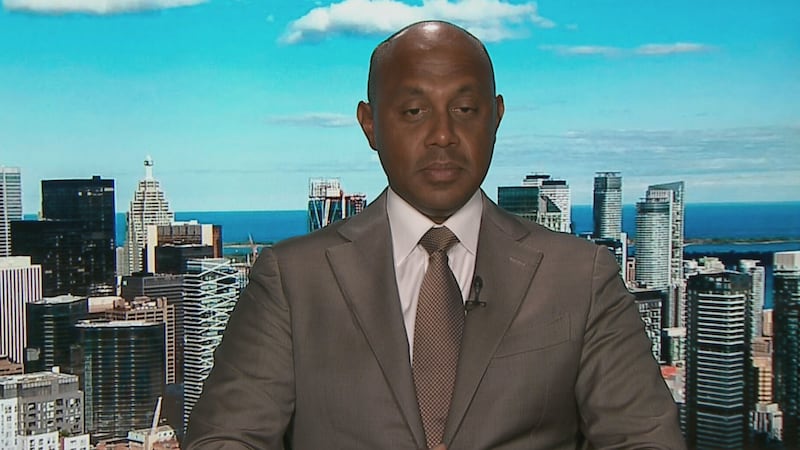
Read the full transcript below:
ROGER: Well, shares of IBM are down sharply today after the company’s profit and revenue fell well short of expectations. Here to tell us more, Jay Bala, CEO and senior portfolio manager at AIP Asset Management. Jay, thanks, as always, for joining us.
JAY: Hey, thanks for having me on.
ROGER: Okay, that’s a miss in a big way, isn’t it?
JAY: It is. I mean, it happens. And look, I mean, I think part of the IBM story, you know, I think people kind of sort of get lost in the weeds. And what, you know, what we have to do always is take a step back to understand, you know, what’s the broader theme here, right? You know, why is it that IBM did poorly while U.S., you know, larger U.S. banks are doing well, and why are some other stocks doing quite well as well? And the broader theme is, look, I mean, this is clearly an AI revolution, and this AI revolution, you know, if it hasn’t, you know, dawned on people yet, it’s about as significant as the Industrial Revolution. It’s going to change things, and there’s going to be winners and there’s going to be losers out of it. So, if you look at U.S. bank earnings today, those are up, and a huge driver of those earnings is these mega-cap IPOs, you know, SpaceX, companies like this, where they’re generating, you know, tons of investment banking revenue. But you’re also seeing it play out in companies, you know, like IBM, which are the losers of this effect, right? Because, you know, if you look at it, you know, a lot of that spending or that capex spending that was geared for IBM revenue from their customers, they’ve rejigged that to AI hardware, and IBM hasn’t kept up as fast. And their business model is probably more under attack from AI than probably most sectors. And so that’s why you’re seeing that, that, that huge change, that huge shift. And so, you know, I think it’s sort of a canary in the coal mines. I mean, I think people should look at IBM and say, “Okay, look, you know, is my business adapting fast enough to the new AI environment, or am I going to become the next IBM?” Right?
ROGER: Yeah, Arvind Krishna, the CEO, said he did not anticipate the magnitude of capex reprioritization — easy for me to say. How, as a CEO of that company, how can you not be ready for what? Especially now, it’s so turbulent.
JAY: I mean, and so it’s interesting. I mean, I think, you know, we look at big companies and we think, you know, everybody’s doing, you know, everything at the same, you know, speed, and that’s not really the case. You know, some people look at AI and, you know, there’s still industries out there that still look at AI as, you know, this could be a passing fad. You know, this could be, you know, maybe doesn’t grow as quickly as we anticipate. And, you know, clearly, you know, I think this, again, you know, should be a reminder to, you know, any sort of CEO of any company that, look, AI is here to stay. It’s going to revolutionize the way we do business, and, you know, if you’re not adapting to it, you know, you should probably quicken your pace, right?
ROGER: Now, is IBM too big to fail? Can they adjust? Can they, can they move with this?
JAY: I don’t think they’re too big to fail. I mean, I think IBM could go bankrupt like any other company. I mean, you know, they’re not, they’re not a trillion-dollar market-cap company. They’re not going to sink the economy in any way. And so, look, I mean, it’s really up to IBM to make that decision on, you know, can they adapt fast enough? And look, I mean, I think the coming quarters are going to be very telling of that, right?
ROGER: All right, you mentioned about the banks and their earnings and coming for a lot of the IPOs. What, where are they going to be? Can they continue to be driven by that, or do they have to make sure they have other routes, which they usually do? But I mean, SpaceX was a huge one, and we’ve got a couple more coming down the pipe.
JAY: Yeah, I mean, if you look at the sheer size of them, right? I mean, SpaceX raised 80 billion. I think Hynix, which is a Korean chip manufacturer, they raised about 25 billion. And so these are astronomical numbers by investment banking standards. You know, these kinds of numbers have never happened before, and this is just the start, right? I mean, you know, OpenAI hasn’t gone public yet. Anthropic hasn’t gone public yet. Neither has Databricks or Stripe or a whole slew of companies. And so those are all coming down the pipe. So I think for the next few quarters, you know, investment banking revenue, trading revenue is going to be key for U.S. banks.
ROGER: And there’s still, you still feel there’s a big investor appetite for them.
JAY: Oh, it’s a huge investor appetite for them. And I think, you know, I think kind of, kind of flipping back to the IBM story is, if you’re not paying attention to it, you should be paying attention to it because it’s going to come to bite you, right?
ROGER: Well, and that’s, I mean, IPOs generally, they kind of, they have their, they spike at the top, and then there’s a little bit of a pullback. But people still love getting in on the ground floor with these, don’t they?
JAY: Yeah, they do, they do. And I think, you know, that’s also sort of a broader topic on how the IPO environment has fundamentally changed. You know, how ETFs have taken over the market, and so there’s a way to trade that system. And so, you know, people that understand how to do it, you know, how to do the index arbitrage, generally make a lot of money doing that, and people who don’t, right? But, you know, longer term, look, I mean, I think all of these companies like SpaceX and Anthropic and OpenAI, you know, they have room in your portfolio somewhere, right? Like, I don’t know if that’s a one per cent sleeve or it’s a five per cent sleeve in your portfolio, but, you know, these are all must-own stocks on a go-forward basis.
ROGER: All right, and another direction I want to talk about just quickly: passive investing. Do people fully understand it, investors, or are they looking at it the wrong way?
JAY: No, I mean, I think, I think people who have the right advice are probably looking at it the right way. Meaning, you know, it makes the core of your portfolio, but you need to understand how it works, what it does and, you know, how to use it efficiently. And I think for that, I mean, you know, you obviously need to get a good financial adviser or find a good portfolio manager and, you know, help them kind of get educated on how to use it best, right?
ROGER: What’s one of the one things you would tell people with it when it comes to passive investing?
JAY: Get advice. I mean, learn as much as you can. Learn as much as you can from someone who knows, right? Because, I mean, you know, at the end of the day, I mean, don’t watch YouTube and then say, “Hey, listen, you know, I know all about investing.” You know, people go to school for this stuff, right? So, you know, find somebody with, with the adequate experience and the adequate designations to help you, right?
ROGER: All right. One last question: Bank of Canada, we get their rate for tomorrow, likely unchanged. Any, what could possibly happen that it won’t be unchanged?
JAY: Yeah. No. I mean, I can’t. I can’t see it not being changed. There’s just, you know, if you look at inflation numbers, they’ve been stable. You know, we’ve had tepid growth and, you know, we’ve obviously got the overhang of CUSMA and any kind of sort of trading relationship with the U.S. I can’t see them, you know, jumping the gun and changing anything anytime soon.
ROGER: What would it take to change it, or, like, further? Obviously not for tomorrow, but down the road, say September, something like that.
JAY: I mean, look. I think if the trade negotiations get worse and we’re going into a deep, dark recession, I think, you know, they’re going to have to make some emergency moves and start making large-scale cuts. But, you know, I don’t think we’re there yet, and I don’t think they’ve decided to make those decisions yet.
ROGER: Okay, we’ll wrap it up on that note, Jay. Always a pleasure. Thank you, sir.
JAY: Perfect. Thank you, sir.
ROGER: Jay Bala, CEO and senior portfolio manager at AIP Asset Management.
---
This BNN Bloomberg summary and transcript of the July 14, 2026 interview with Jay Bala are published with the assistance of AI. Original research, interview questions and added context was created by BNN Bloomberg journalists. An editor also reviewed this material before it was published to ensure its accuracy and adherence with BNN Bloomberg editorial policies and standards.

