ASML’s stronger guidance and capacity plans underscore the scale of the global AI buildout, while SpaceX’s post-IPO decline highlights the risks surrounding heavily hyped investments.
BNN Bloomberg spoke with Tyler Mordy, CEO and chief investment officer at Forstrong Global, about shifting sentiment across technology stocks and the durability of the broader capital spending cycle.
Key Takeaways
- ASML expects 2026 net sales of €43 billion to €45 billion as demand for its advanced chipmaking equipment accelerates.
- The scarcity of specialized equipment and computing capacity is creating bottlenecks throughout the AI supply chain.
- Investors are increasingly assessing whether Big Tech’s capital spending will translate into stronger AI-related revenue and earnings.
- AI opportunities are extending into regions and industries beyond the largest U.S. technology companies.
- SpaceX’s decline below its IPO price illustrates how enthusiasm surrounding prominent public listings can fade quickly.
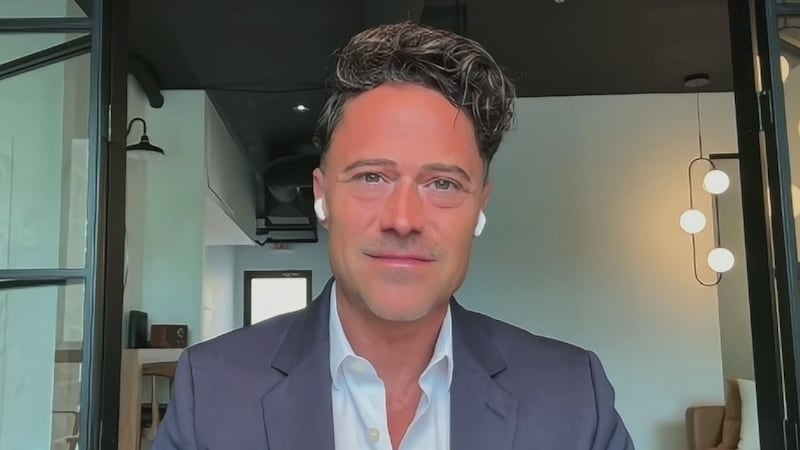
Read the full transcript below:
MERELLA: ASML, a supplier to some of the world’s biggest computer chipmakers, is raising its guidance for the second time this year. The European company also plans to expand production capacity to meet growing AI demand. Let’s go to Tyler Mordy. He is CEO and CIO of Forstrong Global. Thanks for joining us today.
TYLER: Good afternoon, Merella. Thanks for having me.
MERELLA: ASML expects net sales for the year to be about US$50 billion. It can’t keep up with demand. So, what does it tell you about the strength of the AI buildout?
TYLER: Well, Merella, I don’t think we need another data point to confirm that the AI buildout is in full swing here. You know, the strong results reinforce this phenomenon, and, you know, ASML raised its revenue guidance well above prior expectations. The company plans to increase production by about 30 per cent for both 2027 and 2028 and, you know, a grab bag of other goodies. The CEO confirmed that Intel will utilize, you know, ASML’s new equipment for its advanced Panther Lake chips. And, you know, all in all, ASML, Merella, has gained 70 per cent this year, making it Europe’s most valuable company and sort of proof that the picks-and-shovels game within AI has produced some of the biggest winners in this AI trade.
MERELLA: Let’s talk about the buildout for the company. How easy is it to ramp up production, considering how intricate its work is?
TYLER: Well, I think, I think it’s not that easy. I mean, this is a company that obviously has a long history of doing what it does within the lithography equipment-making business. But, you know, I think, I think what we see with the AI buildout, it’s a story, Merella, of bottlenecks, bottleneck after bottleneck after bottleneck. And, you know, I think one of the notable components of the ASML story today is that it confirmed that its business, not only in the U.S. but also in China, is going full speed ahead. So, ASML sells about 20 per cent into China and, you know, it continues, like many other picks-and-shovels companies, it continues to struggle with the rising demand for compute, the rising demand for equipment, the rise in demand for chips, and this is becoming a very global story at this stage.
MERELLA: Tyler, give me a better perspective on where or who they manufacture for. So, obviously, American companies. You mentioned China. So, obviously, Asian companies. Any indication of how much of their business comes from each?
TYLER: Well, roughly. I mean, the big customers, Merella, are TSMC in Taiwan, SK Hynix in South Korea and Samsung in South Korea as well. China is about 20 per cent of that overall sales and revenue. So, it’s distributed right across the world. But it’s one of those, it’s one of those components within the AI buildout that is necessary. And they don’t have a lot of competitors, and they’re sort of, you know, we joke around the office, they’re kind of one of the OG companies with developing standard equipment, or equipment that’s very valued for the AI buildout. So, it’s right across the globe, but it is definitely focused on North Asia. South Korea and Taiwan would be the big customers.
MERELLA: Okay, we talked about the strength of the AI buildout, given what they have reported with their earnings, but given the outlook that they have and the backlog that they have, how long do you expect this hyper-demand to last?
TYLER: Well, that’s the, that’s the million-dollar question, right? Because a lot of the AI capex spend is predicated on this, this concept that the AI buildout will continue for a number of years. So, that’s a million-dollar question in the market right now: How long will this continue? But, I mean, there is a backlog, right? I mean, there’s a backlog for chips, and you can track this through, you know, compute demand. You can track it through a variety of picks and shovels, and it’s something that, you know, we continue to see that is, at least at this stage, showing no sign of slowing. So, I think for investors, for Canadian investors, it’s important to think that, at least for this year and into 2027, we’re going to face an environment where the demand is, like, you know, through the roof and there are a lot of bottlenecks. So, we just don’t know that yet, Merella.
MERELLA: Okay, let’s talk about Big Tech earnings still to come for next week. Yep, we saw what happened when Samsung reported. It did really well. Investors still tanked the stock in the days that followed. What do you expect? Or, first, let’s talk about what investors expect. Are their sort of outlooks too high? Are their expectations too high?
TYLER: For the Big Tech earnings next week?
MERELLA: Yes.
TYLER: I mean, I think that, well, it’s a, it’s a super-interesting thing. What we’ve been saying around the office is that the hyperscalers are now in the penalty box because investors are becoming much more focused on the returns from AI spending. As you know, the big story, I think, for the Mag 7, for the hyper — the big hyperscalers, has been that they’re moving from an asset-light business model, where there wasn’t a lot of heavy capex spending, to an asset-heavy business model. And, you know, this year, I think probably the most notable market development has been that the Mag 7 has underperformed the broader market. It’s underperformed sectors. It’s underperformed international markets. It’s underperformed even banks.
And so, the story behind that, the causality, if you will, has been that investors are becoming more demanding. They like the business models. They like the legacy business lines. They like a lot of what they’re seeing. But they don’t like, you know, that this, this AI capex is just so enormous. And, you know, like, if you look at what the hyperscalers are on track to spend this year, I think we all know the figures. It’s anywhere from US$600 billion to US$700 billion in AI infrastructure. Those estimates kind of continue to rise.
And, you know, the consensus forecast for 2026 is that AI capex will be about US$250 billion greater than it was in 2025. So, you know, the market’s focus now is shifting from, “How much are you spending?” because that was being rewarded in 2024 and 2025, to, “What return are you actually earning on that spending?” And so, I think, with Alphabet reporting early next week, it’s going to be interesting to see, you know, what they, what they say. And, to date, they haven’t really disclosed how much, how much AI spend is actually being translated into AI revenue. And, again, that’s the million-dollar question as we head into the latter half of this year.
MERELLA: Let’s talk quickly about SpaceX, which is now at US$133, so under what it was when it was first offered. Is this a cautionary note for other big IPOs that are expected?
TYLER: Well, I mean, number one, there are probably two points. The first point is that IPOs, if you look back in history, never have a good history of having a good forward one-year return. And I think that was well telegraphed within the financial media, and everybody knows that really well. So, there’s a lot of historical research on that. Everyone sort of gets hyped on the initial IPO, and then the hype kind of deflates from there.
But the second point would be the fact that there is a lot of hot money out there. And, you know, our firm, Forstrong, believes that we’re in this broader AI capex buildup. In fact, it’s a broader capex story around the world. If you look at what is being spent on defence, on industrial self-sufficiency, on decarbonization, that’s been the big story over the last few years here, which is, you know, that the global economy, despite all these supply shocks we’ve seen, Merella, that, that, you know, the world continues to spend. And that sort of kept the bull market alive.
But back to the SpaceX IPO. You know, the rotation from — there’s so much hot money. It’s rotating from the Mag 7, which used to be popular. Now, the semiconductors are having some issues, as we’ve seen over the last couple of weeks here, and the IPO obviously has been indicative of hot money. And that’s not just in America. That’s globally. You see that in South Korea, the Kospi obviously having struggled in South Korea with its heavy weighting toward semiconductors.
So, with respect to the SpaceX IPO, we’re not surprised. And, you know, it’s indicative of this sort of rolling, and maybe also indicative of the investor cohort now, which is called the Robinhood investors, the Gen Z, millennial investors. They’re looking for different areas that they can arb and drive up hot money. And SpaceX was just sort of the latest, I guess you can say, casualty of that.
MERELLA: Tyler Mordy, got to leave it there, sir. Thanks for your time. Appreciate it.
---
This BNN Bloomberg summary and transcript of the July 15, 2026 interview with Tyler Mordy are published with the assistance of AI. Original research, interview questions and added context was created by BNN Bloomberg journalists. An editor also reviewed this material before it was published to ensure its accuracy and adherence with BNN Bloomberg editorial policies and standards.

