Netflix is broadening its entertainment strategy as it seeks to regain momentum following an underwhelming earnings report. The company’s expansion is raising questions about how quickly its investments can translate into stronger financial results.
BNN Bloomberg spoke with Alicia Reese, senior vice-president of equity research for media and entertainment at Wedbush Securities Inc., about Netflix’s evolving strategy and what could help rebuild confidence in the stock.
Key Takeaways
- Live sports accounts for five per cent of Netflix’s content spending and one per cent of viewing hours but drove six of its 10 biggest recent sign-up days.
- Advertising represents a significant opportunity, although Netflix’s latest results have not yet shown a meaningful financial lift from the business.
- Netflix used some of its available capital for its largest-ever quarterly share repurchase and could still pursue another acquisition.
- Content spending is rising 10 per cent this year, increasing the pressure to generate productive engagement, subscriber growth and advertising revenue.
- Netflix is using artificial intelligence across content production and discovery, but higher initial spending is masking potential cost savings.
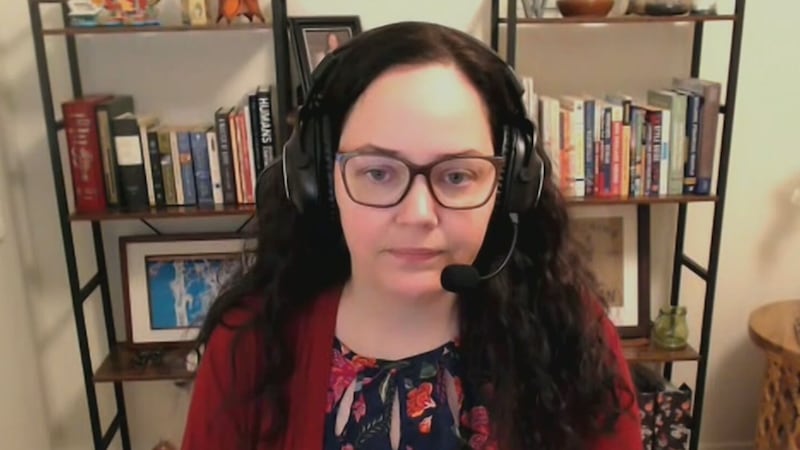
Read the full transcript below:
ROGER: As we mentioned, shares of Netflix are trading lower after narrowing its full-year revenue guidance. The streaming giant’s stock has been dropping since its pursuit of Warner Bros., down more than 40 per cent over the last year. To provide more analysis on these results, we are joined by Alicia Reese, senior vice-president of equity research, media and entertainment at Wedbush Securities. Alicia, thank you very much for joining us.
ALICIA: Thanks for having me.
ROGER: OK, you have it as an outperform, but you’ve cut your price target from $118 to $105. What’s driving it?
ALICIA: Yeah, there are some positives here that we can tease out from the earnings. To be fair, it was — the quarter was underwhelming, as was guidance, and Netflix is cutting its engagement disclosure from a semi-annual cadence to an annual cadence starting next year, and investors are just going to get less visibility, right, as the data, as we’re seeing it, is turning in Netflix’s favour.
So, the positives are really that engagement has reaccelerated for the third straight half, and so that dispels a lot of the bear cases’ central metric just turning in the other direction. But two per cent, really, for that engagement acceleration isn’t all that convincing on its own.
But really, it’s the live sports. It’s punching above its weight. It’s five per cent of content spend, just one per cent of view hours, but six of the last 10 top new member sign-up days have come from the live sports, and significantly more ad revenue to boot. So that’s really the strategic bet on quality per hour that’s paying off, and I think that’s not well appreciated at this point. And it’s going to take some time for Netflix to really show that in its numbers.
ALLAN: I guess my question is: I am an investor in the name. I’ve owned the shares for a little bit. For me, it’s more from an investor standpoint: Where is the growth going to come from?
You know, we see this name. It has been the dominating name in this space for quite some time. No one’s been able to touch — now touch this name. Now, I understand that, you know, they talk about addressable markets and how they have only a very small piece of the market, that they have so much more room for expansion and growth. But where is that growth going to come from? Is it the live sports? Are they going to go full throttle into live sports even more, I guess, than they already have? Is that — is that where the growth numbers, is that where things are going for the company?
ALICIA: Netflix is trying to expand in all directions because they want to be the place that you continue to go for all of your needs. And now, whether that’s live sports to keep you tuned in in the living room and to really exploit their, you know, growing ad revenue, they also want to be on mobile, and so they’re doing more podcasts, they’re doing more games, and that gets people to think of Netflix when they’re on their mobile, and not just YouTube or social media.
If they can do that and really start exploiting more ad revenue on that end, they can more, you know, compete — be more competitive with the likes of YouTube and social media. That’s really the concern, and Netflix’s results now are not showing any, you know, lift from that at this point. But it is a huge opportunity, particularly on the ad revenue side.
And it may start showing up in the engagement numbers. It may not, you know, but it is really productive ad content spend. And so it’s going to take a little time for this to play out. But it certainly could play out very well in Netflix’s results.
The first-quarter, second-quarter results — especially second quarter with a pricing increase — didn’t really show a lot of, you know, benefit. But I think we’ll start to see that more in the back half, and Netflix could get investors on its side again.
ROGER: All right, and the live sports becoming very competitive. One of the numbers I was looking at was their free cash flow came in way below consensus. What happened there?
ALICIA: It was a tax issue. They held their full-year free cash flow guidance, and so, you know, I think it’s just an issue of timing. And you also have significantly lower amortization costs in the back half of the year relative to the front half of the year. So you’ll see that accelerate pretty meaningfully in the back half, and they should easily get to that 12-and-a-half-billion target.
ALLAN: I guess, you know, when they were gonna — when they were in the battle to buy Warner Bros., obviously that didn’t work out. That fell through. They were going to spend a lot of money buying Warner Bros. Where are we now?
You know, what is the management saying with respect to all the money they were going to spend on the acquisition? Is that money going to go elsewhere? You know, where — you know, where things stand with respect to future acquisitions? Are they — you know, they said, I believe, on their conference call that they’re open to other acquisitions. Where do things stand there?
ALICIA: Yeah, so they used some of it for the, you know, biggest repurchase in their own history in a single quarter, which is what they had promised to do with it. They paid down a little debt, and they have plenty left for another acquisition.
I think they’re probably assuming that the next acquisition that they’ll make for content to lower their overall content spend is going to be a bit smaller. Comcast may put NBCUniversal up for sale, and Netflix could certainly go after that. It could also go after, you know, some smaller independent studios.
And this doesn’t, you know, materially change the story because Netflix typically has access to all of this content already, but it won’t have to pay the same licensing fees into perpetuity. They’ll own that and be able to produce more of their own content at a better cost.
ROGER: And they’re raising their expenses for content 10 per cent this year, above their five-year average, below the 10-year. Is that enough? Content is king?
ALICIA: Yeah, and that’s going to continue to rise, I would say. But they have to get a return on that, and whether that’s engagement hours — and it doesn’t have to be, as long as it’s really productive engagement hours, like with live sports, where you’re getting a lot of return on subscriber numbers and ad revenue.
ROGER: And another — just one last question. I think we’re almost out of time. But AI, they’re starting — they mentioned they were going to start bringing it in. Have we started to see an impact of that?
ALICIA: Yeah, you’re starting to see an impact of that. You do see a lot of spend, and so the cost savings out of that are masked by the higher initial spend. But I think over time you’re going to see, you know, at least, you know, a quarter or two, you’re going to see that start to materially turn in a more positive direction in terms of payback versus spend.
You know, they’re using it throughout the company, you know, in terms of discovery, but also in terms of, you know, helping to build the content more rapidly.
ROGER: OK, Alicia.
ALICIA: That should pay off.
ROGER: Sorry, we — sorry, didn’t mean to cut you off there. Thank you very much. We got to wrap it up there. Thank you very much for joining us. Appreciate your insight.
ALICIA: Thanks so much.
ROGER: Alicia Reese is senior vice-president of equity research and media and entertainment at Wedbush Securities.
---
This BNN Bloomberg summary and transcript of the July 17, 2026 interview with Alicia Reese are published with the assistance of AI. Original research, interview questions and added context was created by BNN Bloomberg journalists. An editor also reviewed this material before it was published to ensure its accuracy and adherence with BNN Bloomberg editorial policies and standards.

