Mullen Group’s second-quarter results showed improving freight conditions and growing activity across its transportation, logistics and specialized services businesses.
BNN Bloomberg spoke with John Gibson, industrials and Canadian energy services analyst at BMO Capital Markets, about the emerging freight recovery and the opportunities tied to major infrastructure projects.
Key Takeaways
- The Canadian freight recovery began to emerge in March and could have significant room to run.
- Tighter industry capacity and regulatory requirements limiting driver availability are helping support freight conditions.
- Higher oil prices remain a risk to consumer spending, although fuel surcharges allow trucking companies to pass along much of the direct cost.
- An Alaska pipeline project could provide a major opportunity for specialized transportation services.
- Mining, infrastructure and nation-building projects are creating additional demand beyond the core freight business.
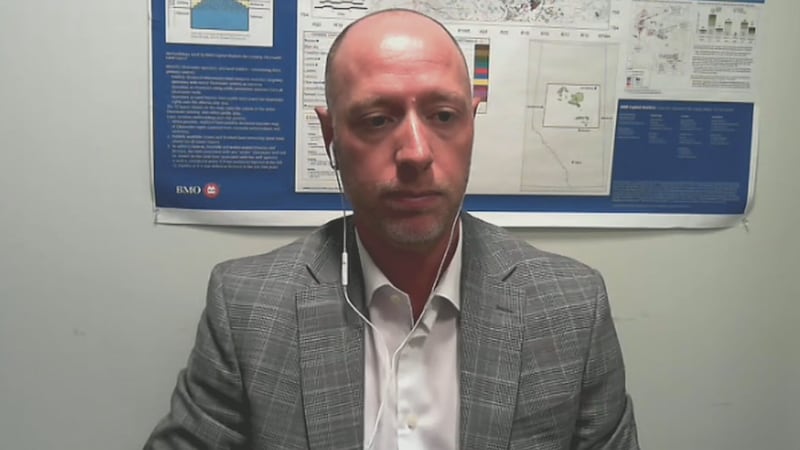
Read the full transcript below:
LINDSAY: Canadian trucking and logistics company Mullen Group reported stronger-than-expected second-quarter results this morning, with revenue and profit up 10 per cent from a year ago. Here to break down the results is John Gibson, industrials and Canadian energy services analyst at BMO Capital Markets. It’s great to have you join us. Thank you.
JOHN: Thanks for having me.
LINDSAY: So, I think it’s interesting that Mullen pointed to June as being its strongest month in several years. What drove that?
JOHN: Well, we started to see early signs of a freight recovery out of Q1. Like, they talked about March being very strong, and that’s really continued. I think it’s a combination of a few factors. You know, the Canadian economy has been pretty resilient in spite of higher oil prices, and there’s been a bit of tightening on the supply side and in the freight market. Some regulatory requirements are limiting drivers, so a combination of those factors continues to drive the results higher. And it’s nice to see June see continued strength.
LINDSAY: Do you think this reflects a broader recovery in LTL freight demand?
JOHN: I think it does. We’re in the early stages of it, and these cycles typically last, you know, 15 to 18 months. But again, it started in March earlier this year, when we started to see a pickup, and Mullen pulled into that last quarter. And again, you know, now it’s three, four months of it. So, I think we are in the early stages of a pretty significant freight recovery.
LINDSAY: Because I wonder if you would say, or if you see, Mullen Group as one of, like, the good indicators for the economy overall, given that it is a trucking company.
JOHN: It definitely is, you know, and it hits various parts of the economy — not only the trucking market, but the specialized business hits energy, mining, infrastructure. So, you know, it is definitely a good bellwether for what’s going on right now, and we’ve seen a lot of these industrial stocks run over the past year. And I think that’s reflective of kind of what’s going on in terms of the flurry of activity north of the border.
LINDSAY: We’ve seen higher oil prices, obviously, over the last couple of months. I don’t have to tell you that, but how are rising energy prices maybe affecting this company?
JOHN: Well, they are largely able to pass through costs through fuel surcharges. The worry becomes: Do higher oil prices limit or, you know, impact the economy in terms of consumer spending? We haven’t seen that yet. I know everything is getting more expensive, but the economy’s been pretty resilient in light of that. And again, you know, I pointed to tightening supply, which is helping as well. So, it’s definitely a worry, especially, you know, if we stay at too high of a level in terms of crude pricing. But again, it’s been pretty resilient from the business perspective. They are largely able to pass on costs, but the worry becomes: Do consumers spend less? And that hasn’t happened yet.
LINDSAY: Is that the main tailwind, do you think, for Mullen Group as it heads into its next quarter? Or what about, like, border bottlenecks? What are some of the big — the big headwinds, I should say, rather — that maybe could be affecting this company moving forward that you’re maybe watching out for?
JOHN: Well, I mean, crude pricing is one of them. I mean, we’ve seen crude be very volatile to start the year for various factors, and I think it’s going to continue to be that way. And we’re going to sit in a higher commodity price environment, you know, into 2027 as well. So, that’s probably the main headwind. I mean, tariffs are obviously top of mind for everybody as well. I highlight those two as kind of being the biggest factors. But again, it’s been a pretty resilient economy in spite of A, higher oil prices and B, you know, some of the tariff impacts that we’ve seen.
LINDSAY: We know Mullen is also looking to an upcoming Alaska pipeline project as a growth driver as well. Tell us a little bit more about that and how that fits into Mullen’s outlook going forward.
JOHN: Well, they have a specialized business, and it’s kind of how Mullen started. It was an oilfield trucking company. Obviously, a lot has changed since, you know, 20, 30 years ago, when it was more focused on that, that, that specific industry. But the Alaska pipeline project is very interesting because the specialized business hasn’t really completed any large projects since 2022-23, when it worked on the Coastal GasLink and TMX projects. And, you know, this would be larger than those two, so definitely a big catalyst. And what I saw that was new this morning was they actually have placed orders for equipment. You know, they haven’t won a contract yet, but it appears that they’re closer and closer to doing so. And they’re very well positioned based on historical work they’ve done and having a presence in the region, especially northwest B.C.
LINDSAY: I wonder what else is standing out to you as potential tailwinds for Mullen Group moving forward.
JOHN: Well, I think it’s — we’ve kind of talked about — there’s two things that are working in its favour. Number one, the freight market is improving, and number two, the specialized business, I think, is picking up. You know, I talked about — we talked about the Alaska project, but I think there’s, you know, mining projects that are picking up, infrastructure projects that are picking up, you know, nation-building. So, there’s a plethora of opportunities for this company, both in its, you know, core trucking and logistics business, as well as the specialized businesses here.
LINDSAY: And then, just lastly, the earnings call for Mullen Group happening at 10 a.m. So, in, like, nine minutes from now, anything you’re expecting to hear or really hoping to hear from the company, or any questions you want answered in this earnings call?
JOHN: Well, obviously, you’d like to see if the freight market has continued to be strong in July. And based on the outlook commentary in the release this morning, it appears that it is. And then also, yeah, I’d love to hear an update on the Alaska bid, which is, you know, appears to be inching closer and closer to being awarded here.
LINDSAY: Okay, John Gibson, industrials analyst at BMO Capital Markets. Appreciate your time. Thank you.
---
This BNN Bloomberg summary and transcript of the July 23, 2026 interview with John Gibson are published with the assistance of AI. Original research, interview questions and added context was created by BNN Bloomberg journalists. An editor also reviewed this material before it was published to ensure its accuracy and adherence with BNN Bloomberg editorial policies and standards.

