Home Depot is expanding its professional contractor business as elevated interest rates weigh on housing turnover and renovation activity.
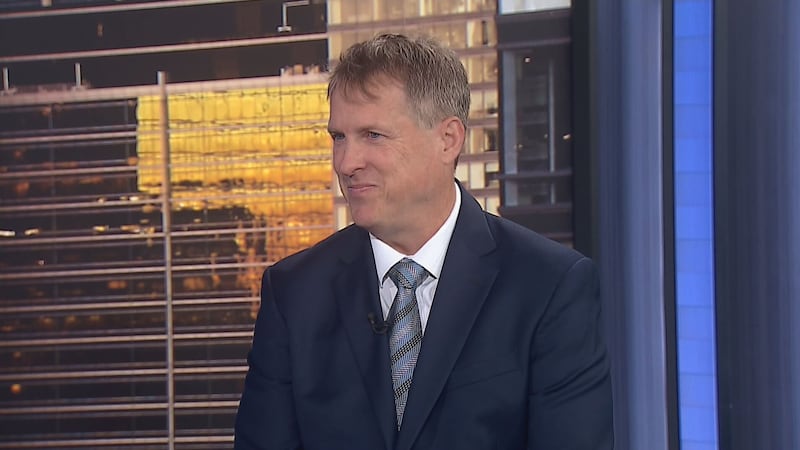
BNN Bloomberg spoke with Garnet Anderson, president and head of portfolio management at Tacita Capital, about Home Depot, Bird Construction and the strength of corporate earnings.
Key Takeaways
- Home Depot exceeded sales, comparable-sales and profit expectations, but its reaffirmed outlook points to relatively modest near-term growth.
- The retailer is pursuing professional contractors to generate more sustainable revenue and reduce its exposure to cyclical do-it-yourself spending.
- Professional sales carry lower margins, but Home Depot’s delivery network could provide a competitive advantage over online retailers.
- Bird Construction has strong price and earnings momentum as public and private investment supports Canada’s infrastructure buildout.
- Robust U.S. earnings growth is supporting equity markets, although investors must assess whether companies can sustain the quality of those results.
Read the full transcript below:
LINDSAY: Canada’s housing market showed modest signs of improvement in July, with existing home sales rising by 0.5 per cent. At the same time, Home Depot delivered better-than-expected second-quarter results. Is there a connection between what’s happening in the housing market and consumer spending on home improvement? Joining me now is Garnet Anderson, president and head of portfolio management at Tacita Capital. Great to have you in studio.
GARNET: Good morning. Thank you.
LINDSAY: Is there a connection, do you think, between the two?
GARNET: There is more of a connection to the U.S. real estate market than the Canadian market because Canada accounts for about four and a half per cent of Home Depot’s revenue.
LINDSAY: Okay.
GARNET: And so, certainly an influencing factor. Nice to see some stabilization in the Canadian marketplace. I just caught the headlines coming out of the States in terms of their permits and starts because the process starts off: You have to get permits, then you have a housing start, then you have housing completions, then you’ve got sales of new homes and you’ve got sales of existing homes. And all that is pretty well flatlined when you take a look.
Actually, starts in the U.S. — the starts actually came off quite a bit. Now, it’s a very jagged-edge kind of number, so you really have to look at trends. At the end of the day, that has not helped Home Depot or Lowe’s or any other competitors because, if people aren’t turning over their homes, you know, then it relies more on renovation projects. And those have happened, and we saw the results.
I mean, sales were — they beat expectations on sales, on same-store sales and on profits. They were up over last year. But if your bellwether benchmark is going to be, well, what’s Meta or Amazon doing this month? Well, this pales in comparison because it’s really up three, four per cent year over year.
They reaffirmed their 2026 plan. So, when you have 2,300 stores, you can only add so many. So, they expect to add 15. So, not going to get a lot of organic growth that way. So, it really is about same-store sales.
And what they’ve been focusing on since ’24 was really saying, we have to go after the professional market, and so that we can deliver more to job sites. We’ve got both commercial and residential, move it away from a do-it-yourselfer renovation type of only because that’s very cyclical. When the economic tides go out, people go, well, wait a second, I’m not going to go put in that new bathroom or what have you.
Whereas the push — and it was about, total acquisition cost was about US$24 billion on a US$350-billion market-cap company, so not a massive swing at the plate, but a substantial bet in terms of saying we’ve got to go after the professional market because that is more sustainable, less cyclical.
LINDSAY: Is it becoming more cyclical, though, just because of everything we’re seeing in terms of tariffs and trade wars with the U.S. and many other countries? Like, is that becoming less of a safer bet, too?
GARNET: Well, interesting. I mean, just because you pull on tariffs, I mean, one thing was: How much did tariffs affect? Now, they have a lot of their production actually in the States, but one of the things that — their call was at 9 o’clock this morning, so I’ll have to read the transcript notes afterward.
But it will be interesting because they got a tariff refund, and how was that playing into margins, and how substantial was that? But at the end of the day, despite — they have an aging housing stock, so that’s a tailwind. They still have immigration stateside, so that’s a tailwind, and renovations are happening.
The consumer — U.S. consumers held up stronger. Even Canadian consumers held up stronger than people would have thought a year ago, so that’s a positive. So, yes, it is cyclical. When the tide goes out, homebuilders, home renovation, the Home Depots and Lowe’s, they take a step back in their share price, absolutely. But they’re just trying to smooth that out a little bit.
And now, what’s that cost them? It is a little bit in terms of margins because the professional market’s not paying the same margins as when you and I go and buy a hammer and a piece of plywood. Fair enough. So, they’re trying to get that. They might have turned the corner, but you need more than one quarter to see that as they digest these new acquisitions.
And, you know, but it does put a little bit of a moat around, you know, competing against the Amazons when you can deliver to site and have more of your components go into that site build. That is a positive. So, when we take a look at it, I mean, this is not your momentum stock.
And when we put together portfolios on the equity side, we’re multifactor, which means we’ll have the base or the core, we’ll have value, we’ll have quality, we’ll have momentum, we’ll have small-cap and some low-vol. And so, you have to understand what bucket you want a stock in.
So, this is really coming through the quality and value sleeve, and kind of smiling a little bit at the value because trading at 22 times — yeah, that’s not Benjamin Graham, you know, Warren Buffett, old-school value. But in today’s relative market, it still is on the value side. And from a quality perspective, they’ve been a great compounder over the years.
Now, that’s — and dividend grower over the years. Like, they used to grow their dividends over 10 per cent per year. That has slowed down the last couple of years. So, the market’s always looking for some free cash flow news coming out of them to see if they can get back on that dividend growth trail.
LINDSAY: So, yeah. I guess maybe you’d have to read the fine printer or see if there’s more of that coming. But at this point, is it still a good investment, do you think, Home Depot?
GARNET: I think it’s a good investment. I think if they can continue to execute on this professional buildout, right? I think if U.S. rates, interest rates, if they spiral further, that’s not good for any stock, if you will, any bond, what have you.
But if they remain contained, if you will, and maybe come back in a little bit because U.S. rates, the five- and 10-years, are up 70 basis points this year, and they’re about one per cent higher than Canadian rates of the five- and 10-year, you know, terms, sort of things. So, that’s not insignificant.
So, that’s put a — that’s certainly a headwind for them. But all things being equal, I think it’s a decent entry point. If you’re looking five and 10 years out, you go, great. You know, the housing market will continue to turn over. Renovations will continue to happen. People invest in their homes, always have and usually always will.
LINDSAY: So then, if we’re looking at Bird Construction, a Canadian company that also recently reported earnings, like, does that fall into the same category for you?
GARNET: It is completely at the other end. That’s over in the momentum camp when you’re up 160 per cent and your fundamentals are increasing.
So, you take a look at their sales growth or revenue growth, if you will, over 2026 or 2027, it’s up in the 20 per cent range. EPS growth is up — call it expected to be in the 40 per cent range altogether. That’s been reflected in the price momentum that we’ve seen.
And even if you take a look at analysts and where they expect the upside there, and they’ve been upgrading the stock over the past 90 days, which is a nice sign to see — not just the price upgrades, but the earnings upgrades for 2026 and 2027.
So, you kind of go: You have fundamental momentum, you’ve got price momentum, you’ve got a company that is right place, right time, with all the government spending, never mind all the private spending going on construction projects, because it is widely diversified in terms of what it tackles.
LINDSAY: Because it’s interesting with this deadline looming tonight for the latest tariff trade talks. Like, how vulnerable would a company like Bird Construction, you know, on this side of the border, be to any tariffs coming in? Is that something you’re watching for?
GARNET: It’s something I’m watching for, but maybe this is a little bit of wishful thinking. Actually, a positive is Canadian-focused, and how are we reacting to the tariffs? We’re building more in Canada, and they’re partaking in that Canadian buildout.
And again, whether that’s defence, whether that’s AI buildout, whether it’s the electricity grid, whether it’s, you know, renewables, power, transportation, highways, road systems, we’re building.
You know, projected spend over the next 10 years from the governments, collective federal and provincial, you know, it’s half a trillion to a trillion dollars. Now, the numbers move, like, minute by minute, right? So, it’s a very broad range. Then you add on top of that all the private investment that’s going into there.
So, if they continue to mind their Ps and Qs and work on their margins and be smart about their contracting, they’ve got a nice tailwind for that next 10-year period as Canada anchors its sovereignty, if you will.
LINDSAY: Yes. Okay. Lots to watch for. Just before I let you go, second-quarter earnings season kind of winding down at this point. Your overall takeaway so far?
GARNET: Ridiculous. Is that fair to say? Just, you take a look at the U.S. You know, 50 per cent year over year on Q2 over Q2, sort of thing. Q3 outlook is very strong. Call that 25, 30. ’26 as a whole, strong.
So, the band is playing on the earnings front. We don’t have a valuation bubble anymore. It’s really — eyes are on the quality of those earnings, and will they pull through? That’s the question.
LINDSAY: All right, we’ll have to wait and see. We’ll leave it there for now. Garnet Anderson, president and head of portfolio management at Tacita Capital. Really appreciate you joining us. Thanks so much.
GARNET: Thank you for having me.
---
This BNN Bloomberg summary and transcript of the Aug. 18, 2026 interview with Garnet Anderson are published with the assistance of AI. Original research, interview questions and added context was created by BNN Bloomberg journalists. An editor also reviewed this material before it was published to ensure its accuracy and adherence with BNN Bloomberg editorial policies and standards.

