Canada’s space sector is seeking global investment as it builds advanced communications infrastructure and expands its international reach. Industry leaders see the Canada Investment Summit as an opportunity to attract both financial and strategic partners.
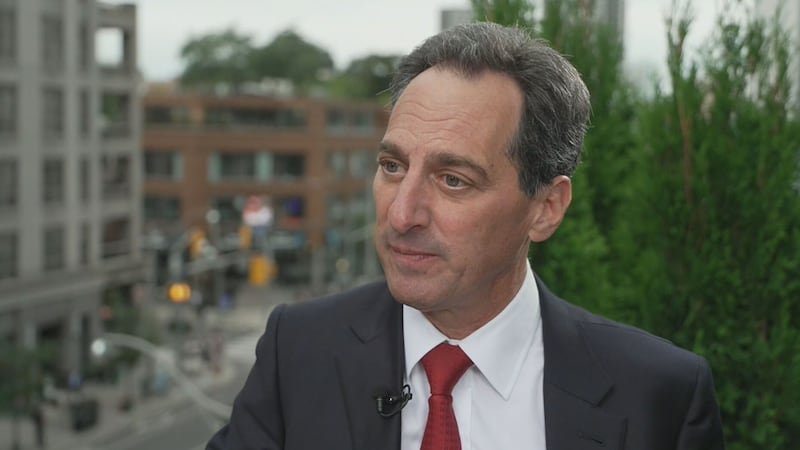
BNN Bloomberg spoke with Daniel Goldberg, president and CEO of Telesat, about the investor response to the company’s pitch and the benefits that foreign capital could bring to Canada.
Key Takeaways
- Telesat says its $7-billion Lightspeed constellation is fully funded, but additional capital could support further investment.
- The company plans to begin launching Lightspeed satellites next year and expects global coverage in early 2028.
- The network is being developed as an alternative to Starlink for defence, aviation, maritime and telecommunications customers.
- Strategic investors could provide customer relationships and domestic demand in addition to capital.
- Satellite communications could support Canadian sovereignty, rural broadband access, employment, innovation and exports.
Read the full transcript below:
MERELLA: As Canada works to strengthen its defence capabilities, secure space-based communications are critical. So, in the pitch book for the Canada Investment Summit is a minority stake in Telesat’s Lightspeed low-Earth-orbit network. BNN Bloomberg’s Lindsay Biscaia spoke to Daniel Goldberg, who’s president, CEO of Telesat.
DANIEL: They would be buying into the opportunity to participate in this very advanced low-Earth-orbit satellite constellation that we’re building. We’re very bullish on the opportunity, so we’re building what’s an alternative to Starlink. There’s no alternative to Starlink right now, and so we think that there’s an enormous amount of demand for the kind of network that we’re building, from defence users to airlines and cruise ship companies and mobile network operators all over the world. So, they’d be buying into the opportunity to participate in that.
LINDSAY: Throughout this summit so far, have you been speaking to people? Like, do people sound like some investors maybe would be interested?
DANIEL: I think that we came and we participated because it’s a great opportunity and a very efficient opportunity to speak to some of the biggest funds and senior executives at these funds all at once, and in connection with, see, a broader story about what the government of Canada is trying to achieve. So, so in some ways, that was the focus, just to have an efficient opportunity to speak to lots of different investors. And, yeah, I think there is a lot of interest in what we’re building.
LINDSAY: We will get to the broader story, as you just mentioned, in just a moment. But are you—what kind of investor are you looking for? Like a financial investor, a strategic telecom partner?
DANIEL: Yeah, I mean, I think so. I’d say there are two separate things. One, so we’re investing $7 billion to build this global constellation. We’re fully funded, so we’ve secured all the funding that we need to build the constellation. But we’re in a capital-intensive business, and so there are always opportunities for us to put more capital to work. So that’s, you know, sort of one area of focus. And then, remind me, Lindsay.
LINDSAY: Just if you were looking for a financial investor or a strategic.
DANIEL: Oh, and then—and then on the strategic opportunities. So, you know, attracting capital at the right cost of capital is something that we’re always interested in. And then, yes, some investors are also sort of strategic investors. They might be sovereign wealth funds that need the kind of capability that we’re building for their own domestic requirements. Some of these funds own airlines; they own mobile network operators. And so that would be a great investor for us as well. They bring capital, but they also bring the strategic benefits as well.
LINDSAY: Okay, so Lightspeed is fully funded. I was going to ask you that. Is there a valuation for a stake—for the stake that you’re offering?
DANIEL: We haven’t put out a number. I’d say that’s a conversation that we would have with investors.
LINDSAY: That would have behind closed doors. Okay, so moving on, then, as investors gather here, what’s the pitch for why Canada should be investing more aggressively into satellite infrastructure and space technology in general?
DANIEL: So, I think the opportunity there is pretty compelling, and I think it’s resonated pretty well with the government of Canada. So, the government came out with a new defence industrial strategy last year. In that strategy, they identified what they call key sovereign capabilities. Satellite communications was one of those, and the reason I think it made the list is the way modern conflicts are unfolding. You need this kind of a capability in order to be effective. We’re seeing that in Ukraine right now. We’ve seen this in the Iranian conflict. So, I’d say that’s one. There are important strategic defence capabilities that come with having an advanced constellation like this. And then there’s just broadband connectivity. Canada is a big country. There is still a digital divide. A capability like ours bridges that digital divide. So, I’d say that’s another important key consideration. And then, beyond that, we’re creating a lot of jobs, we’re innovating, we’re creating a lot of intellectual property and we’re exporting a lot.
LINDSAY: What does Telesat need at this point to become competitive with Starlink—or, sorry, SpaceX when it comes to satellite communication and Starlink, I guess?
DANIEL: So, what we need is to get our capability in orbit. Okay. So, we’ve designed it, we’ve secured the funding, we’re building it, we start launching it next year and we’ll have full global coverage in early 2028. That’s what we need in order to go out and provide this alternative, and that—that’s what we’re working very hard to do.
LINDSAY: Okay, so we’re in the last day of this summit. If it’s successful, what concrete outcomes would you like to see emerge in Canada’s space industry over the next couple of years?
DANIEL: What we would like to see is incremental investment in the kinds of capabilities that we’re deploying. So, that would be one concrete capability that we are successful. We tell us that we, the government of Canada, you know, working with the government of Canada, that we bring in some important foreign investors as well, also to back the investments that we’re making. For me, those will be key proof points that—that this was worthwhile. And I have to say, I’m optimistic that it will be.
LINDSAY: Okay, and why do you think it’s important to have foreign investment as well?
DANIEL: I think it’s important to have foreign investment. One, we are building a global network, and so it’s great to have support, you know, here in Canada. But I think it’s an important proof point when we go around the world. It’s not just Canadian capital sources that believe in the capability that we’re building. So, I think that’s one reason. And then, beyond that, I just think the more sources of capital you have, the more competition you have to put capital to work, which means—which should mean—a lower cost of capital for Canadian borrowers.
LINDSAY: Okay, we got to leave it there. Daniel Goldberg, appreciate you joining us.
DANIEL: Okay, thank you very much.
---
This BNN Bloomberg summary and transcript of the Sept. 15, 2026 interview with Daniel Goldberg are published with the assistance of AI. Original research, interview questions and added context was created by BNN Bloomberg journalists. An editor also reviewed this material before it was published to ensure its accuracy and adherence with BNN Bloomberg editorial policies and standards.

