Costco’s latest earnings offer a look at consumer spending as households contend with higher prices. Strong sales and slower membership fee revenue growth raise questions about how long shoppers can maintain their spending.
BNN Bloomberg spoke with Carol Schleif, chief market strategist at BMO Wealth Management, about what Costco’s results may signal for the broader U.S. economy.
Key Takeaways
- Costco’s fourth-quarter sales grew, while membership fee revenue growth slowed.
- Costco’s results put consumer resilience in focus, with Schleif saying employment is key to continued spending.
- Higher fuel and everyday costs account for part of the increase in household spending.
- Stronger-than-expected revenue has prompted some companies to rebuild inventories and bring in workers.
- Upcoming U.S. bank earnings could offer another view of consumer health through signs of stress on credit card customers.
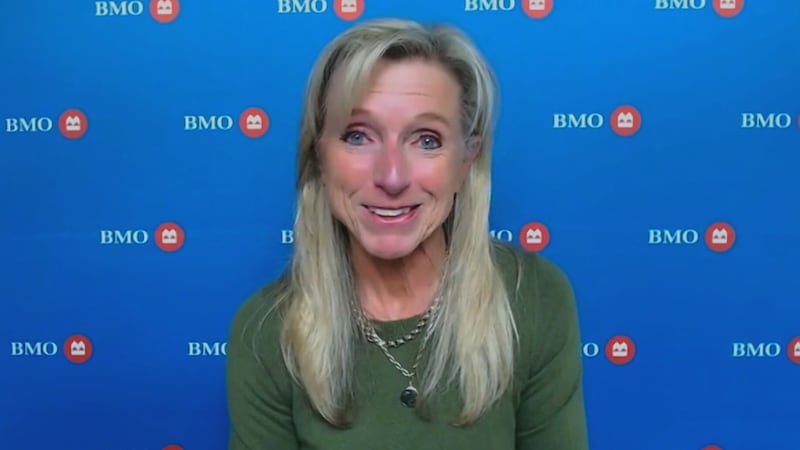
Read the full transcript below:
LINDSAY: U.S. stocks are edging higher as markets get set to wrap up a volatile week of trading. So let’s get more perspective now. Joining us is Carol Schleif, chief market strategist at BMO Wealth Management. Great to have you join us once again. Thanks for taking the time.
CAROL: Yeah, thanks for having me. Happy Friday.
LINDSAY: Of course, happy Friday to you as well. So, as I mentioned, stocks are taking higher, at least in the U.S. Can’t say the same for the TSX today. But the Dow is heading for a fourth straight losing week. What’s your take on the markets right now and what’s happening?
CAROL: I think a piece of it is we’re in that desert between earnings seasons. It’s a couple weeks yet until we can lean into that. We — and it looks like markets, especially this week, have been hyper-correlated to energy. When it’s up a little bit, they go up. When it’s down a little bit, they go down. And so they’ve been really focused on that because we have had data to focus on this week. But we’re in that period when investors really don’t know what narrative through line to lean into, and we’ll get a lot more reassurance, if you will, once earnings season starts the first and second week of October. It kicks off down here.
LINDSAY: The global bond sell-off appears to be steadying. Do you think the worst of that is maybe behind us at this point?
CAROL: It’s tough to tell because the bond markets have become more volatile. We actually wrote a piece the last couple weeks, but last week we put a chart in showing the VIX and the MOVE, which is the bonds’ equivalent of volatility, and bond volatility, especially since the start of the Middle East conflict, has been higher than stock volatility has. So you’ve got a lot more volatility there, and I think the other thing — one of the things investors will really be leaning into here with earnings season — is listening through how companies are handling the margin pressure, because it’s not just the Strait of Hormuz. You’ve got the Ukraine-Russia conflict impacting diesel as well, and diesel flows through to so many things. And what are companies doing to be able to control those costs? Because that’ll rotate through to what are the expectations for how much the Fed and now the Bank of Canada thinks about raising rates in more than they already have.
LINDSAY: What’s your base case there? What do you think is going to happen for the remainder of the year?
CAROL: Well, quite frankly, I’d come into the year thinking the Fed wasn’t going to do anything. Then we — that they were going to be able to sit pat, but that toasty CPI report and the PPI report, and you saw it again reiterated in yesterday’s ISMs, that the cost side of the equation is putting more pressure. So we would suspect you might — you might potentially see another hike by the end of the year, and possibly one more insurance one after that. But a lot of this is going to be data-dependent, so we’re going to have to see the data come in. We’ll watch the Fed’s Beige Book really closely for what they’re seeing in those Fed regions, and then also earnings. There’ll be a lot of focus on earnings in terms of how companies are absorbing it. Can they deploy AI fast enough to get it to the point where the use of AI is deflationary, like technology in the long run typically is?
LINDSAY: Okay. I wanted to ask you about Costco as well because Costco reporting fourth-quarter earnings and sales growth, but one of the interesting stories coming out of this report is membership fee revenue growth slowed in the latest quarter. I wonder what that tells you about the broader consumer and the overall economy right now.
CAROL: I think the consumer is — the consumer, as long as they’re employed, stays strong. And one of the interesting aspects you had is, you know, we came into the early summer thinking that the employment market looked a little tepid, but we’ve seen the strength pick up. And part of that has to do with the fact that company — the revenue line — has surprised many different companies. So they were trying to watch margins, they were trying to limit hiring, and then all of a sudden, you had revenues come in stronger, and so companies have had to rebuild inventories, bringing people in. And as long as people are employed, they’re going to tell the pollsters they’re feeling bad about things because they’re being told they should feel bad, and they’re seeing higher prices. But as long as they’re employed, there’s a certain level of spending they will continue to do, even though big chunks of that spending are inflation-related. They’re at the gas pump, as you’re showing. They’re related to just maintaining that level of traditional spend because everything’s a little bit more expensive.
LINDSAY: Okay, I want to move right along because we’ve got a couple of other topics to talk about here. You mentioned off the top, you know, fourth-quarter earnings seasons beginning soon. There’s a lot you’re going to be watching for, I’m sure. But it’s going to begin with U.S. banks reporting in a couple of weeks as well. What are you watching for there?
CAROL: I think the interesting thing and the thing for investors to remember is that you start in this third quarter here as they’re reporting, you’re going to be up against some pretty tough comps from last year. So you’ll be looking at trading volume, which should be high. Deal volume is going to be high because we’ve had record M&A, record IPOs, record debt issuance. So those companies that — or those banks that participate in that — will be watching net interest margins as well because banks are getting pinched in different aspects, especially that you want to, you know, some are bigger mortgage manufacturers, if you will, or mortgage providers than others, and so we’ll want to watch that too, and we’ll listen through for what is the health of the consumer. Are they seeing stress on the consumer balance sheets, especially those card manufacturers? So we get a lot of good data out of the banks, and it’s always lovely in the U.S. where they start first.
LINDSAY: We’ll have to be quick with this last answer, but I did want to ask you about the Prime Minister Mark Carney’s Canada Investment Summit, which happened just recently. I think it was last week, or feels like maybe two weeks ago now. You were watching that closely. What were some of the key takeaways you heard in terms of how Mark Carney’s planning, you know, some ambitious long-term visions for Canada’s economy and investment here?
CAROL: Yeah, I think I actually was in Toronto at the same time, so it was super fun hearing all of the vision that was laid out, and I think that’s really important when you put that vision out here. It’s unlike — people peg it back to when you looked at JFK in the U.S. saying we’re going to put a man on the moon, and it focused entire industries on where you’re going. The fact that he had a lot of key players from around the globe in Toronto for that huge event, they had playbooks ready to go. You’ve had a lot of good commentary and created a lot of buzz from a lot of different people. You had sovereign wealth funds. You had BlackRock, Blackstone. A lot of key players from that that have the potential to invest. And then you’re seeing follow-on implications as well with Canadian pensions talking about, or different groups talking about, having Canadian pensions invest a minimum amount in Canada, and so I think laying out that vision and talking about how well-educated the workforce is, all of the opportunity that there is to build infrastructure, to invest in Canada, to build up critical — the access to critical minerals, the opportunity to build data centres. There’s a lot of good infrastructure. The key will be doing the other things: cutting taxes, making sure that permitting getting gets done, making sure it’s not just words but it’s followed through with action. And I think that’s what a lot of global people will be watching. But the optimism — it’s fun to see the united vision created, and that’s where it all starts.
LINDSAY: Okay, Carol Schleif, chief market strategist at BMO Wealth Management. Always great to have you join us. Thank you.
---
This BNN Bloomberg summary and transcript of the Sept. 25, 2026 interview with Carol Schleif are published with the assistance of AI. Original research, interview questions and added context was created by BNN Bloomberg journalists. An editor also reviewed this material before it was published to ensure its accuracy and adherence with BNN Bloomberg editorial policies and standards.

