Titan Mining plans to expand U.S. graphite production from 2,500 tonnes to 40,000 tonnes as Washington seeks to reduce reliance on China for critical minerals.
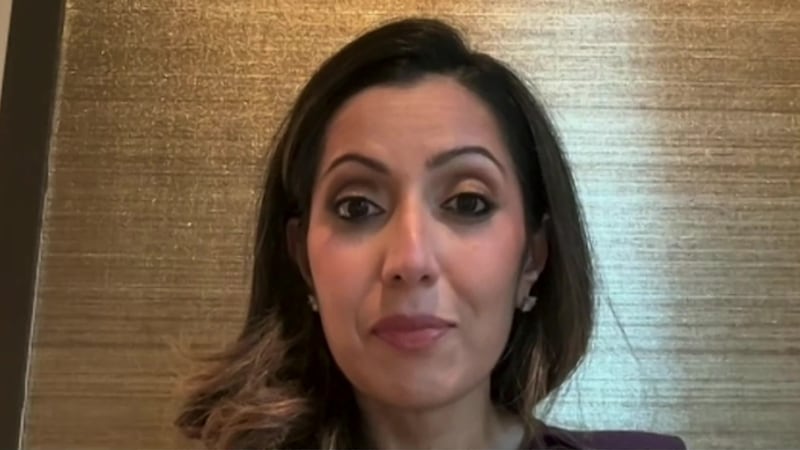
BNN Bloomberg spoke with Rita Adiani, CEO at Titan Mining, about the company’s expansion beyond zinc and the role of refined graphite in meeting demand tied to artificial intelligence and the energy transition.
Key Takeaways
- The proposed Alabama graphite-refining facility would cost an estimated $30 million to $50 million, according to Adiani.
- Graphite mined and concentrated in New York would supply the Alabama facility, creating a domestic production chain serving U.S. customers.
- The U.S. Army would have the right to purchase up to 10 per cent of the output, with final arrangements still being worked out.
- A final investment decision is expected as early as 2027, with construction targeted for that year and production for 2028.
- Existing operations are expected to cover most equity funding needs, while potential EXIM debt support remains part of the financing plan.
Read the full transcript below:
ANDREW: A Canadian-listed company called Titan Mining is looking to help the U.S. reduce its reliance on China for critical minerals. Titan plans to develop a graphite-processing facility for the U.S. military in Alabama. Let’s get more from Rita Adiani, CEO of Titan Mining. Thanks very much indeed for joining us.
RITA: Thanks, Andrew, for having us on.
ANDREW: Before we get into the plan in Alabama, right now you’re producing zinc in the United States, and then you also already have a graphite production process project in New York state.
RITA: That’s correct.
ANDREW: Right. So, tell us about this, and you’re — you’ve got revenue and everything. You’re profitable.
RITA: Yes, we are. We are.
ANDREW: Tell us about this Alabama project. What? How much would it cost? Why is it needed?
RITA: So, Andrew, as you referenced there, we already are the United States’, you know, only graphite producer at the moment, and what we’re looking to do is ramp up our graphite production all the way from 2,500 tonnes to 40,000 tonnes starting in 2028. And as part of that program, what we would like to do is start producing some refined graphite, and it is the refined graphite which would be looking to produce at the site in — on the — on the U.S. Army site in Alabama. And the reason for that is, you know, refined graphite effectively forms one of the precursors to battery materials, which, as we know, is, you know, significantly important in — in a new and developing AI and energy transition world, and we see our partnership with the Army as, you know, a key core component of that strategy.
ANDREW: Why are they teaming up with you and not a bigger player in the graphite industry?
RITA: I think we — we’ve had a great partnership with the U.S. government, starting with our relationship with EXIM, being the first mining company to have been awarded a Make More in America loan last year. And I think as we continue our engagement with the U.S. government, they believe that, you know, we — what we say we’re going to do, we do it, and we said we’d be the first to produce graphite in the United States. We’ve done it, and I think we — they believe in the fact that, you know, we would also like to become a key supplier in the battery supply chain, so they look at it as a great partnership.
ANDREW: What kind of capital cost are you talking about here?
RITA: So the downstream facility site will have a capital cost, anything ranging from $30 million to $50 million, and it is part of the entire project proceeds, which we are currently outlining in our feasibility study. But it’s obviously a significant investment for a single site.
ANDREW: And what — what’s going to? Oh, sorry. Yeah, where will you get the feedstock, the actual graphite for this facility?
RITA: So this is going to be an end-to-end domestic production site where we’re effectively mining in New York. We’re producing concentrate in New York, and then we’re bringing that feedstock down south and processing it in the facility down south to be able to produce refined product, which again goes back into U.S. customers’ hands. So it’s a complete end-to-end solution.
ANDREW: And do you have an offtake deal with the U.S. military?
RITA: We do have — the U.S. Army, under the terms of the agreement, has the right to purchase 10 per cent — up to 10 per cent of our product, and I think we’re working through the final arrangements on that.
ANDREW: Right. So when could we? What kind of a timeline? When would we expect a final investment decision, for example?
RITA: We are expecting a final decision, an investment decision, as early as next year, as early next year, with the goal of starting construction in 2027, and obviously moving through to production by 2028. So it’s a pretty aggressive timeline, but I think we’ve proved we’ve done it before, so we expect to be there in 2028.
ANDREW: The — will you? I mean, will you do — will you need an equity issue? Let’s have a look at the stock price.
RITA: In terms of an equity issue, as you’ve mentioned, Andrew, we are currently a cash-flow-producing operation. We produce about $30 million to $35 million of EBITDA annually. So we’re going through our final numbers in scoping out our feasibility study for the graphite project, and we expect that, you know, majority of the proceeds required for the graphite project on the equity side will be covered through our existing operations. As we’ve mentioned before, EXIM is looking to support us with the debt for the project, so we’re fairly confident that, you know, we’ll be able to build it in a way which creates shareholder value.
ANDREW: Right, and we’re looking at the stock down today. I guess smaller mineral companies, though, it’s hard. You have to deal with short selling, for one thing. So you’re part then, Titan Mining. You’re part of Richard Warke’s Augusta Group, which has been involved in buying and selling various mines.
RITA: That’s right. We are part of the Augusta Group, and Titan’s been part of the Augusta Group now for eight years.
ANDREW: Right. Well, listen, Rita. Thank you very much indeed for joining us.
RITA: Well, thank you, Andrew.
ANDREW: Rita Adiani, CEO of Titan Mining.
---
This BNN Bloomberg summary and transcript of the Oct. 13, 2026 interview with Rita Adiani are published with the assistance of AI. Original research, interview questions and added context was created by BNN Bloomberg journalists. An editor also reviewed this material before it was published to ensure its accuracy and adherence with BNN Bloomberg editorial policies and standards.