Jensen Huang’s departure puts Nvidia’s next chapter in focus, raising questions about how the AI chipmaker will evolve under new leadership.
BNN Bloomberg spoke with Kim Forrest, founder and chief investment officer at Bokeh Capital Partners, about the transition and what it could mean for the semiconductor sector.
Key Takeaways
- Forrest said production sold out a year ahead and an experienced leadership team could help Nvidia meet its financial objectives despite Huang’s departure.
- Forrest sees interim CEO Colette Kress as a credible permanent successor and favours separating the CEO and board chair roles to strengthen accountability.
- Forrest favours spreading AI exposure across Nvidia, AMD and Micron rather than relying on a single chipmaker.
- AI chip export rules could face closer scrutiny, with Forrest anticipating clarifications on sales restrictions.
- Bookings beyond the next year will be a key earnings indicator for Forrest, who expects demand for AI services to become a more significant measure of the sector’s health.
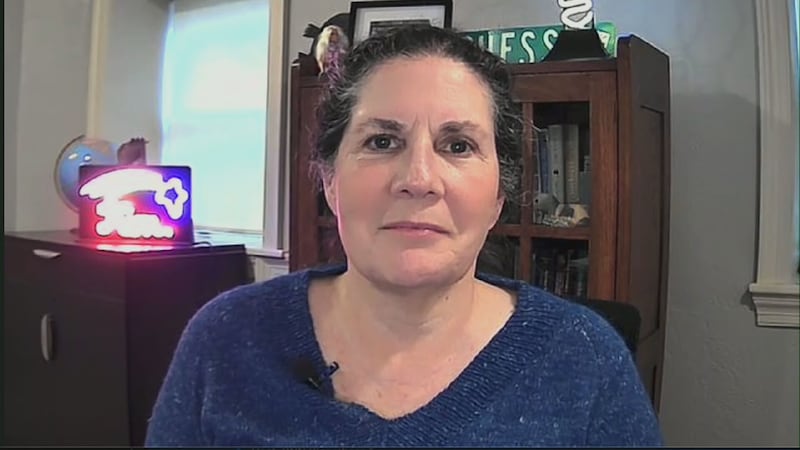
Read the full transcript below:
ROGER: Nvidia shares are under pressure with the news that CEO Jensen Huang is resigning amid allegations surrounding a second extramarital affair. Investors are now grappling with what leadership uncertainty could mean for one of the world’s most valuable companies, possibly one of the most powerful companies, a leader in the AI race. Joining us now is Kim Forrest, founder and chief investment officer at Bokeh Capital Partners. Kim, thanks very much for joining us today.
KIM: It’s a pleasure.
ROGER: OK, we’re seeing the reaction, but the — it seems to be tempered a little bit, a little more now. I mean, earlier today, when the news first broke on the — on the premarket, it was down about 10 per cent. Now we’re off about 4.8, 4.9. How are people approaching this? How are you approaching it?
KIM: Well, I think you really have to look at how big of a company we’re talking about here. It’s not a one-person company. That is the good news. The other thing is, is this is one of the companies that’s supplying AI. It is a huge driver, of course, of everything AI. But again, the companies who are buying their products are the ones that are sort of driving where the product goes, not the company driving where the models go. So if you look at it that way, and you realize that their production is sold out a year ahead of time, you have relatively low risk here for the company not meeting its financial objectives. It also looks like there is a bench of people that can take over, at least in the interim. And I think it’ll be interesting who the board picks as the next CEO. Nvidia has always been a very narrow company. First, for most of its life, it did video, you know, chips, and now it has branched out into other areas that use that technology in different ways. So what could Nvidia become? Only the next CEO knows.
ROGER: There is — there is a lot ahead. Now you mentioned that it’s more than just Huang’s Nvidia, but he was perceived as a rock star and kind of — and he’s the face of it. And he had that unique arrangement. I mean, 60 people reported directly to him. Is that — are those things easy to overcome?
KIM: Well, we’re going to find out. But look at his schedule. I think that gives you a peek into what the company was really doing. He has been doing a lot of press, a lot of conferences, flying around the world. That’s some of the issues that probably got him into the trouble that he’s in. That he wasn’t back at the company, you know, minding the store. So I’m thinking that the company probably is well positioned internally to do what it does, which is make the chip that every AI frontier lab wants to have. And I think that is important for investors to remember whenever they see the stock price falling.
ROGER: OK, now for a replacement, we’ve got Colette Kress, temporary. The CFO is now in as CEO. Is she a possibility, or will they look outside, do you think?
KIM: Well, the company itself has said internal and external candidates are being looked at, and I believe she has a pretty good shot at retaining that. Now we will certainly see, and I think the board, because it doesn’t look great for them that these issues have come up, and it doesn’t sound like they were really on top of, you know, being a board of directors, knowing what the management is doing, so I think they’re going to be very careful about who they choose as CEO. Although they have to really start getting down to the work here shortly.
ROGER: And I want to ask: They also appointed Harvey Jones as the chair, and they’ve never had a chair before. What does that — does that mean anything to you, or is it — can we read into it?
KIM: Well, absolutely. I mean, you know, Jensen Huang was the company. He was the chairman of the board. He was the CEO, and, you know, in a lot of governance circles, that is a warning sign that there’s too much power in one person. So I think it’s good that they did not, you know, keep that arrangement. But I don’t think it’s practical either. So I think having a separated CEO and board chair is probably what a lot of companies should think about doing, and just spread the risk around and make people more accountable.
ROGER: All right, just doing some quick math. Down about 17 per cent. Is Nvidia a buying opportunity, or is it AMD or something like that?
KIM: Well, I think a lot of companies are. I’m a bull on the longer-term aspects of AI. I am somebody who doesn’t believe that the leading frontier labs are going to be game over, the winners in the long run. So I think there is a lot of opportunity out there, and we like to spread the risk around and not just have one holding being the AI chip. So we like AMD, we like Micron and we like Nvidia.
ROGER: Any concerns about the chips from a government perspective, that they may put in restriction or further restrictions on what — who can buy the chips, what, when and where?
KIM: Well, I think everybody’s going to take a good, hard look at that. So yes, I would think that there are some — we’ll just say clarifications coming to the export laws, especially in these — in AI chips.
ROGER: All right, and you mentioned the numbers are pretty solid. What are you going to be looking for next week with that — that earnings report? What will be a key number for you?
KIM: Well, it’s really what the bookings are going to be, you know, beyond a year ahead. What do the bookings look like? You know, we’ve been using this as a measure of: Is AI healthy? Looking at the semiconductors, things are turning. I think Anthropic, with it being public, is going to be the new face of AI health. Are people buying their product, which is a service to do, you know, whatever they do with it, write code, you know, create agents, whatever? So I think the importance of Nvidia being the indicator of health in AI spending is going to change, and I think that’s probably a good thing.
ROGER: OK, we have to wrap it up there, Kim. But always appreciate talking to you. Thanks very much for joining us.
KIM: Thank you.
ROGER: Kim Forrest, founder and chief investment officer at Bokeh Capital Partners.
---
This BNN Bloomberg summary and transcript of the Nov. 12, 2026 interview with Kim Forrest are published with the assistance of AI. Original research, interview questions and added context was created by BNN Bloomberg journalists. An editor also reviewed this material before it was published to ensure its accuracy and adherence with BNN Bloomberg editorial policies and standards.

