U.S. investors appear to be shrugging off fresh tariff threats, with stocks climbing on optimism about interest rate cuts and strong results from major banks. Despite rising concerns about inflation and private credit markets, risk appetite remains strong, with highly leveraged and high-beta stocks leading the rally.
BNN Bloomberg spoke with Melissa Brown, managing director of investment decision research at SimCorp, about investor complacency in low-volatility markets, how concentrated U.S. stocks are amplifying risk, and whether a stagflation scenario could challenge the Federal Reserve’s policy path.
Key Takeaways
- Investors remain focused on expected Fed rate cuts, largely ignoring renewed trade tensions with China
- Risk appetite is strong, with leveraged and high-volatility stocks outperforming safer sectors
- Market concentration makes U.S. equities vulnerable if enthusiasm for AI stocks fades
- Inflation pressures and deportation-related labour issues could raise stagflation risks
- Canadian stocks are showing broader strength, helped by gold exposure and diversified performance
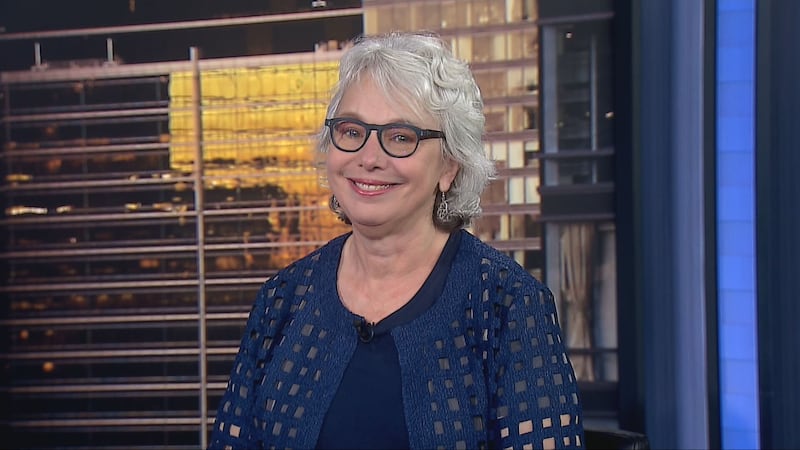
Read the full transcript below:
ANDREW: U.S. stocks are moving higher today, boosted by strong results from Bank of America and Morgan Stanley, along with expectations of more interest rate cuts from the Federal Reserve. We’re joined by Melissa Brown, managing director of investment decision research at SimCorp. Thanks very much for joining us.
MELISSA: My pleasure.
ANDREW: Great to have you here in our new Scarborough studio.
MELISSA: It’s beautiful.
ANDREW: Yeah, it’s a bit more open than I’m used to — I’m a downtown rat. So, despite the trade tensions, it looks like investors are deciding the economic fallout won’t be too bad.
MELISSA: That seems to be what they’re expecting. I think investors, in general, understand tariffs will be part of the landscape. They’ve put some sort of ceiling on them. Last Friday, when it looked like that ceiling might be broken — at least with China — it created some jitters. But overall, investors remain focused mainly, and almost exclusively, on the Fed.
ANDREW: And rate cuts — that’s the magic helping drive stocks higher?
MELISSA: Yes. When we look at the kinds of stocks investors are buying, highly leveraged and high-beta companies are doing well. Investors are definitely showing risk-seeking behaviour.
ANDREW: Although there were suggestions recently that people are getting jittery about the private credit market.
MELISSA: Yes, we’ve seen that. In fact, we’ve seen it for a while. The stocks of many companies selling private credit instruments have dropped quite a bit, so those jitters have been building for some time.
ANDREW: Do you see any major impediment to U.S. stocks going higher? What’s the main risk?
MELISSA: The U.S. market is very concentrated. If investors decide the AI trade is over, or should pause, that could bring the whole market down. Another risk would be if the Fed signals that inflation is still a bigger problem than expected and halts rate cuts. We haven’t heard that yet, but it’s certainly possible.
ANDREW: Maybe we can put up a 10-year chart for Walmart. It’s trading in record territory today, and apparently AI is part of the story. It seems like a stretch — Walmart and AI.
MELISSA: I remember back in the internet bubble when Starbucks announced it was launching an internet strategy, and I thought, “It’s hard to pour coffee over the internet.” Maybe this is a similar situation, although using AI for inventory management or logistics makes more sense.
ANDREW: Do you think there’s some AI silliness going on — companies just trying to jump on the bandwagon?
MELISSA: It does seem to be permeating every type of company. There are real benefits to AI, but in many cases they don’t go much beyond advanced statistical analysis. There’s some hype, but the difference between now and the internet bubble is that these companies are starting from a position of profitability.
ANDREW: In your business, have you seen presentations that seem, shall we say, AI slop?
MELISSA: Occasionally, you can tell by how something reads that it wasn’t written by a person. But not that often. People are learning to make their material sound more realistic.
ANDREW: What about Canadian stocks — are they catching your attention?
MELISSA: They are. With exposure to gold and other commodities, Canada has probably outperformed the U.S. this year.
ANDREW: It has — by more than 20 per cent.
MELISSA: Right, and because the Canadian market isn’t as concentrated as the U.S. market, there’s a broader range of opportunities. You don’t have to be in a narrow segment to benefit.
ANDREW: Do you generally like to hold a gold weighting in portfolios?
MELISSA: I can’t speak specifically to that, but having a small weighting in gold seems like a good diversifier, given the other risks we’ve discussed.
ANDREW: It sounds like investors are quite happy to embrace risk right now.
MELISSA: They certainly are. They went a little risk-off on Friday, but that reversed quickly on Monday — and it’s still the mood today.
ANDREW: Traditionally, when everyone’s partying, it might be time to leave.
MELISSA: It could be. But it’s also hard to miss out — there’s a lot of FOMO out there.
ANDREW: Do you think the Fed is being careful about how it handles rates, given inflation hasn’t gone away?
MELISSA: The Fed is in a tough spot. Employment doesn’t look terrible, but it’s not great either. They have to balance that with inflation, and you can’t tackle both at once. My big concern is that we’re moving toward a stagflationary environment — low growth with higher-than-expected inflation.
ANDREW: And that’s a central bank nightmare, isn’t it?
MELISSA: Absolutely — and it’s very difficult to fix.
ANDREW: Because inflation expectations get baked in, while parts of the economy still struggle.
MELISSA: Exactly. It might be just pockets of the economy or products, but when you add them up, it’s a big concern. You also have the issue of deportations in the U.S., which could push up labour costs and distort employment numbers.
ANDREW: I imagine that’s hitting the farm sector in California, which relies heavily on migrant workers.
MELISSA: I’m sure they’re worried. And many companies are also concerned about what further Chinese tariffs could mean for their operations — both on costs and supply chains.
ANDREW: After years of letting China handle manufacturing and rare earths, the U.S. is now trying to make a quick U-turn.
MELISSA: Yes, and it’s like turning a battleship — you can’t do it quickly.
ANDREW: We’ll leave it there. Melissa, thanks very much.
MELISSA: My pleasure.
ANDREW: Melissa Brown, managing director of investment decision research at SimCorp.
This BNN Bloomberg summary and transcript of the Oct. 15, 2025 interview with Melissa Brown are published with the assistance of AI. Original research, interview questions and added context was created by BNN Bloomberg journalists. An editor also reviewed this material before it was published to ensure its accuracy and adherence with BNN Bloomberg editorial policies and standards.

