Stock markets are rising after U.S. lawmakers made progress toward ending the government shutdown, lifting sentiment following last week’s AI-led selloff. Investors continue to question whether megacap tech’s dominance signals overvaluation or lasting strength.
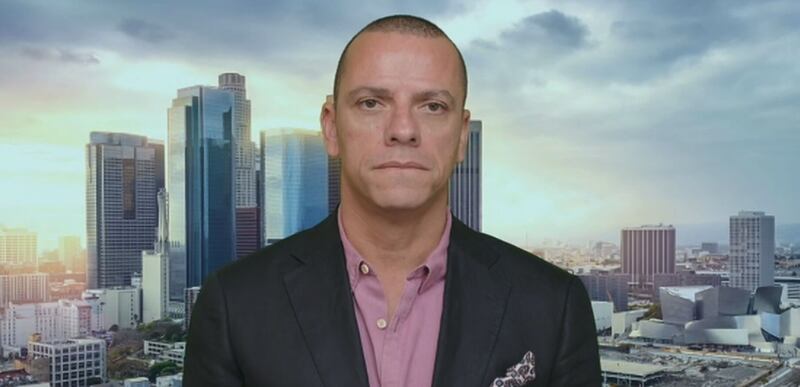
BNN Bloomberg spoke with Hatem Dhiab, managing partner at Gerber Kawasaki Wealth & Investment Management, who said the current concentration of market power in technology is not a bubble. He said record profits and solid balance sheets set today’s AI buildout apart from past speculative booms.
Key Takeaways
- The top tech companies now make up about one-third of global market value, but their profit growth justifies current strength.
- AI infrastructure spending of roughly US$400 billion is being financed mostly by free cash flow, not debt, easing systemic risk.
- Consumer sentiment remains weak even as markets hit record highs, underscoring a divide between Main Street and Wall Street.
- Tesla’s massive pay plan for Elon Musk highlights a shift toward an AI and robotics narrative but raises governance questions.
- Amphenol is seen as a key “picks and shovels” play for the AI boom, supplying cables and connectivity for new data centres.
Read the full transcript below:
ANDREW: OK, let’s take a look at the broad market here — maybe a one-week chart for the Nasdaq and the S&P 500. Last week, we saw some selling in the AI leaders amid concerns about valuations in the sector. Our guest says the current market dominance of the huge tech companies doesn’t indicate we’re in a bubble, even if it sometimes feels that way. Let’s welcome Hatem Dhiab, managing partner at Gerber Kawasaki Wealth & Investment Management. Hatem, great to see you as ever. You say it does feel a bit like a bubble with the massive market caps of these stocks, but you don’t think we’re there yet?
HATEM: Yeah, good morning, Andrew, good to see you. Absolutely. I think when you look at the Magnificent Seven being basically a third of all market capitalization for the whole world — bigger than most of Europe or other continents — one can start to think, wow, that’s a bubble. But the reality is, the earnings power for these companies is just magnificent — no pun intended. You’re seeing that the Mag Seven themselves generate so much cash flow every quarter, with profits growing at about 27 per cent on average. These numbers are impressive. And throughout history, we’ve seen sectors dominate markets for long stretches — think of transport or financials through the mid-century — simply because that’s where the growth is.
ANDREW: So you’re not concerned, in that sense. But what about the massive spending — hundreds of billions of dollars on data centres and chips? How long will it take before corporate profits are big enough to justify those investments?
HATEM: That’s the trillion-dollar question — when do we see ROI from those investments? What encourages me is that much of the spending is from free cash flow. These companies generate massive cash and are using it to build what is really the next infrastructure — the railways of the AI era. They’re funding the buildout of an ecosystem that promises huge advantages for humanity. If this continues to be financed by free cash flow from the world’s strongest companies, I’m not too worried. The minute we see more companies issuing debt or getting aggressive with financing, then it’s time to worry. But that’s not where we are today.
ANDREW: I suppose the problem here is that we just don’t know if AI will really cut corporate expenses that much. Will it be that effective?
HATEM: Yeah, it’s anecdotal right now. What we’ve mostly seen is what ChatGPT or other AI chatbots can do — like helping with better emails and writing. But when you think about efficiencies across the whole economy, and companies hiring less because AI helps serve customers better, you can see how this technology could boost productivity. Over the next two or three years, I think we’ll see that start to materialize — and that’s what the market is betting on.
ANDREW: What trends have emerged for you from the Mag Seven reports, particularly the so-called hyperscalers? It looks like cloud growth is continuing.
HATEM: For me, it’s all about capital expenditure. Every Mag Seven company has boosted capex, with combined spending of around US$400 billion — roughly double pre-AI levels. There’s huge investment in data-centre infrastructure, and I think that’s going to continue for years. As investors, that’s encouraging because that’s where the future lies.
ANDREW: Turning to consumers, the University of Michigan survey shows sentiment near three-year lows. It’s interesting to see that while the stock market is near record highs.
HATEM: There’s definitely a bifurcation between the stock market and the economy. You mentioned the shutdown — flights are being cancelled here in the U.S., and Thanksgiving is coming up. Inflation remains high, so some spending just isn’t happening. On the lower end, consumers aren’t doing well, but those with assets in the stock market are. That’s where we see most of the spending strength. You can see it in the market too — consumer discretionary names aren’t doing that well.
ANDREW: Speaking of the boom in AI spending, Taiwan Semi says it can’t meet demand for devices, including those sold to Nvidia.
HATEM: One hundred per cent. Nvidia doesn’t have any issues selling GPUs. The biggest constraints are energy, infrastructure, and regulation — building all these data centres is the challenge. TSMC, as the manufacturer, will continue to see strong demand for years because we’ll need enormous computing power going forward.
ANDREW: What about Tesla — speaking of possible excesses — what did you think of that pay package for Elon Musk that could be worth a trillion U.S. dollars?
HATEM: You have to look beyond the headlines. The trillion-dollar figure sounds ridiculous, but the targets Tesla must meet for Musk to receive that full package are enormous — an US$8.5-trillion market cap and US$400 billion in profits, up from around US$14 billion today. They have to execute big time. More importantly, Tesla is trying to change its narrative from being a car company to an AI and robotics company, and that’s what the pay package reflects. I’m a bit skeptical, though. Elon’s involvement in politics has caused brand damage, and that’s part of why only about 75 per cent of shareholders supported it.
ANDREW: Many observers think he should have stayed out of politics and not endorsed right-wing candidates.
HATEM: Absolutely. The funny part is he backed Trump, and one of the first things Trump did was cut EV subsidies and credits. It’s actually been detrimental to the electric vehicle movement, which doesn’t make much sense.
ANDREW: What about the ambitious goal in robotics? Do you think there’s any chance of achieving it?
HATEM: It’s a hot topic — would you want a robot in your house? Many people say no, but maybe in 20 years we’ll all have them. Tesla has done a fantastic job as a robotics company, particularly in automating its manufacturing. If Elon and his team can pull it off, they will. They’re an incredible execution team. But it’s hard to see where humanity is heading with this technology.
ANDREW: You have a stock idea for us — the symbol is APH. What attracts you there?
HATEM: We’ve loved the AI trade for a long time, but for us, the “picks and shovels” plays are among the best. Amphenol, ticker APH, is one of them. With roughly US$400 billion in data-centre spending expected over the next few years, you need reliable connectivity infrastructure. Amphenol makes the low-latency, high-reliability cables that power those data centres. For example, Elon Musk’s xAI Colossus data centre requires about 2,000 to 2,500 miles of cables. Amphenol provides those high-performance connections, so for us, it’s a great play on the infrastructure behind AI.
ANDREW: Hatem, always great hearing from you. Thanks very much.
HATEM: Thank you.
ANDREW: That’s Hatem Dhiab, managing partner at Gerber Kawasaki Wealth & Investment Management.
---
This BNN Bloomberg summary and transcript of the Nov. 10, 2025 interview with Hatem Dhiab are published with the assistance of AI. Original research, interview questions and added context was created by BNN Bloomberg journalists. An editor also reviewed this material before it was published to ensure its accuracy and adherence with BNN Bloomberg editorial policies and standards.

