U.S. markets are bouncing back from recent volatility, with investors betting on a broad-based year-end rally. The S&P 500 could reach 7,100 by year-end, fuelled by strong corporate earnings, seasonal strength and policy tailwinds.
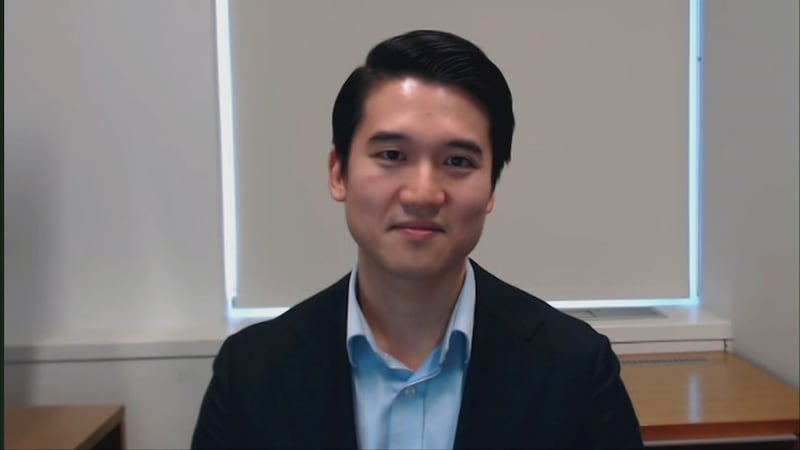
BNN Bloomberg spoke with Ohsung Kwon, chief equity strategist at Wells Fargo, who said the rally will likely be supported by AI investment, an expected Supreme Court tariff ruling and rising tax refunds. He added that power demand has become the key constraint for AI expansion, even as companies continue to invest aggressively.
Key Takeaways
- The S&P 500 could climb to 7,100 by year-end, led by broad-based strength across sectors.
- Kwon cites five rally drivers: seasonality, strong earnings, tariff refunds, higher tax returns and the U.S. government reopening.
- The AI capex cycle remains in early stages, with hyperscalers investing heavily to stay competitive.
- Power supply is emerging as the biggest constraint for AI infrastructure expansion.
- A potential Supreme Court tariff repeal could refund up to US$160 billion, providing an economic boost.
Read the full transcript below:
MERELLA: North American markets rallied back today after a volatile week. So what’s ahead? Let’s go to Ohsung Kwon, chief equity strategist at Wells Fargo, to talk about that. Thanks for joining us today.
OHSUNG: Thanks for having me.
MERELLA: Was it valuations that triggered last week’s volatility in AI and big tech, or do you think something else was fostering those fears?
OHSUNG: I think it was more technical and more about profit-taking, rather than any fundamental deterioration or signs of a bubble. I don’t think it’s a bubble. This bull market still has a long way to go. We’re bullish through year-end and are targeting 7,100 on the S&P 500 by the end of this year — so there’s still more upside from here.
MERELLA: And you see a broader rally by the end of the year. Is that attributable to the end of the government shutdown, you think?
OHSUNG: There are a few reasons why the market could broaden out. We basically call it an “everything rally” into year-end. Number one, seasonality — November and December are typically favourable, not just for the market overall, but especially for laggards. Number two, this earnings season was one of the broadest beats in history — 75 per cent of companies beat on EPS, the widest level in four years. Number three, the iBot tariff refund — we saw the hearing last week and expect a ruling likely in January. That could provide a big reflationary boost to the economy. Number four, the one big critical bill — tax returns. We’re talking about potentially $800 more per person this year versus last, which should be stimulative. And lastly, the government reopening will also be a positive catalyst for the market.
MERELLA: Let me ask about tech spending on AI. We’ve seen Meta face pressure from investors concerned about overspending. Do you see any similar threat for other big tech companies?
OHSUNG: We are a little concerned about hyperscalers’ need to spend. What’s concerning is that this might not be growth capex — it’s almost maintenance capex they must invest to stay competitive. That’s a little worrying for hyperscalers. Their free cash flow margins and cash flow conversion versus earnings have deteriorated quite a bit.On the other hand, that’s great news for AI semiconductors, power providers and other capex beneficiaries, because it suggests this AI investment cycle could last longer. That’s the part of the market we like.
MERELLA: What about energy stocks as a side play to AI? Is that something that still interests you?
OHSUNG: We like power overall, but we’re more cautious on the energy sector within the S&P 500 because it’s predominantly oil-focused. We think natural gas will probably do better than oil. The problem with gas is that there’s so much supply in the U.S., so we’re still cautious on that commodity overall.
MERELLA: I want to get back to that Supreme Court ruling we’re waiting for on whether those tariffs are legal. You mentioned a decision is expected by January. Is there a possibility it could come before year-end?
OHSUNG: I don’t want to speculate on timing, but I do think there will be trading activity ahead of the ruling. Betting odds show about a 70 per cent chance the tariffs will be repealed. If that happens, roughly US$160 billion in collected tariffs would be refunded into the economy. That would be a significant stimulus and could trigger a reflation trade ahead of the ruling.
MERELLA: If that’s how it plays out, how are you planning around it? It could swing one way or the other depending on the outcome.
OHSUNG: We’re recommending buying some of the potential tariff refund beneficiaries — mainly consumer and industrial stocks — heading into the event. If the tariffs are repealed, that would be positive for equities overall. We’d expect a reflation trade with stocks, rates and even gold rising on physical demand concerns.Medium- to longer-term, though, it could create uncertainty because the administration may look for other ways to reimpose tariffs. So we think there will be a reflation trade into the event — and you’ll want to sell the news afterward.
MERELLA: All right. Ohsung Kwon, we’ll leave it there. Thanks for your time.
OHSUNG: Thank you.
MERELLA: That’s Ohsung Kwon, chief equity strategist at Wells Fargo.
---
This BNN Bloomberg summary and transcript of the Nov. 10, 2025 interview with Ohsung Kwon are published with the assistance of AI. Original research, interview questions and added context was created by BNN Bloomberg journalists. An editor also reviewed this material before it was published to ensure its accuracy and adherence with BNN Bloomberg editorial policies and standards.

