A surge in speculative trading across unprofitable, high-risk technology stocks could be signalling that the U.S. market is entering the euphoric phase typical of a late-stage bull run, says a leading portfolio manager. Liquidity from potential fiscal and monetary easing could further fuel volatility and risk overheating.
BNN Bloomberg spoke with Andrew Slimmon, senior portfolio manager at Morgan Stanley Investment Management, who says despite his concerns about speculation, he still expects earnings growth and supportive policy conditions to sustain the rally into next year.
Key Takeaways
- Andrew Slimmon says rising speculation in high-risk, money-losing tech names suggests the market is entering a euphoric phase.
- He warns that monetary and fiscal stimulus could inject excess liquidity, risking an overheated market.
- A Fed decision not to cut rates in December would be “good news,” cooling speculation, he says.
- Slimmon argues markets remain less expensive than commonly perceived, with earnings estimates still rising.
- He expects continued strength in big banks, megacap tech and aerospace, sectors driving current market momentum.
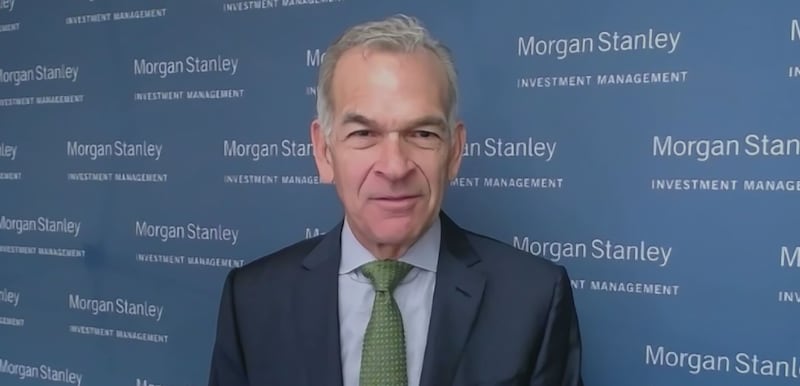
Read the full transcript below:
A. BELL: Investors are looking out for signs of excessive enthusiasm in the market. Many have focused on the huge rise in AI-related stocks. Our guest, though, says the biggest worry right now isn’t the Mag 7 or excessive enthusiasm for artificial intelligence — it’s the increased level of speculation and volatility. He says this kind of euphoria can mark the last stage of a bull market. We’re joined by Andrew Slimmon, senior portfolio manager at Morgan Stanley Investment Management. Andrew, that’s a very fresh take. Thank you very much for joining us. So you’re seeing people, for example, putting money into companies that won’t make money for years?
A. SLIMMON: That’s right, exactly. Look, the bear market ended in October 2022 and the market started to rise. No one wanted to buy speculative stocks — they wanted safety. They were worried about downside risk. It’s classic early-to-late cycle, but the more the market goes up, the more people forget that you can lose money. Balance sheets and cash flow statements are what put a floor under stocks, and now investors are chasing things with upside without regard for downside risk.
What we’re seeing is it’s not the Mag 7, it’s these money-losing, more speculative tech stocks. That’s where the money is going. Incredibly enough, off the low of April 8, the best thing to buy has been the most speculative, highest beta, money-losing stocks. They’ve done the best. That’s very consistent, Andy, with late-cycle bull markets.
A. BELL: Yeah, if I remember correctly, sometimes when things get really heated, people look for companies with no earnings because they think, “Well, I’ll get more leverage,” right?
A. SLIMMON: What’s incredible, though, is that if you look at the indexes for money-losing tech stocks, they’re up about 100 per cent off the low in April. Now, in 2021 they were up 400 per cent off the COVID low, but they’re still not back to where they were at the peak in 2021. So you can make a lot of money, but boy, oh boy, when the tide goes out, you’re going to get crushed.
A. BELL: You think another interest rate cut runs the risk of fuelling speculation?
A. SLIMMON: Number one worry — people ask me all the time, “Andrew, what keeps you up at night?” What keeps me up at night is that here in the States, we have a combination of monetary policy creating more liquidity, and we have this One Big Beautiful Bill that’s going to send a lot of consumer tax relief money to individuals. That’s a very powerful liquidity combination. It’s going to fuel speculation, just like it did when we were sending out COVID cheques in 2021. The more that liquidity fuels the boom, the bigger the bubble grows, which means when bad news comes along, it not only brings down speculative stocks, it brings down everything else. That’s what we learned in 2022.
A. BELL: However, broadly speaking, you think the bull market overall is likely to continue for a while?
A. SLIMMON: Well, look, we can discuss the AI and the bubble in AI, but look at what these companies reported. These Mag 7 companies reported unbelievable numbers. Yes, some of them are taking on debt to grow faster, but many aren’t. I think the earnings estimates all went up for these companies. They beat by double digits.
What we’re learning is a lot of people come on your show and say, “The market’s expensive, the market’s expensive.” Well, the flaw in that argument is the “E,” the denominator of the P/E, is too low — and it’s going up every week now because Wall Street underestimated the damage of tariffs and cut their numbers too much. These big companies are reporting big numbers, and they’re big weights in the S&P. It’s going to push the numbers up. What we’re learning is the market’s not as expensive as many have thought.
A. BELL: You have an interesting metric here — consistently, when the S&P 500 can make it into the fourth year of a bull market, it keeps going in that fourth year.
A. SLIMMON: It’s never gone down. A bear market is a 20 per cent correction — we came within a whisker, but we didn’t quite get there. I’ve been in business a long time, and it seems like we get to 19 per cent a lot. If we get to the fourth year, there have been seven times since 1950 and the market’s been up every time.
So look, you have some very compelling arguments. You have that track record, a fiscal policy tailwind, a monetary policy tailwind, and incredibly enough, Andy, sentiment for the fourth year of a bull market is still very contained, which I find curious. Sentiment follows price, and it’s still not very high yet.
A. BELL: The old wall of worry.
A. SLIMMON: Exactly.
A. BELL: What would really turn you cautious or bearish on this market? Is there an indicator that would be a serious red light suggesting it’s time to cut equity exposure in a big way?
A. SLIMMON: I think it’s what we talked about initially — these money-losing, speculative stocks in areas like quantum computing, nuclear, flying cars and rare earths. Yes, they’re up, but not nearly as much as in 2020–21 or during the tech bubble in 2000. The more they inflate, the more worried I’ll get.
I’d actually like the Fed not to cut, purely for the health of the stock market. It would be healthier if the Fed didn’t cut. One reason the market sold off last week is that all the speculative stuff came down after Powell said it’s no guarantee the Fed will cut in December. Less liquidity would actually extend the duration of this bull market. But the more this bubble inflates, the more we’ll start to move toward more defensive stocks.
A. BELL: Thanks. It’s interesting you mentioned nuclear as a speculative investment. I guess, yeah, we are going to see big spending on nuclear, but those plants will take years before they’re built.
A. SLIMMON: Years, years, years. Don’t forget, when you’re in the late stage of a bull market, you start to think about how much you can make over the next five to seven years, and you forget about the downside risk. There’s a great Warren Buffett quote — I love all his quotes — but one of them is, “Investors frame their viewpoints looking solidly in the rear-view mirror.” Right now, that rear-view mirror shows a roaring bull market, and that’s when people buy speculative stocks.
A. BELL: The old recency bias, yeah. Andrew, great hearing from you. Thanks very much indeed.
A. SLIMMON: All the best.
A. BELL: Andrew Slimmon, senior portfolio manager at Morgan Stanley Investment Management.
---
This BNN Bloomberg summary and transcript of the Nov. 11, 2025 interview with Andrew Slimmon are published with the assistance of AI. Original research, interview questions and added context was created by BNN Bloomberg journalists. An editor also reviewed this material before it was published to ensure its accuracy and adherence with BNN Bloomberg editorial policies and standards.

