Loblaw Companies Ltd. reported steady earnings in the third quarter, with adjusted profit and revenue rising from last year, while CAE Inc. delivered results that exceeded expectations on the strength of its defence and simulation businesses. The gains come as investors look ahead to a potentially stronger close to the year, buoyed by seasonal spending trends and improving sentiment following the end of the U.S. government shutdown.
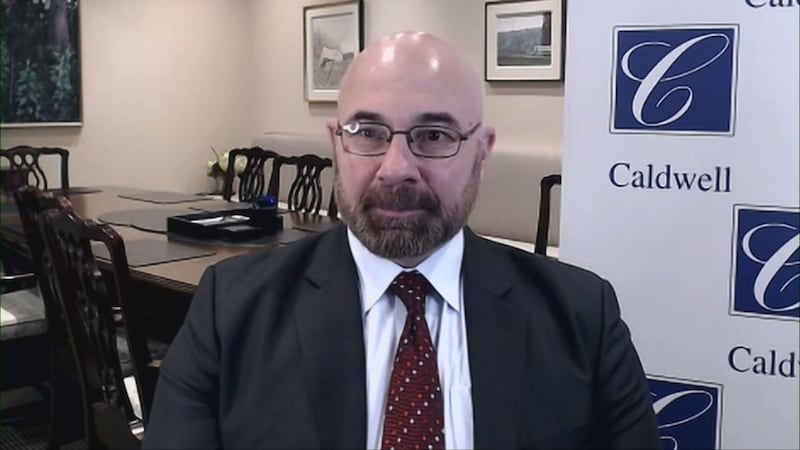
BNN Bloomberg spoke with Tony Ciero, vice-president and senior portfolio manager at Caldwell Securities, about the outlook for consumer and aerospace stocks, the drivers behind the latest earnings, and what investors should watch for as markets approach the holiday season.
Key Takeaways
- Loblaw reported steady third-quarter results, with adjusted profit of 69 cents per diluted share and revenue up more than four per cent.
- Ciero said Loblaw remains a reliable inflation hedge as consumers seek value through private-label grocery brands.
- CAE’s earnings per share beat forecasts by 22 per cent, driven by strength in defence contracts and steady training demand.
- The global shortage of pilots and ongoing defence spending are expected to support CAE’s long-term growth.
- Ciero advised investors to stay invested in stable, inflation-resilient sectors while maintaining portfolios aligned with their risk tolerance.
Read the full transcript below:
ANDREW: Loblaw’s sales and profits are up year over year. The gain on food sales may be smaller than analysts had expected, but the rest of the business is doing just fine. Let’s get more from Tony Ciero, vice-president and senior portfolio manager at Caldwell Securities. Tony, great to see you. Thanks very much for joining us. Give us your reaction to the Loblaw report, please.
TONY: Yeah, steady earnings. We anticipated this — slightly higher revenues than expected. I think year-over-year growth was around four to 4.3 per cent, and when you’re looking at a stable company like that, you’re looking at it staying ahead of inflation. A lot of the cost of groceries is passed on to the consumer. That won’t be absorbed by big companies like Loblaws and Metro — consumer staple companies. So that’s something expected. It’s inflationary, and the growth is again due to inflation. The No Name value brand is an area that did quite well. In a rising-rate, inflationary environment, consumers are looking for lower prices on groceries, so Loblaw was exactly what we expected from an earnings standpoint.
ANDREW: Would you be a buyer of Loblaw, or is all the money that’s going into it pretty well there?
TONY: Yeah, we are buyers of Loblaw. And again, it helps — it’s an inflation protection. The higher cost of goods is passed on to the consumer. So yes, we’re always considering Loblaw for our clients’ accounts, and sometimes it could even be a cash replacement because it does pay a little bit of a dividend, roughly about one per cent. But again, you stay ahead of inflation.
ANDREW: That’s interesting. You feel the stock is predictable enough that it almost resembles cash — a sort of holding place for money.
TONY: Yeah, yeah, and it’s great. Investors generally go to cash when markets are a little frothy and potentially could decline going forward, and a consumer staple like Loblaw will generally do well in that type of environment. So that’s the reason why we buy it. It’s more of a risk minimization as part of the portfolio. And a company like Loblaw — even if you look at George Weston and Metro — generally stays ahead of inflation.
ANDREW: What about the CAE numbers? Of course, if there’s a massive increase in countries wasting money on weapons, it’s going to be good for CAE.
TONY: Yeah, that was a surprise. The earnings per share came in around 17 cents, and the expectation on the street was about 14 cents — so a surprise to the upside of about 22 per cent. We anticipated much of what the rhetoric has been — their utilization rates. If we look at the civil aerospace side first, that’s generally their bread and butter: pilot training and simulation. There’s a shortage of pilots globally, and many are retiring because they’re hitting retirement age. Utilization rates for simulators aren’t as high because they’re not being used. So the anticipation was that earnings would be much lower compared to this time last year, but at the end of the day, they were only slightly lower.
On the defence contract side, they’re looking at replacing some of those old legacy contracts that are not necessarily profitable with new ones, especially as you mentioned — quite a bit of global spending on defence. One more thing I want to add — and I apologize for interrupting — is what’s next for this stock. You could argue the government shutdown in the U.S. could cause a slowdown. Maybe next earnings we’ll see a little bit of a headwind there, but that will be transitory. It could easily be offset as utilization increases. More pilots need to be hired globally, so the civil aerospace pilot simulation programs will increase. And again, as I mentioned, the defence spending momentum across the world — the U.S., Canada, Europe — CAE should benefit from those contracts as well.
ANDREW: Of course, I say “wasting money” on defence — we may need to do it in a more dangerous world. But it’s a pity we couldn’t be spending it on hospitals and ice rinks and fun fairs and things that actually contribute to the quality of life. There does seem to be some softness in the civil side of the business, though — apparently, according to Desjardins, a slower-than-expected recovery in pilot hiring.
TONY: Yes, exactly. Coming out of COVID, there was not a lot of need for pilots because airplanes were grounded. Now you need to ramp up, but that coincides with a lot of pilots retiring and hitting retirement age. You need to replace them. It’s an industry that, if you enjoy planes and flying, you might want to consider over the next five to 10 years if you’re looking for a career. We think the hiring spree will last about five to 10 years to meet the demand.
ANDREW: Thank you very much for joining us, Tony. It’s always great hearing from you.
---
This BNN Bloomberg summary and transcript of the Nov. 12, 2025 interview with Tony Ciero are published with the assistance of AI. Original research, interview questions and added context was created by BNN Bloomberg journalists. An editor also reviewed this material before it was published to ensure its accuracy and adherence with BNN Bloomberg editorial policies and standards.

