The TSX is under renewed pressure as selling intensifies, driven by wobbling confidence in the tech-led rally and growing questions about how much longer markets can defy high valuations. The weakness comes as investors weigh the wealth effect, narrowing leadership and the durability of the artificial intelligence narrative.
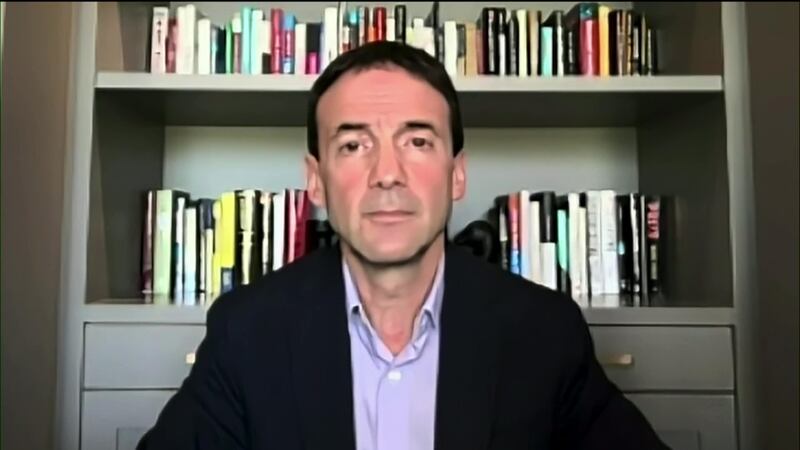
BNN Bloomberg spoke with Martin Cobb, senior vice-president of equities at Lorne Steinberg Wealth Management, who says pockets of opportunity are emerging even as the broader market struggles, pointing to engineering consultancies, retail operators and convenience-store consolidators as compelling longer-term ideas.
Key Takeaways
- The selloff reflects weakening confidence in the idea that all AI-related investments can continue powering markets without regard to spending or valuation.
- High equity exposure among U.S. households leaves the economy vulnerable to the wealth effect if markets experience a deeper pullback.
- Market concentration and reliance on tech-driven capital spending are amplifying volatility and raising the risk of feedback loops.
- Government spending on defence offers limited economic multiplier effects compared with infrastructure investment.
- Selective opportunities remain, including engineering consultancies, retail operators and convenience-store consolidators with durable growth models.
Read the full transcript below:
ANDREW: Pressure on stocks today. Let’s get more from Martin Cobb, senior vice-president of equities at Lorne Steinberg Wealth Management. Martin — what am I saying? I was thinking about your partner there. Martin, great to see you. I’m going to start off with an impossible question. Let’s put up a 10-year chart for the S&P 500. Do you think we’re at a major turning point for the markets? And it is impossible to be categorical about that.
MARTIN: Good morning, Andrew. Thanks for starting with the impossible question. I’ll tell you the answer to that in another 10 years, if that’s okay. Are we at a turning point? Who knows? But there are certainly indications the narrative is breaking down around the idea that all things AI are good and it doesn’t matter how much money you spend. It was interesting looking at Oracle. Remember early September, that massive day we had in Oracle as investors embraced it? It’s now back below where the share price was before that move. So some reality is setting in. I think this is healthy. I think it provides opportunities in other parts of the market. But calling the market from here is tricky.
ANDREW: And there’s Oracle. Like so many other tech stocks, it has come down from those record highs. An interesting angle here is that wealthier households in the United States have a lot of their wealth exposed to the stock market.
MARTIN: Yes. I had my first funds to manage in the late 1990s. At that point, we saw the S&P 500 reach 125 per cent of GDP, which was seen as high. Today it’s 175 per cent of GDP, which is at record highs. Then you look at U.S. household wealth, particularly among the wealthy, in terms of the assets they hold. Their total household wealth in equities is 21 per cent today — three times what it was 15 years ago.
There have been various studies done — with fairly wide conclusions, it has to be said — on the wealth effect, how people spend based on increases or decreases in their wealth. And if we do see a major downdraft in markets, that could impact the economy. That’s the argument, and it’s certainly conceivable.
ANDREW: Could that turn into a self-reinforcing thing? The economy turns down, confidence is damaged, and that in turn hurts corporate earnings?
MARTIN: Exactly. We’ve talked about this before. If you look at the U.S. economy today, so much of it is driven by IT capex — I think it was 40 per cent of GDP growth in the first six months of the year driven by that sector. And the whole thing is self-reinforcing. The economy is confidence — the confidence of individuals, business owners, everyone making decisions. If things start to unravel, that will depress demand and could lead to a vicious feedback loop.
That said, it works the other way too. If markets continue to new highs, that could bolster spending.
ANDREW: Looking back at history, in times of war or crisis governments are happy to spend money on weapons, arguably a huge waste of money in that they don’t produce anything except destruction when used. Do you think the rush to re-arm in Europe will have a big economic impact?
MARTIN: You’re touching on the multiplier effect. With government spending — which always concerns me — if you’re investing in infrastructure, as the Chinese have done, there are multiplier effects as we all benefit from using that infrastructure. It doesn’t work in armaments manufacturing. There is very little multiplier effect. You’re absolutely right, Andy. It may lift employment to some extent, maybe GDP to some extent, but it won’t have an ongoing effect of helping the economy continue to grow after the initial spurge is done.
ANDREW: With defence spending in Canada, if the media tries to find out details, will we be told, “We couldn’t possibly share that — national security?”
MARTIN: It’s a good point, yes.
ANDREW: Why is Sweden able to build fighter jets, but Canada can’t?
MARTIN: I’m not going to answer that. But Sweden has a history of high-end engineering in niche areas. Aerospace is an area they have focused on for decades. The problem for Canada — and I won’t touch on it too much — is that our neighbours to the south make jets, they do it very well, and we can buy them. But that has been thrown into doubt because of where we find ourselves today.
So you look around the world and ask: where else can you find jet manufacturers? Sweden punches well above its weight in that area.
ANDREW: Let’s look at a couple of stocks on your radar. Stantec, the engineering firm. What’s your take there? With fresh money, would you be a buyer?
MARTIN: It has been on our radar for some time, and I like the business. Stantec is effectively a consultancy. When will regulation ever disappear? When will we ever need less permitting or fewer environmental studies? I’ve built two houses — I know what that’s like.
Across the economy, there are so many boxes you have to tick, and they provide that. They’re a great secular grower: maybe 10 per cent sales growth and a bit more profitability every year. So you get dependable growth — mid-teens earnings per share.
The multiple is rich — mid to upper 20s — but it’s coming down nicely. Stantec, WSP, AtkinsRéalis — these are all interesting businesses as long as they stick to their knitting and don’t do something silly. Long-term demand for these services and their market positions tick a lot of boxes. I’d like the valuation a little cheaper.
ANDREW: Before you get enthusiastic, George Weston — a proxy for buying Loblaw in many ways. What’s of interest there?
MARTIN: We own Loblaw. George Weston gives you about 80 per cent exposure to the retail business. The other 20 per cent is Choice Properties, Loblaw’s landlord, though it has other clients. We prefer Loblaw because it’s simpler — I like things simpler as I get older.
You can buy Weston today at a discount to Loblaw — about 10 per cent — and it gives you a slightly better yield. Probably not worth shouting about, but if you like Loblaw’s market position, you can like George Weston.
ANDREW: What about Alimentation Couche-Tard? I was just in Ireland and Circle K stations are everywhere — a little depressing to see the same brands, but the stores were nice. Is that stock interesting to you?
MARTIN: Yes, we’ve been recent buyers. We stepped away when they made that huge offer for Seven & i Holdings, the owner of 7-Eleven, and that came about 18 months after their bid for Carrefour. The reason you want to buy Couche-Tard is the roll-up strategy: buying service stations from entities selling them, as they did with Total in Europe, rebranding them as Circle K, and driving synergies and growth. They’ve done that for years and are very good at it.
Get away from those very big deals — which were arguably legacy deals — and stick to the organic roll-up strategy. They’re facing some pressure in the U.S., but the valuation today is in the mid-to-upper teens and they can probably deliver 10 per cent earnings growth, some sales growth, and improved margins. There’s a lot to like if they stick to the mission.
ANDREW: Martin, we better jump. Thank you very much.
MARTIN: Thank you.
ANDREW: Martin Cobb, senior vice-president of equities at Lorne Steinberg Wealth Management.
---
This BNN Bloomberg summary and transcript of the Nov. 14, 2025 interview with Martin Cobb are published with the assistance of AI. Original research, interview questions and added context was created by BNN Bloomberg journalists. An editor also reviewed this material before it was published to ensure its accuracy and adherence with BNN Bloomberg editorial policies and standards.

