Walmart’s move to the Nasdaq and its stronger-than-expected results added a new layer to conversations about technology, competitiveness and North America’s evolving industrial strategies. The company continues pushing deeper into AI-enabled operations, even as broader concerns rise around supply chains, productivity and economic sovereignty.
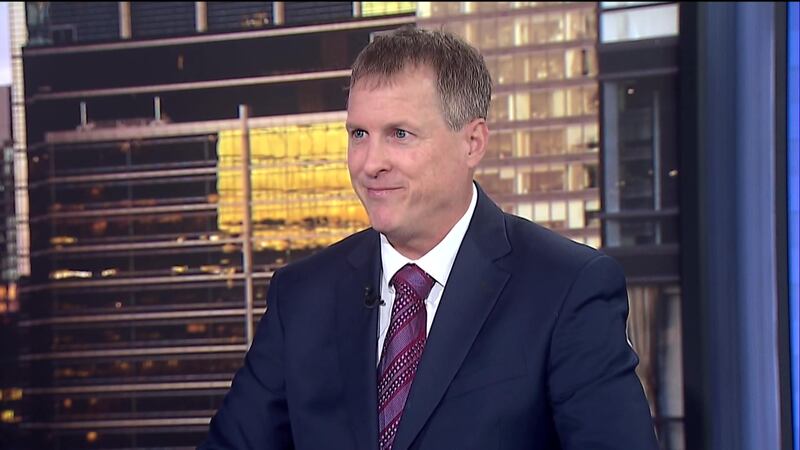
BNN Bloomberg spoke with Garnet Anderson, CFA, head of portfolio management at Tacita Capital, who discussed Walmart’s strategy, Celestica’s surge, and the broader challenges Canada faces in strengthening productivity, supply chains and global competitiveness.
Key Takeaways
- Walmart’s Nasdaq listing reflects its push to position itself as a tech-heavy retailer, though Anderson says the shift has little practical impact for investors.
- Canada faces growing pressure to retain listings and strengthen industrial competitiveness as other markets aggressively court companies.
- Increasing productivity, investing in supply chains and building more domestic capability are key long-term challenges for Canada’s economy.
- Celestica’s sharp gains and improving profitability make it a strong performer, though Anderson notes investors should be patient with new positions.
- Strategic autonomy — from rare earth processing to defence procurement — is becoming more central as geopolitical and economic pressures rise.
Read the full transcript below:
ANDREW: We’ve been talking a lot about Nvidia, but let’s get a bit more about Walmart. Walmart sales topped expectations, the company raised its forecast again and it’s moving to the Nasdaq because it says it’s such a tech-forward company now. Let’s get more from Garnet Anderson, head of portfolio management at Tacita Capital. Great to see you.
GARNET: Great to be here.
ANDREW: It’s interesting about Walmart, isn’t it? Moving to the Nasdaq?
GARNET: Well, it has a little bit. I mean, it’s the bellwether for the U.S. consumer — over 80 per cent of its sales come from there. But it is going quite hard at the whole AI theme, if you will, from consumer-facing to employee-facing to supplier-facing to its own tech stack. So it’s an interesting move, to your point, going over to the Nasdaq. In the end, I don’t think it’s a massive deal. Exchanges battle for listings; there are fees involved and so on. For the end investor, I don’t think it makes much of a difference, to be honest with you. It’s already a behemoth. It’s already in the benchmarks. So it’s not like being added to a benchmark that suddenly boosts a bunch of index buying.
ANDREW: The NYSE must be annoyed, though, because they don’t want to be seen as old-fashioned.
GARNET: Well, that — or you see the battle London’s going through trying to keep its own listings. Maybe we can look domestically and go: we’re going to have to make sure we keep as many listings as we have. I mean, we’re the greatest country in the world, but we don’t have the deepest stock market. Yes, we’ve got a lot of listings, but many are on the Venture Exchange. When you look at our large caps, we certainly have some world-beaters. It’s just not like the States where you look right, left and centre and they’re everywhere. So let’s keep our listings here as well.
ANDREW: I’m not sure if you saw that story from the Globe’s Niall McGee that the federal government is trying to twist Anglo American’s arm to put its primary stock listing in Toronto.
GARNET: If you want our mines, perhaps that’s part of the quid pro quo. And I don’t blame them, because you’ve had others talk about moving their head office down to the States. I’d just hate to see that slide.
ANDREW: Yeah. But of course, that’s what the Americans want. That’s Trump’s game here.
GARNET: Oh, absolutely. It’s about bringing back manufacturing, bringing back factories, bringing back services — tariffs and the whole kit and caboodle. It’s absolutely about bringing that business back to the States. They’re saying, “We’re the greatest consumer economy in the world and we want more of that to be local.” It’s a multiyear rollout, but you are seeing where he’s chalking up some wins. You may not want to admit it, but some of that game plan is working out.
ANDREW: There are critics who say we’ve always been a branch-plant economy. Maybe it’s inevitable with a gigantic neighbour.
GARNET: Well, I think we’re much more attuned. We were talking about this yesterday in the office: nothing galvanizes a community or a country like having an enemy — and I’m putting quotation marks around “enemy” because they’re not our enemy; they’re an ally. But you need something to focus a challenge. So yes, let’s strike deals with other countries. Let’s get our employees and companies more competitive, driving toward higher productivity and making more investments — not relying so much on cheap labour. Let’s move up the food chain. Let’s not just ship the oil — let’s refine more of it. Let’s dig out the rare earths. It’s a big technical challenge, but let’s try to process them. Recognize they’ll lay out a list of projects for the nation to march forward and improve our economy to become more resilient. They’re not all going to be successes. That’s life; that’s business. Fail fast. Get in there, spend the money, and let’s hope we get a three-quarters success rate.
ANDREW: Do we need a more risk-taking business culture in Canada? Canadian companies seem reluctant to invest.
GARNET: It’s partly cultural. It’s not a light switch you can just throw and wake up tomorrow and say, “I’m going to be entrepreneurial. I’m going to be a risk taker.” But slowly but surely — from our education system to how we make it easier to lend to and start young companies, to how we support them, to how professionals like accountants and lawyers support that grassroots — it should bode well for us in five or ten years. I’ve said before: we’re probably in for some rough times in 2026 with the USMCA renegotiation. We’re going to be put to the wall a couple of times. But ten years from now, are we better for the challenges we’re enduring today and will endure over the next couple of years? I’m optimistic. I think that in ten years, Canada will be that much more of a world leader.
ANDREW: Necessity being the mother of invention, we might just have to.
GARNET: Right. And we have a tailwind. We’re blessed with natural resources and a highly educated population. Let’s make hay.
ANDREW: This is indirectly — well, fairly directly — connected to Nvidia. Celestica is a stock you continue to own.
GARNET: Well, we do. We’ve owned it for a while. We’re quantamental in nature, so we take a look at the numbers first and then figure out if the story dissuades you from taking that position. It’s up very strongly — up roughly 230 per cent this year. It’s the proverbial Peter Lynch 10-bagger over the last little bit. So we’ve been practising risk management; you have to take a little bit off the top here and there. Having said that, we think it remains well-positioned in Canada. It’s got diversified business lines. It’s not a high-margin business like Nvidia, but it has grown its profitability. Its margins continue to improve — not stratospheric — and its valuation multiples have also improved. So it’s a good company.
It got tattered in the tariff worries because they’re global. Particularly in Southeast Asia they’ve got production plants, and there were concerns about tariffs there. They’ve come back from that. But it is a stock that’s prone to selloffs in the 20-per-cent range — call it once a year. Before this morning — and it’s rallied three or four per cent this morning — it was off 11 per cent. So it wasn’t quite down to a juicy buy range, but it’s something Canadian investors might not be getting if they only own the S&P/TSX 60. It’s not a component there. It’s about 1.8 per cent of the composite. It’s not like Nvidia, which is eight per cent of the S&P 500 — you already have it if you own a SPY or any S&P 500 index. So it’s not a bad complement to a portfolio, but new buyers would want to be patient.
ANDREW: With Celestica — yeah, it’s not screaming out at you now for new money.
GARNET: No. With risk management, you trim. It’s not a wholesale sale. It’s a good, solid company. But as an entry point, we’re probably not there yet.
ANDREW: Just circling back to sovereignty, do you think Carney will dare to buy a fighter jet other than the F-35? The Americans would be furious.
GARNET: Oh, goodness gracious. That’s a fantastic and loaded question. I can’t say it really has much to do with markets. The part I don’t have is: if you divide it and say, “I’m going to take half the Gripens and half the F-35s,” what is the incremental maintenance, management and training cost per year? I don’t know if that becomes prohibitive. If it’s not prohibitive, it would seem to me it’s a solid strategy — you’ve aligned both ways. The F-35, by all accounts, is the leader.
But it struck me as strange that President Trump came out with the “51st state” talk before saying all countries need to militarize more and spend more. That’s been a beat and drum, but he meant it this time — and we’re reacting this time. I don’t understand why it was: “Well, you only have F-35s,” and then start the banter about becoming the 51st state. It was bizarre and backwards.
Having said all that, I think there is a chance we’ll have to diversify out. If it’s not in planes, it may be in other sources — via drones or otherwise. The other thing is: the Avro Arrow era was back in the ’50s — that’s a long time ago. That knowledge base is gone in Canada. We’ve got Bombardier that has some of that knowledge, and other associated firms. But if we can bring back jobs and education around it so we become more self-sufficient, it’s part of the reason Trump wants more manufacturing in the States. After the Second World War, everyone was able to build tools and dies and support the military complex. Those people have now retired. They’re selling off their companies. They’re dwindling. So they looked at their trade-school system and said: we’ve got to bring up the next generation who can build the things. You can design them, but you have to be able to build them. And we have to be able to do that in Canada.
ANDREW: And it can take a generation or more to do that.
GARNET: Start with one tree planted today.
ANDREW: Garnet, thanks very much. We covered a lot of ground and solved the world’s problems.
GARNET: Oh, we did. Excellent. Thank you.
ANDREW: Thank you, Garnet Anderson, head of portfolio management at Tacita Capital.
---
This BNN Bloomberg summary and transcript of the Nov. 20, 2025 interview with Garnet Anderson are published with the assistance of AI. Original research, interview questions and added context was created by BNN Bloomberg journalists. An editor also reviewed this material before it was published to ensure its accuracy and adherence with BNN Bloomberg editorial policies and standards.

