Markets continue to recover after last week’s tech pullback, with growing confidence that economic momentum remains intact. While questions persist around market breadth and the sustainability of AI-linked gains, broader indicators point to steady expansion.
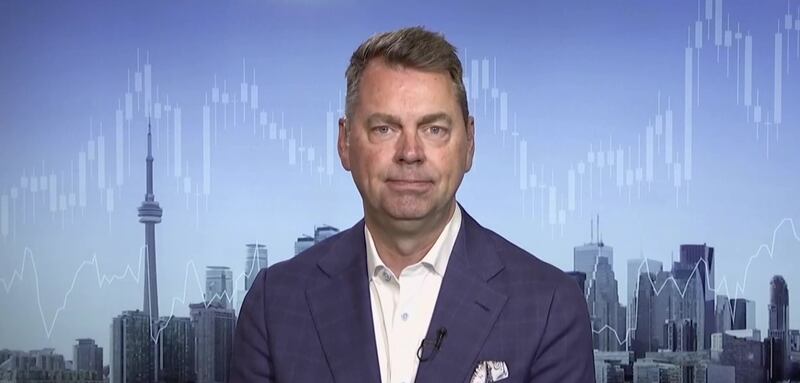
BNN Bloomberg spoke with Philip Petursson, chief investment strategist at IG Wealth Management, who outlined four macro pillars shaping the 2026 outlook and why they continue to reinforce a positive path for markets.
Key Takeaways
- Monetary easing from the Bank of Canada and the U.S. Federal Reserve is boosting liquidity and supporting long-duration sectors such as technology.
- Fiscal expansion in Canada and the United States — including upcoming U.S. tax cuts — is set to reinforce consumer demand and investment.
- The AI spending cycle continues to drive capital investment, productivity gains and earnings growth despite concerns about financing.
- Strong household balance sheets and rising equity markets are fuelling the wealth effect, supporting consumption across higher-income groups.
- Broader economic indicators, including global trade, manufacturing and housing data, point to durable expansion with low recession risk into 2026.
Read the full transcript below:
ANDREW: It looks like U.S. stocks will slip at the open today. Yesterday, though, they jumped despite last week’s fears of an AI bubble. Our guest says skepticism is lingering, but the data suggests we’ll continue to see durable expansion supported by fundamentals. We’re joined by Philip Petursson, chief investment strategist at IG Wealth Management. Philip, great to see you. When we talk about durable expansion, are we talking in particular about tech spending?
PHILIP: It’s partly tech spending, but there’s a lot more to it. Thank you, Andy, for having me on. We’ve just released our 2026 outlook, and we’ve identified four pillars that we believe will support the economy and drive growth into next year. These are monetary stimulus, fiscal stimulus, AI spending and the wealth effect. So it’s not just AI. There’s everything around it. We saw that in the third quarter results where most sectors participated. There was only one sector that was down year over year on earnings, and that was energy. Every other sector posted very strong earnings growth and surprises to the upside. So this is a good lead-in to next year.
ANDREW: And you’re not concerned that eventually the financing will start to dry up for AI until people see sustainable profits from all this investment?
PHILIP: The financing might dry up, and that’s something we’re seeing in the headlines more and more as large companies turn to the credit markets to finance some of these AI initiatives. But right now, we’re still seeing real money flow through. While future investment may start to slow, we have a solid core going into next year that should be very supportive. It might be more of a 2027 story where things soften a bit on AI, because by then the proof will need to be realized in terms of returns on these investments. But for now, we remain optimistic. The one to one-and-a-half per cent of AI spending going into the global economy, as a percentage of U.S. GDP, is still fairly solid.
ANDREW: And we hear a lot about this wealth effect, where households — especially in the United States — see the value of their stock holdings go up and feel inclined to spend. I guess it cuts both ways. If the market took a big downturn, that would tend to cut into confidence.
PHILIP: It does. But interestingly, research shows that as $1 of financial wealth is realized by households in the United States, about 15 to 25 cents of that is spent. When markets decline, it doesn’t mean you see an equal decline in spending. It remains to be seen, if we saw a meaningful downturn in the near term, what that would mean for consumption. But in the meantime, we’ve had three very strong years of growth for investors. Even your average balanced fund has delivered double-digit returns on an annualized basis over the last three years. That is being realized and being spent by consumers — not only in the United States, but also in Canada and elsewhere.
ANDREW: And you note — I think you touched on this — that governments are in stimulus mode. Even if interest rate cuts are coming to an end in Canada and the United States, they’re still talking about big spending or tax cuts.
PHILIP: Exactly. Remember OB3 — or the One Big Beautiful Bill. A lot of those tax cuts come into place at the beginning of 2026, and that will be quite stimulative. We think you’ll see a massive extension of tax cuts for corporations and households. Households earning more than US$217,000 a year are expected to see an average tax cut of about US$12,000. That’s meaningful. We talk about the K-shaped economy, but it’s the consumer at the top end of that K that’s most important to the economy and to stock markets.
ANDREW: What kinds of stocks do you think will do well next year? Is it possible to generalize?
PHILIP: We look geographically first. We’re equal weight in the United States and still have a positive outlook for U.S. equities in 2026. But we see an extension of the outperformance we enjoyed in 2025 continuing into next year. That includes the Canadian equity market, the TSX. We also think international stocks will continue to perform well and outperform U.S. stocks. Additionally, emerging market stocks are poised to continue to outperform. So we are overweight Canada, international markets and emerging markets relative to the United States. We are overweight equity over fixed income heading into the new year.
ANDREW: Sorry, what was that last point about fixed income? Bonds, right?
PHILIP: We’re underweight fixed income relative to equities. Fixed income is still attractive, but we think returns will be around three to four per cent for a broad-based portfolio. We believe equity markets can do better. When we look at the real downside risks — such as the risk of recession, which tends to lead to deep bear markets — we don’t see a significant recession risk into 2026. So we see a much higher probability of continued positive returns for equities, likely multiples of what fixed income can offer. That’s why we’re overweight equities and underweight fixed income in our portfolios.
ANDREW: And is one reason to be cautious about fixed income the risk of inflation, or is inflation now under control?
PHILIP: We believe inflation is under control. When we model it out over the next six to nine months, both in the United States and Canada, we see inflation settling into its target range. In Canada, that’s two per cent plus or minus one. We might see inflation a little higher in the next couple of months, but that’s more math-related than price-related. Then it should ease back toward two per cent by mid-2026. In the United States, we have inflation targeted around two-and-a-half per cent — a little above the Fed’s target, but consistent with historical norms. Inflation is no longer a problem for central banks. We think the focus will shift to economic support, and that’s where we see four cuts by the Fed next year and one by the Bank of Canada.
ANDREW: That’s interesting. Canada is well ahead in that cutting cycle. Thank you very much, Philip. Really appreciate it.
---
This BNN Bloomberg summary and transcript of the Nov. 25, 2025 interview with Philip Petursson are published with the assistance of AI. Original research, interview questions and added context was created by BNN Bloomberg journalists. An editor also reviewed this material before it was published to ensure its accuracy and adherence with BNN Bloomberg editorial policies and standards.

