U.S. markets steadied after a volatile start to November, with major benchmarks finding support as concerns over AI valuations, interest-rate decisions and sector-level divergences began to ease. Earlier drawdowns of about five per cent moderated as traders reassessed the latest signals from tech earnings and shifting expectations for the Federal Reserve.
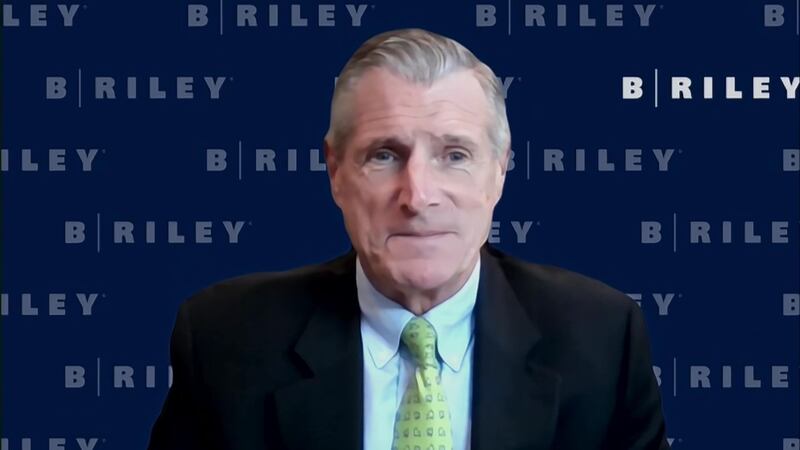
BNN Bloomberg spoke with Art Hogan, chief market strategist at B. Riley Wealth, about how AI leadership, sector breadth, GDP momentum and rising odds of a December rate cut are shaping investor sentiment heading into year-end.
Key Takeaways
- November’s early selloff eased as major U.S. indexes found support at key technical levels.
- AI sentiment improved as valuations in leading tech names normalized and Alphabet gained momentum with its Gemini 3 rollout.
- Nvidia demand remains strong, with next-year orders measured in the hundreds of billions despite China currently being excluded.
- Broader sector strength emerged, with utilities, industrials and communication services outpacing the S&P 500.
- Odds of a December U.S. rate cut increased sharply, while GDP estimates point to stronger growth in early 2026.
Read the full transcript below:
ROGER: Even with the green today, we are seeing mixed markets. Over the last little while, the TSX, Dow Jones, S&P and WCS crude are all up. The Nasdaq was down — it’s now up again. WTI crude is down. The Canadian dollar is declining slightly, and so is bitcoin. There’s a lot going on. Let’s bring in Art Hogan, chief market strategist at B. Riley Wealth. Art, thanks very much for joining us.
ART: Thanks so much for having me.
ROGER: There is a lot going on. A lot seems to be going on during the day, but also for the month. I was surprised to see — yeah, November is shaping up to be, and all this may change in the next couple of days, but one of the worst Novembers in 17 years.
ART: Yeah. So November is typically a very good month, and October and September are typically difficult months. I think we just pulled forward the seasonality a bit in October, and September actually worked out fine. Some of the concerns about everything we’re thinking about kind of played out in November. So November actually being down as much as it was coming into this morning was setting up to be one of the worst Novembers in about 17 years.Now, obviously, we have a couple of days to make up some ground here. But clearly some of the concerns — focused around AI valuations, focused around whether the Fed will cut rates in December or not — all played into a risk-off attitude. That was really apparent in the first two weeks of November, when we had much more significant sell-offs, and last week when we seemed to hit the crescendo with the S&P 500 hitting the key level of support at the 50-day moving average and bouncing off that nicely.So we were actually down five per cent at the low point of the drawdowns in November, and we seem to have found some support. The news around AI seems to be migrating to the positive versus that overarching concern it had gotten ahead of itself.
ROGER: Now, does that seem a little firm now — that positivity when it comes to AI — or is there still some turmoil there?
ART: Well, I would tell you this: if you look at the valuations of the top six artificial-intelligence star names — or the “Mag Six” — and if you exclude Tesla from that because it’s not actually an AI play, multiples haven’t been this cheap in two years. You’re talking about an average multiple of 31 for companies that are growing earnings north of 50 per cent, revenues north of 60 per cent and have gross margins north of 65 per cent.So I think the multiples are more rational now than they were a year ago and certainly don’t call into question any type of bubble in the near term. I think the larger concern had been whether there is a circular nature to some of the financing of CapEx, and those names that were on the speculative edge of this artificial-intelligence revolution have seen a much larger drawdown.So we’re probably in a better place coming into this week. I certainly think the pullback in Nvidia is probably overdone. I think the fact that Alphabet — or Google’s parent Alphabet — is the new leader with the Gemini 3 rollout this week is meaningful. Leadership will obviously evolve over the next couple of years, but here and now, it seems like the pole position goes to Alphabet, and that’s really driving a lot of the gains today.
ROGER: And with the news today about chips — does that change anything?
ART: That doesn’t really change anything. Nvidia has been at the tip of the spear for all the folks who want to build out large language models. At some point, there will be a need for less-expensive chips, but we’re just not there yet.So along the path to the dream of agentic artificial intelligence, the folks who want to spend money on chips are going to continue to go to Nvidia. After the report last week, we saw that their demand for next year is measured in the hundreds of billions of dollars — and that’s without China. I would suspect at some point that China will be part of that order book. But right now, China is not part of it.
ROGER: It sounds like somebody agrees with your strategy.
ART: I have two very good analysts. I’d love to get them in the shot right now, but they’re right over there begging to go outside and chase some squirrels.
ROGER: I think I have the same analyst at home as well. Overall, year-to-date, I was just looking at the numbers. Everyone is talking about tech, tech, tech. But the communication sector has had quite the year.
ART: Yeah, communication services — part of that Mag Seven. But more importantly for me, utilities and industrials. With artificial-intelligence adjacency, we need all sorts of power; we certainly need data-centre build-out. So when you look at the makeup of the 11 sectors in the S&P 500, you actually have six of them outperforming the index itself — much broader than we saw last year.
ROGER: And the other thing everyone is talking about: there wasn’t going to be a rate cut. Now that’s changed. And we’re heading into the quiet period. What can we expect?
ART: I think the fact that we’re in the quiet period is good. The fact that we’ve gone from a 40 per cent possibility of a rate cut to an 80 per cent possibility is also positive. It’s likely going to be a divided decision. We may have a seven-to-five vote, which is okay — it’s a committee.So even if Donald Trump introduces a new, very dovish chair before Christmas, remember, you need seven votes in a 12-voter committee. This one might come down to a seven-to-five vote. But the fact we’ve moved closer to a decision that perhaps in December we’re actually going to see a rate cut — the market is celebrating that.
ROGER: And GDP growth — we’re going to get some numbers. It’s looking at about 1.8 per cent. We were talking up here in Canada — it’s almost stagnant. Such a different story down there. What’s it shaping up to be with the numbers?
ART: I should probably grab this animal to stop barking. But I’ll tell you this: the Atlanta Fed, which estimates this, actually has GDP growth north of two-and-a-half per cent. The St. Louis Fed, which also does an estimate, is closer to the mean — which is 1.8 per cent.I think GDP growth is going to pick up in the first quarter and first half of next year, because a lot of the things this new administration is bringing about — less regulation, more productivity with AI, a corporate tax rate that will stay the same for a period of time — haven’t played in yet because we’ve been so concerned about trade and tariffs.At the end of the day, we’re likely going to see earnings growth next year that is as good or better than we saw this year. We’ve had double-digit earnings growth for the last three quarters.
ROGER: And we saw some more earnings coming out today — Alibaba having a good one, Analog Devices beats as well.
ART: It’s amazing. We started this third-quarter season thinking we’d have about seven per cent — maybe seven-and-a-half per cent — earnings growth. It’s north of 13 per cent right now. The more important piece to me is that estimates for the fourth quarter went higher, and estimates for 2026 went higher.So earnings growth and the fundamentals are clearly better now. Around the edges, concerns about trade and tariffs are always there. Concerns about valuations in AI reared their head in November. In general, if you’re an investor thinking about the long term, the fact the fundamental picture is sound is probably a good reason to stick with a diversified investment plan.
ROGER: All right, we’re going to leave it there. There are bear markets, bull markets — you might be in a new dog market. Thanks very much.
ART: Thank you so much for being patient with the boys.
ROGER: It happens. Cheers, Art. Thanks very much. Art Hogan is chief market strategist at B. Riley Wealth.
---
This BNN Bloomberg summary and transcript of the Nov. 25, 2025 interview with Art Hogan are published with the assistance of AI. Original research, interview questions and added context was created by BNN Bloomberg journalists. An editor also reviewed this material before it was published to ensure its accuracy and adherence with BNN Bloomberg editorial policies and standards.

