More Canadians are preparing to enter the housing market as shifting conditions, moderating prices and stronger inventory create a more favourable environment for prospective buyers. A new survey suggests renewed confidence among households waiting for stability in interest rates and affordability.
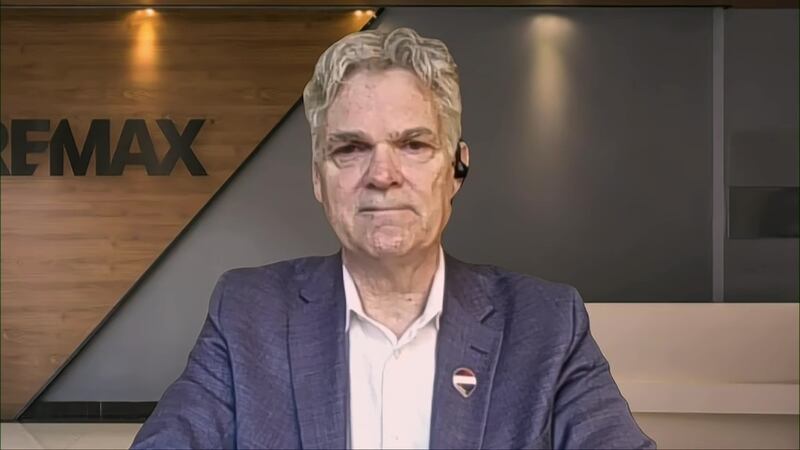
BNN Bloomberg spoke with Don Kottick, president of Re/Max Canada, about the factors driving buyer readiness, including pent-up demand, demographic shifts, regional affordability differences and expectations for rate movements heading into 2026.
Key Takeaways
- Ten per cent of Canadians plan to buy a home in the next year, with first-time buyers making up roughly half of that group.
- Nearly a quarter of Canadians say they would be ready to buy if interest rates fall by 0.5 to 1 percentage point.
- Rising listings across most regions have shifted many markets toward balance, contributing to price moderation in 2025 and an expected 3.7 per cent decline in 2026.
- First-time buyers are trending older as affordability pressures extend the time needed to save for a down payment.
- Regional conditions vary, with stronger demand in more affordable markets such as Montreal, Calgary and the Prairies, while higher-priced cities like Toronto and Vancouver show slower buyer momentum.
Read the full transcript below:
ROGER: More Canadians are looking to buy a home, including first-time buyers, according to Re/Max Canada. About a quarter of those interested say they would be ready to buy if the Bank of Canada cuts rates. Here to talk about these numbers is Don Kottick, president of Re/Max Canada. Don, thanks very much for joining us.
DON: Hey Roger, thanks for having me today.
ROGER: Let’s talk about the 10 per cent of Canadians who plan to buy a home over the next 12 months. That’s about a 35 per cent increase from the fall. What’s driving that change — that optimism?
DON: Well, I think we have to realize that Canadians have been living in a state of uncertainty in terms of the economic situation for the last little while. As a result, I think consumers have just become comfortable that this is the way things are going to work out. They had hoped that, by this time, the Canadian government had negotiated a settlement with the U.S. on the tariff discussions, but that isn’t the case. So now they’ve just become comfortable with this state of uncertainty. And I think there’s a lot of pent-up buyer demand that has existed in the market for quite some time, and it’s just coming to fruition as we head into 2026.
ROGER: It’s a lot easier, of course, to buy your second home, but about half of these prospective buyers are first-time buyers. What do we know about the demographic breakdown? Are they younger? Are we starting to see young people looking to buy again?
DON: One of the things we’re seeing is a demographic shift among first-time buyers over the last five years. They’re skewing older. They’re taking longer to save their money, given the way things are, and they’re generally older than first-time buyers were in the past.
ROGER: So we’re not seeing young people feeling more optimistic? Many still feel they won’t be able to buy for a while.
DON: Anecdotally, we’re finding that home buying is still near and dear to Canadians, including younger first-time buyers. They definitely want to buy a home — that’s something our survey found. I just think they’re waiting a little longer than they have in the past. But they know that owning a home is one of the few ways to accumulate wealth in Canada, given the taxes we pay. It’s part of our culture and it continues to be.
ROGER: And you found about 23 per cent of Canadians would be ready to buy if Bank of Canada interest rates drop. What kind of drop are they waiting for?
DON: It’s interesting. I think the general consensus is that rates are probably going to hold firm through the first quarter and potentially into the second quarter. That creates a scenario where people say, “Okay, I’m not going to sit on the fence anymore.” Rates have stabilized in many consumers’ minds, so those waiting on the sidelines for another drop are realizing it may not come for a while. This may be the way things are, and they’re getting back into the market. We’re seeing that anticipation heading into 2026.
ROGER: And these numbers — are they consistent across the country, or does it vary by region?
DON: It varies. Everything is based on affordability. So in more affordable markets, the uptick is higher. In major markets like Vancouver and Toronto, where the average price is higher, we’re not seeing the same increase. But markets like Montreal, Calgary, the Prairies, Saskatoon and some rural regions in Ontario are seeing stronger demand.
ROGER: And when buyers start looking, what kind of prices can they expect? Have we seen a drop?
DON: I think going into next year, the general consensus is we’ll see a decline of between three and four per cent — probably closer to four per cent — in average prices across the country. We also anticipate that sales could be up 3.4 per cent heading into 2026. So we’re expecting a slight upswing as people become more comfortable with uncertainty.
ROGER: And we’ve seen a bit of a drop in immigration. Is that alleviating pressure for buyers?
DON: I think we’re coming off decades of chronic inventory shortages relative to our population. Even though immigration levels have been reduced somewhat, immigration has increased significantly over the last decade. We’re going to feel the residual effect of that record immigration for years. That puts pressure on the rental market and on the resale market as well.
ROGER: You mentioned tariffs. Has that had an impact on home prices, beyond the psychological hit?
DON: I think there was concern about material costs and how that would affect new homes. From a consumer sentiment perspective, we saw an initial shock back in February and the spring when the impact was felt. But as time has gone on, people have adjusted to the reality. They’ve given up hope that a resolution is imminent, and as a result, they’ve jumped back into the market.
ROGER: Okay, we’re going to have to end it there. Don, thanks very much for joining us.
DON: My pleasure. Thanks, Roger. Thanks for having me.
ROGER: Don Kottick is president of Re/Max Canada.
---
This BNN Bloomberg summary and transcript of the Nov. 26, 2025 interview with Don Kottick are published with the assistance of AI. Original research, interview questions and added context was created by BNN Bloomberg journalists. An editor also reviewed this material before it was published to ensure its accuracy and adherence with BNN Bloomberg editorial policies and standards.

