U.S. equity valuations have surged to levels rarely seen in history, raising the risk of a significant downturn even as major benchmarks continue to climb.
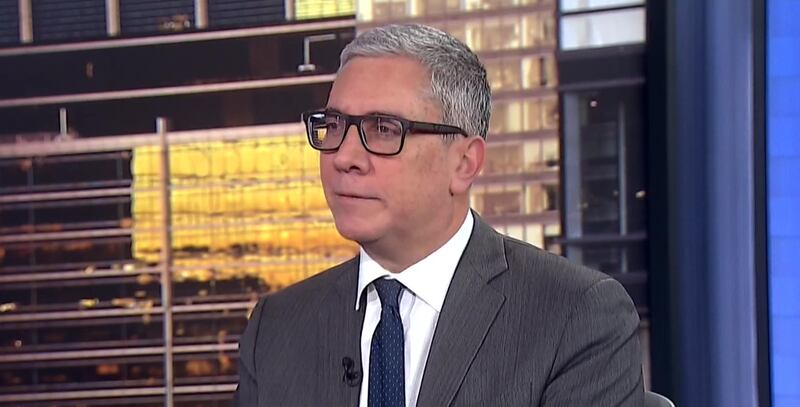
BNN Bloomberg spoke with Ted Rechtshaffen, portfolio manager, president and CEO at TriDelta Private Wealth, who says today’s environment warrants caution but not panic. He outlined how his firm is trimming equity exposure and leaning on defensive, low-correlation strategies.
Key Takeaways
- The Shiller PE ratio climbed above 40 this month, a level last reached in 1999, signalling historically stretched U.S. stock valuations.
- Rechtshaffen says extreme valuations heighten the risk of a 10 to 25 per cent market decline, though timing such corrections remains highly uncertain.
- His firm is reducing equity weightings toward the lower end of client ranges, aiming to limit exposure while avoiding drastic market-timing shifts.
- Defensive alternatives include high-quality bonds, tax-efficient corporate class structures, a two-year note yielding 10.25 per cent and low-correlation options-income strategies.
- Purpose Premium Yield funds are being used to generate income with minimal equity correlation, helping hedge against potential market volatility.
Read the full transcript below:
ROGER: Well, Scotiabank topped adjusted profit estimates in its latest quarter. We’re getting more bank earnings throughout the week, but let’s turn to the markets and see how they’re doing. We’re joined by Ted Rechtshaffen, portfolio manager, president and CEO of TriDelta Private Wealth. Ted, thanks very much for joining us today.
TED: Thank you.
ROGER: You want to look south of the border right now, don’t you? Your concerns are on the valuations down there.
TED: Yeah, I mean, I really think that, you know, one of the things we follow is something called the Shiller PE index, and it’s just a measure of valuation. It goes back, with data, to 1880. It hit 40 this month. So, 40 — the higher the number, the more expensive it is. The last time it, and only time it, hit 40 was in 1999, and 1999 was as the dot-com bubble was just starting to filter up to its peak.
ROGER: And are we in the same situation? Does it feel like we’re in the same situation? Because we hear people talking about AI, which is fuelling a lot of it, and they’re saying it’s different this time. Is there a lot of similarity, or does it feel like it might be a little different?
TED: Well, I always say history always repeats itself, but never in the exact same way. So, I don’t know if it’s the same. I know it’ll be a little bit different. I mean, people point to sort of the biggest companies and that they’re profitable and make real money, which is absolutely true. But there’s always something that trips up companies that do exceptionally well and are very expensive — because they’re expensive not because of how great they are today. They’re expensive in part because the future expectations are huge, and they don’t always meet them.
ROGER: And so what do you do? What are you doing in this situation then, when you’re looking at that, when you’re seeing the Shiller and seeing the similarities to 1999? What are you doing?
TED: Well, a couple of things. I mean, again, very quickly: from 2000 to 2002, the S&P 500 was down double digits three years in a row. You know, a million dollars would have dropped to $625,000. But at the same time, bonds were up three years in a row, double digits — a million dollars invested in January 2000 would have been worth $1.3 million at the end of 2002, so double what it would have been in the stock market. So that gives us some pause.
What do we do here? So, we have a few investments. We’re looking at just traditional bonds — whether corporate class, which are more tax-efficient, or broader corporate bonds. We’re looking at options strategies that basically are not correlated to the market. They will return four, five, six, seven per cent in general, and they are very tax-efficient. And the other one is, we have a two-year note that we put together with a company that pays 10.25 per cent and pays interest every month, and again, it’s not correlated with stock markets. We really like that investment as well.
ROGER: And what kind of weighting are you doing with everything?
TED: Well, that’s the key question, right? Because even though we’re concerned, timing is never perfect, right? We don’t go from 60 per cent stocks to zero, because who knows what next week or next month will be. But if a client should be in sort of a 50 to 70 per cent stock weighting, we’re trying to get stocks down to the 50 range, as opposed to the 70 range. So we’re trimming back a lot of, I’ll call it, the overweight stock range, to put into that.
ROGER: And I just want to go back to the option strategy. How are you working that? What are you doing with that?
TED: So, there are a couple of companies that have really good option strategies. One is a company called Purpose. They have premium yield funds. And Dynamic has a couple of similar types of premium yield funds. Some of them are a little bit more correlated to the stock market — so when stocks are doing great, they do great. I tend to lean a little bit more to the Purpose Premium Yield because it’s less tied to the stock market, which is really what I’m trying to do. If I’m trying to remove risk from the stock market, I don’t want to put it right back into something that’s tied to the stock market.
ROGER: A little bit of protection.
TED: Yes.
ROGER: And are we looking at any indicators of where we’re heading and how long we might be heading there? Because you’re talking about numbers that are similar to ’99. Could it take that long if it does go? If we do see the drop that may come?
TED: Well, again, these things are never certain. One of the things that is interesting is, last time we were at 40 PE in the Shiller PE index was January 1999, and 1999 was a great year for the stock market. So just because it’s super expensive doesn’t mean tomorrow it’s going to drop.
But in answer to how long: we do see that, you know, there could be 10, 20, 25 per cent drops in stocks. And the question is, does it start today or does it start in six months? We don’t know. But what we want to do is be a little bit cautious and a little bit hedgy, as they say.
ROGER: And with the Shiller number, were there times before that that have come close to 40? And were there similar factors? Was it one group driving everything?
TED: Yeah, it’s interesting because it never got that high. I mean, there were times where it was in the 30s — mid-30s, low-30s — but it never got higher than 40 except in that dot-com bubble in the late ’90s. So, you know, are we apples to apples? Probably not. But is it apples to oranges, and are oranges still fruits? Yes, they are. So I think it’s close enough that part of our job really is to say: how do we look at caution and react to it, and not ignore it? And that’s kind of where we’re at today.
---
This BNN Bloomberg summary and transcript of the Dec. 2, 2025 interview with Ted Rechtshaffen are published with the assistance of AI. Original research, interview questions and added context was created by BNN Bloomberg journalists. An editor also reviewed this material before it was published to ensure its accuracy and adherence with BNN Bloomberg editorial policies and standards.

