The TSX has delivered a 26.6 per cent gain so far this year, even as macroeconomic and political uncertainty continues to weigh on the broader investment landscape. Still, concerns about stretched valuations are keeping some investors cautious heading into 2026.
BNN Bloomberg spoke with Jerome Hass, partner at Lightwater Partners, who says opportunities remain in under-followed Canadian mid-cap stocks, even as he maintains a guarded stance on the broader market.
Key Takeaways
- The TSX’s 26.6 per cent year-to-date gain contrasts with increasingly stretched valuations across banks, U.S. tech and gold.
- Stretched pricing in major sectors has left few obvious places to allocate capital heading into 2026.
- Canadian mid-cap stocks continue to offer overlooked opportunities due to limited institutional participation.
- Cineplex could see a strategic sale before its CEO retires in 2026, creating a near-term catalyst for the stock.
- DRI Healthcare Trust and Fairfax Financial stand out for attractive valuations and potential catalysts, including index inclusion for Fairfax.
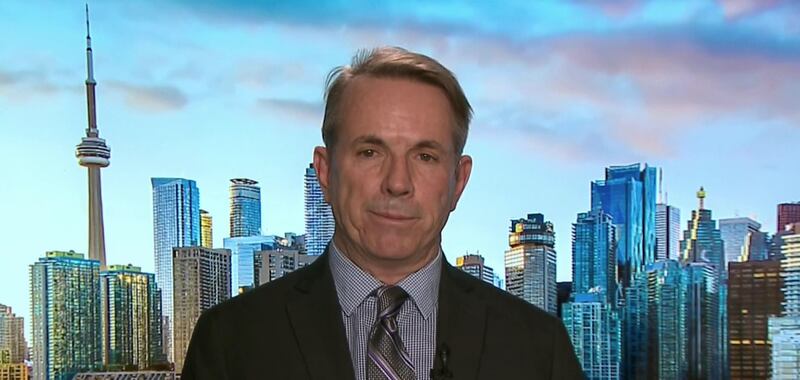
Read the full transcript below:
ANDREW: Let’s welcome one of our favourite market watchers, Jerome Hass, partner at Lightwater Partners. Thank you very much, Jerome. It’s always great to hear from you. It’s been a pretty good year for the TSX. What has jumped out for you?
JEROME: Well, just how successful it’s been. When you think about where we were in February or April, the market was very, very bullish. We were all concerned about the tariff war and what potential impact it would have on the Canadian economy. I don’t think anybody predicted that we’d be up 26 per cent year-to-date at this point. So, you know, we kind of ask ourselves, why are we up so much? And I think that’s the more fundamental question — not why, where, what the market is doing at these levels.
ANDREW: You’re saying, though, in Toronto, valuations are stretched by any standard. For example, you reckoned our beloved banks’ valuations are near the highest in a decade.
JEROME: Yeah, I think they’re near a 10-year high in terms of valuation. And I think they all surprised the market last week with their quarterly results, so good on them for doing so. But valuations are definitely stretched. And if you look at some of the other segments in the market, you know, U.S. tech has also done very, very well over the last three years, and you kind of go, well, how stretched do you really want the valuations to be? And on top of that, the inflows into that segment of the market have been phenomenal. And then you look at other segments of the market — you know, gold is up at $4,000 right now. Do you really want to be putting money into gold stocks at these levels? So the question is: where do you put your money in 2026?
ANDREW: You have some stock ideas for us. The Atlantic magazine ran a story asking whether we are in an AI bubble, and it claims the entire U.S. economy is being propped up on the promise of productivity gains that seem very far from materializing. And they’re talking about the massive investment here. Is that overstating it? I mean, obviously, they’re being a bit rhetorical there — it’s not the only thing in the U.S. economy. But is it that these productivity gains may be much slower than companies hope?
JEROME: Yeah, I think so. What we’re going to see is a lot of investment going into the infrastructure for AI — and we talk about the data centres — but are we actually going to see any gains from that? I think no. And I think if we do, it’s going to take some time for them to come to fruition. And, you know, I think in your intro you were talking about Capital Power as an example. And I think there’s a lot of enthusiasm that has gone into that stock — and TransAlta as well — that’s perhaps getting ahead of itself in terms of them actually being able to deliver on these data centres in Alberta.
ANDREW: I wonder, yeah, I think I’ve said this on air before: if you run some kind of electrical contracting firm, I guess you’re buying yourself a Porsche this year. These guys must be able to charge what they want these days.
JEROME: Well, yeah. I mean, really, the enthusiasm about those two stocks in particular is that Alberta has a lot of stranded gas. Arguably, we could say we have the cheapest gas in the world, and it’s stranded. So the ability of them to tap that for these data centres makes a lot of sense. It’s great for nat gas in the medium to long term in Western Canada. But we’ve got to get there first, and there’s got to be a lot of capex that would go into this. And Canada being Canada, nothing’s going to be built in a hurry here. So, you know, when I look at those two names, we think they’re overvalued, to be honest, at current levels.
ANDREW: You have — okay, and we’re trying to get hold of the Capital Power CEO to get his analysis because it is interesting: Ottawa watering down the environmental rules, and he sees it as a growth spurt for him. You have some ideas for Cineplex. Investors were a little shaken to hear that Netflix might be taking over HBO and getting even bigger in streaming — and, of course, acquiring the Warner Brothers cinema business as well. Do you think investors are missing potential with Cineplex stock right now?
JEROME: Last week, the stocks were up five per cent one day, down five per cent the next day, as rumours came in and out of the Netflix potential takeover. And then this weekend, there were comments by President Trump largely in favour of Paramount, which is a rival bidder. Then overnight, Paramount announced a hostile deal for Warner Brothers. And this does have implications for Cineplex and the other cinema exhibitors in the States, because Netflix is perceived to be negative toward the cinema exhibitors, whereas Paramount is viewed to be a lot more friendly in that regard. And so that’s why we saw the bump yesterday in them.
But coming back specifically to Cineplex, aside from all that, our thesis is this: the CEO, Ellis Jacob, who’s been in the industry for 35 years, announced his plans to retire at the end of 2026. He has strong incentives within his contract to sell the company before he goes. It’s estimated he can earn $12 million on a sale of Cineplex. And so we think the deal gets done before he leaves. And given that it’s got 73 per cent market share in Canada, I think it has to go before the Competition Bureau, which will take about six months. So you work back six months from the end of next year — they basically have to announce a deal by June of next year. So you’ve got a pretty short window for these guys to be sold if they’re going to be sold. And, you know, we value it at $31. There’s an activist fund out of Miami that’s involved in the name. I think it’s worth $31 — it’s trading at $11 and change today. We think it’s pretty good risk-return on a six-month horizon at this point.
ANDREW: We’re tight for time. You always bring us something new. Jerome, we’re tight for time. DRI Healthcare — they’re a royalty player akin to Franco-Nevada. They’re in pharmaceuticals. I’m sorry — we are tight for time. Tell us what’s drawn your attention here.
JEROME: Well, Canadian investors love the royalty model in Franco-Nevada, which kind of pioneered that. What DRI has done is essentially apply that to the pharmaceutical and biotech space. And so, to us, it’s a really conservative way to play the biotech and pharmaceutical space. DRI owns a portfolio of 26 or 27 royalties. They trade at a very cheap valuation — about six times EV/EBITDA — but it’s got about a three-and-a-half-per-cent yield on it, and it’s growing at double digits. You know, if you’re looking for something conservative to invest in that’s got a yield, we think DRI is a pretty good name to be in, plus they have a history of special dividends at year-end. So if you buy it before year-end, you might get lucky and get a special distribution again this year.
ANDREW: Jerome, thank you very much indeed.
JEROME: Thanks for having me, Andy.
ANDREW: Jerome Hass, partner at Lightwater Partners Ltd.
---
This BNN Bloomberg summary and transcript of the Dec. 9, 2025 interview with Jerome Hass are published with the assistance of AI. Original research, interview questions and added context was created by BNN Bloomberg journalists. An editor also reviewed this material before it was published to ensure its accuracy and adherence with BNN Bloomberg editorial policies and standards.

