Global equities could see improving conditions in 2026 as growth stabilizes, inflation remains contained and fiscal and monetary policy continue to support risk assets, according to a new investment outlook.
BNN Bloomberg spoke with Arun Sai, senior multi-asset strategist at Pictet Asset Management, about why his team remains constructive on equities, where selectivity matters most and how investors should position for a lower-return, higher-volatility environment.
Key Takeaways
- The macro backdrop is expected to shift from mild stagflation toward a more balanced environment as policy support feeds through to growth.
- Equity returns are likely to be moderate rather than strong, making selectivity critical amid high valuations and heavy market concentration.
- Regional opportunities diverge, with value favoured in Europe and Japan, while growth remains more attractive in the United States and emerging markets.
- The artificial intelligence investment cycle is seen as constructive but evolving, shifting from rapid spending toward greater focus on earnings quality.
- Emerging markets are supported by favourable macro tailwinds and domestic drivers, with opportunities spanning equities and both local- and hard-currency bonds.
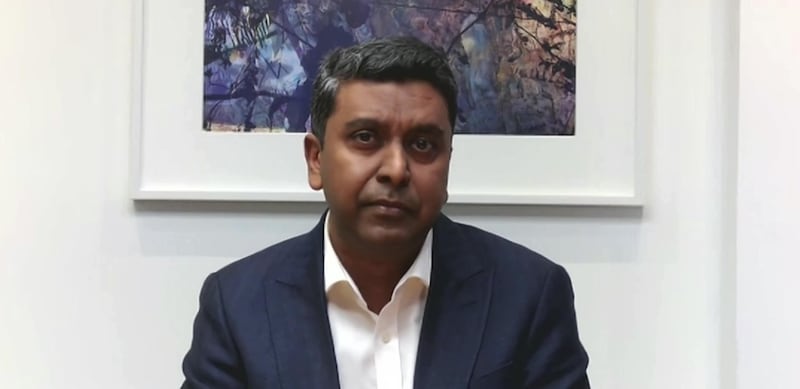
Read the full transcript below:
ROGER: Pictet Asset Management has released its 2026 investment landscape, saying the outlook for global equities is expected to improve. Our next guest says the macro backdrop could shift from mild stagflation to a Goldilocks environment over the next year. Let’s get more from Arun Sai, senior multi-asset strategist at Pictet Asset Management. Arun, thank you very much for joining us.
ARUN: Thanks for having me.
ROGER: What makes you think a Goldilocks environment is coming next year?
ARUN: We have to keep in mind that we are going to go through a phase where macro data will be quite hard to parse, but we are looking ahead of that. Policy should remain supportive for much of next year, both on the fiscal and monetary sides, and we continue to expect the impact of rate relief to feed through into the real economy. All of this should contribute, in our view, to an upside surprise on growth. That leads us to remain constructive and overweight equities. That said, we are not going to shoot the lights out. This is not a year when returns are going to be high. We are thinking about mid- to high-single-digit returns for global equities, and within that, selectivity is critical. Equity investors face a double whammy today: very high valuations and extremely high levels of market concentration.
ROGER: Where are you looking when it comes to that? Which areas do you like, and where do you have concerns?
ARUN: In a low-return, high-volatility environment, we need to be very selective about where we take risk. We like value and value-oriented strategies in Europe and Japan, where we see a modest cyclical recovery and fiscal support through much of the year. In the United States, by contrast, we favour growth. We still want selective exposure to the AI capital expenditure cycle, but as the year progresses, we expect that opportunity set to broaden into other areas.
ROGER: Let’s talk more about Europe. What are you favouring there?
ARUN: The structural and cyclical headwinds facing Europe are well flagged and, in our view, largely priced into valuations. Expectations around Germany following through with fiscal spending, particularly on infrastructure and defence, remain very low. That creates a low hurdle for an upside surprise. If we do see traction on that front, we think returns in European equities could be outsized, especially in European and German mid-caps. We see this as cheap optionality within a diversified portfolio. It is not our base case, as we still expect European equities to lag the United States and emerging markets, but it offers asymmetric upside.
ROGER: Another area you’ve highlighted in Europe is health care.
ARUN: Health care is a compelling opportunity for us. The sector has faced a series of headwinds over the past two or three years and has underperformed for three consecutive years. The valuation case is clear, but catalysts matter. We think those are now falling into place. We are past peak policy uncertainty on tariffs and drug pricing, and we see a constructive outlook for mergers and acquisitions. Health care is not just a defensive allocation for us; it also offers early exposure to an innovation cycle.
ROGER: What about Japan? Where are you looking there?
ARUN: In Japan, we favour value. We expect a cyclical recovery and some curve steepening, which should support the banking sector. Corporate governance reforms and capital efficiency initiatives are also continuing, and we think those trends still have legs. All of this supports a value-over-growth trade in Japan over the year ahead.
ROGER: You’re also constructive on emerging markets. What is driving that view?
ARUN: The promise of emerging markets is not new, so the key question is why now. From a macro perspective, the backdrop is quite attractive. A weaker U.S. dollar, falling interest rates, a modest global manufacturing recovery and firmer commodity prices tend to be powerful tailwinds. Historically, when these factors are in place, emerging markets outperform about 80 per cent of the time. Beyond that, we are seeing strong domestic and idiosyncratic drivers across regions. We do not want to apply developed-market playbooks to emerging markets. We like India for its pro-growth policy pivot and reasonable valuations, while in Latin America we see scope for real rates to fall, supporting multiple expansion and a cyclical recovery. Opportunities are broad-based, spanning equities as well as local- and hard-currency bonds.
ROGER: Arun, we’ll have to leave it there. Thank you very much for joining us.
ARUN: Thank you.
ROGER: Arun Sai, senior multi-asset strategist at Pictet Asset Management.
---
This BNN Bloomberg summary and transcript of the Dec. 15, 2025 interview with Arun Sai are published with the assistance of AI. Original research, interview questions and added context was created by BNN Bloomberg journalists. An editor also reviewed this material before it was published to ensure its accuracy and adherence with BNN Bloomberg editorial policies and standards.

