Statistics Canada’s November consumer price index showed inflation holding steady, with headline CPI rising modestly and matching economists’ expectations. The data offers fresh insight into where price pressures are easing — and where they remain stubborn.
BNN Bloomberg spoke with Claire Fan, senior economist at RBC, about the underlying drivers of inflation, the outlook for interest rates, and how housing, food prices and trade dynamics could shape inflation into 2026.
Key Takeaways
- Headline inflation held at 2.2% in November, with CPI rising 0.1%, confirming a stable overall inflation trend near the Bank of Canada’s target.
- Core inflation measures improved, suggesting easing pressure in areas most sensitive to interest rates and domestic demand.
- Food inflation accelerated to its highest level since late 2023, driven by supply constraints, weather impacts and global commodity pressures.
- Shelter inflation continued to cool, with slower rent growth and moderating mortgage interest costs reflecting earlier rate cuts.
- Inflation risks remain tilted to the upside, raising the possibility of rate hikes in 2026 if strong consumer demand and trade costs persist.
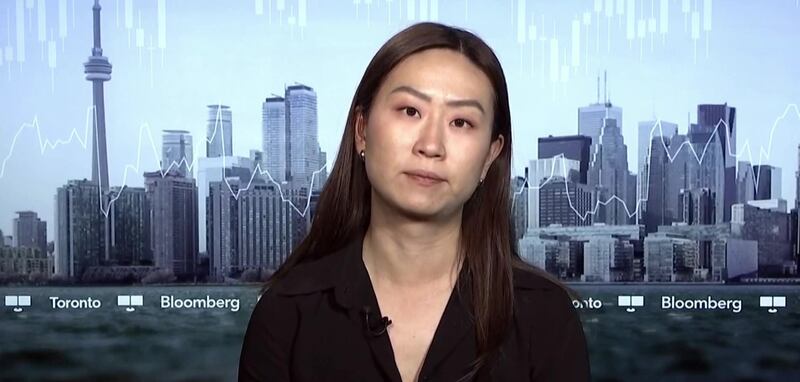
Read the full transcript below:
ROGER: Statistics Canada has released its consumer price index numbers for November. Inflation held steady at 2.2 per cent, with CPI rising 0.1 per cent, matching estimates. Joining us to discuss what it all means is Claire Fan, senior economist at RBC. Claire, thanks as always for being here.
CLAIRE: Thank you for having me.
ROGER: Big picture, these numbers were largely what markets were expecting, right?
CLAIRE: Yes, the headline inflation rate of 2.2 per cent was exactly in line with expectations, but some of the details were a bit more surprising. We saw fairly significant improvement in the Bank of Canada’s core measures, CPI trim and CPI median, which strip out some of the more volatile components. The downside, however, was a sharp increase in food inflation, which rose to its highest level since the end of 2023.
ROGER: Let’s start with trim and median. There’s been some discussion about how much weight the Bank of Canada still puts on those measures. Do they still matter?
CLAIRE: They do, because of what they capture. These measures focus on parts of the consumer basket that monetary policy can influence, particularly services that are driven by domestic demand. Interest rates have more influence there than they do on categories like food, where price movements are often driven by global supply factors that are outside the Bank of Canada’s control.
ROGER: Is that where tariffs come into play when it comes to food prices?
CLAIRE: Tariffs are part of the story, but a relatively small one. Much of the food inflation we’re seeing is driven by domestic factors, such as drought conditions in parts of Western Canada and a reduced cattle herd, which has pushed beef prices up more than 17 per cent year over year. Coffee prices have also risen sharply.
ROGER: I don’t like hearing that.
CLAIRE: Me neither. Coffee prices are largely a global story. Production in major producers like Brazil and Vietnam, which together account for more than half of global output, has been hit by hot and dry weather over the past couple of years. Tariffs also matter indirectly, because U.S. importers facing higher costs can pass those along when products are re-exported to Canada.
ROGER: Looking ahead, do we have any sense of how long elevated food prices could stick around?
CLAIRE: Unfortunately, supply disruptions tend to take time to resolve. It takes years for cattle herds to rebuild and inventories to normalize, so food inflation is likely to remain uncomfortable in the near term.
ROGER: On the positive side, where are Canadians seeing some relief?
CLAIRE: Shelter inflation has eased somewhat. Rent growth has slowed, although it’s still elevated at about 4.7 per cent year over year. Mortgage interest costs are also continuing to moderate as past Bank of Canada rate cuts — about 275 basis points so far — work their way through the system.
ROGER: Regionally, the picture isn’t uniform.
CLAIRE: That’s right. There’s more divergence than usual across regions. From a broader policy perspective, what we’re seeing aligns with the Bank of Canada’s view that upward inflation pressures from trade reconfiguration are being offset by weaker growth. If this continues into 2026, we expect inflation to hover around target, with no rate cuts or hikes until 2027.
ROGER: There had been some talk about the possibility of rate hikes sooner than that.
CLAIRE: The risks are tilted to the upside for inflation. Consumer spending has been surprisingly strong despite headwinds like tariff uncertainty and slower population growth. Trade reconfiguration costs also appear higher than previously expected. If inflation risks materialize, rate hikes in 2026 would be more likely than additional cuts.
ROGER: Claire, always good to get your insight. Thanks for joining us.
CLAIRE: Thank you, Roger.
---
This BNN Bloomberg summary and transcript of the Dec. 15, 2025 interview with Claire Fan are published with the assistance of AI. Original research, interview questions and added context was created by BNN Bloomberg journalists. An editor also reviewed this material before it was published to ensure its accuracy and adherence with BNN Bloomberg editorial policies and standards.

