Activist involvement in high-profile companies, recent volatility in artificial intelligence-related stocks and leadership changes in the energy sector are sharpening investor attention as markets head toward the new year. The developments raise questions about execution risk, valuation support and whether recent selloffs reflect deeper concerns or temporary pauses.
BNN Bloomberg spoke with Jamie Murray, president of The Murray Wealth Group, about activist-driven management changes, why long-term AI spending trends remain intact despite sharp stock pullbacks, and how leadership shifts in global energy companies could influence project execution and shareholder returns.
Key Takeaways
- Activist investors are increasingly driving management and strategic changes, often accelerating leadership transitions at underperforming companies.
- Short-term weakness in AI-related stocks contrasts with steadily rising revenue expectations, signalling continued long-term demand for AI infrastructure.
- Declining costs per AI query are being offset by growing enterprise adoption, keeping overall spending on an upward trajectory through 2027.
- Leadership changes in the energy sector are refocusing attention on operational expertise, project execution and capital discipline.
- Investors are increasingly differentiating between temporary volatility and structural growth trends when assessing opportunities heading into 2026.
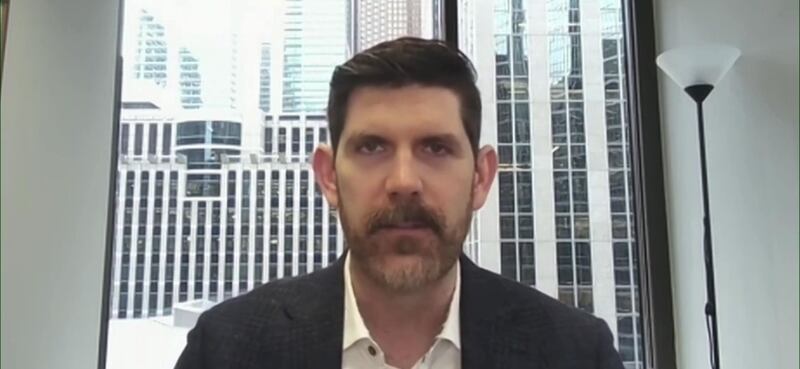
Read the full transcript below:
ANDREW: Activist investor Elliott Management has built a stake of more than US$1 billion in Lululemon, according to Bloomberg reporting. That comes after CEO Calvin McDonald said he will step down at the end of January. Our guest says he believes the leadership change may have been influenced by Elliott. Let’s get more from Jamie Murray, president of The Murray Wealth Group. Jamie, thanks very much for joining us. Lululemon is on your radar, and you think Elliott, which is known for making its views clear to management teams, may have helped push out the CEO.
JAMIE: Yes. We repurchased Lululemon shares this past summer when the stock dipped below the $200 mark. We saw a very strong franchise, similar to what Elliott likely sees — a great brand with plenty of global growth opportunities — but some sluggishness in the U.S. business. Activism and a potential management change were part of our thesis. Now we’ve seen both of those boxes checked. There had been expectations that Lululemon would eventually replace its CEO, but the move came sooner than expected. The timing of the CEO announcement last week, followed by Elliott revealing its stake this week, suggests to us that the activist may have pushed for change earlier than would have otherwise occurred.
ANDREW: Are you still holding Lululemon, or have you lightened your position?
JAMIE: We’re still holding it. It was a top pick from one of my colleagues on Market Call a couple of weeks ago. We think the company still has growth opportunities in North America and is continuing to take market share, albeit in a very weak apparel environment. With better product execution, stronger merchandising and improved inventory management — and with the tariff noise of 2025 likely being lapped in 2026 — we think growth can accelerate. We also think the valuation multiple can expand from roughly 13 to 14 times earnings to closer to 17 to 18 times, alongside share buybacks. That could support a stock price closer to $300. We wouldn’t trim the position unless the shares move above $250 or our view changes.
ANDREW: You’re not concerned that the magic has faded from the brand, which was once almost a cult favourite among yoga enthusiasts?
JAMIE: No, we don’t think the magic is gone. We think it may just be a bit lost right now. The core community brand is still very strong. There was a lot of noise over the summer about leggings falling out of fashion in favour of baggier styles, but our channel checks don’t support that. Leggings remain very much on trend with younger consumers. The bigger issue has been increased competition from new entrants. We think Lululemon needs to get back to its roots in highly technical apparel — products that really wow consumers — and we believe the company can do that with better execution.
ANDREW: Turning to artificial intelligence, you’ve been watching revenue projections for companies like Nvidia and Broadcom, even as the stocks have pulled back.
JAMIE: That’s right. The AI trade has taken a hit over the past week. Broadcom, one of our larger holdings, was trading at an all-time high after reporting earnings, but comments on the conference call pressured the stock. A week later, it’s down about 25 per cent. Oracle is also down sharply, roughly 30 to 40 per cent. A lot of air has come out of the AI trade. But when we look at revenue projections for next year, they continue to move higher. Broadcom’s expected revenue for 2026 was about $70 billion a year ago. Today, it’s closer to $95 billion, even after the most recent quarter. Nvidia’s numbers tell a similar story. We’re seeing continued spending on AI data centres and chips. To us, this looks more like a temporary air pocket rather than a break in the long-term thesis.
ANDREW: Finally, what’s your view on BP bringing in a new CEO with an engineering background, after leading Woodside Energy?
JAMIE: BP began refocusing on its core oil and gas business two to three years ago, but it hasn’t moved fast enough for shareholders. The company previously replaced its CEO with its CFO, meaning a finance executive was running a very complex, project-driven energy company. Bringing in Woodside’s CEO, who has deep experience managing large LNG projects and offshore developments, makes sense to us. BP recently announced a major offshore oil discovery in Brazil that could become one of the largest fields developed over the next five to 10 years. Strong project execution will be critical, and we think this leadership change improves BP’s ability to deliver and create value for shareholders.
ANDREW: Jamie, thanks very much. I really appreciate it.
JAMIE: Thanks for having me on. Happy holidays.
ANDREW: You too. That’s Jamie Murray, president of The Murray Wealth Group.
---
This BNN Bloomberg summary and transcript of the Dec. 18, 2025 interview with Jamie Murray are published with the assistance of AI. Original research, interview questions and added context was created by BNN Bloomberg journalists. An editor also reviewed this material before it was published to ensure its accuracy and adherence with BNN Bloomberg editorial policies and standards.

