Investors are becoming more selective after years of piling into artificial intelligence-related stocks, with growing scrutiny on how companies fund massive capital spending and when those investments will start generating returns. At the same time, leadership in U.S. equities is broadening beyond a narrow group of mega-cap names, with strength emerging across sectors, commodities and smaller companies.
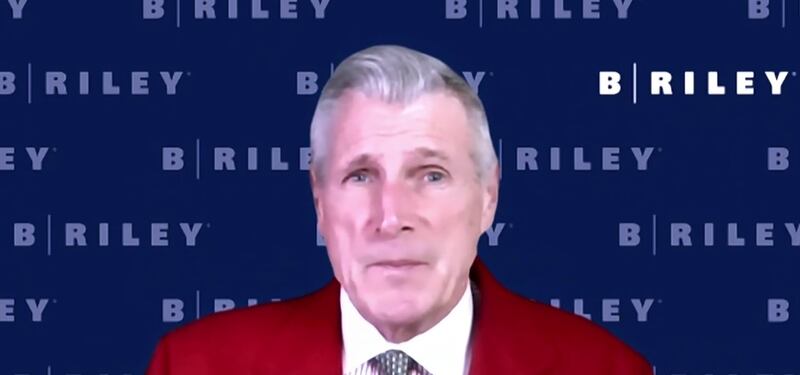
BNN Bloomberg spoke with Art Hogan, chief market strategist at B. Riley Wealth, about investor differentiation within AI, improving earnings breadth, the resurgence in gold and why demand for power infrastructure is becoming a key long-term theme.
Key Takeaways
- Investors are shifting from buying anything tied to AI to favouring companies that fund expansion with free cash flow rather than rising debt.
- Earnings growth is broadening across sectors, reducing reliance on a small group of mega-cap technology stocks to drive equity performance.
- Small-cap stocks are attracting renewed attention as their earnings outlook improves relative to large-cap peers.
- Gold has broken out after decades of stagnation, supported by technical momentum, easier access through ETFs and steady central bank buying.
- Rising demand for power to support data centres and AI infrastructure is driving strong performance in industrial and electrical equipment stocks.
Read the full transcript below:
ANDREW: Let’s get more on what’s happening in the markets. We’re joined by Art Hogan, chief market strategist at B. Riley Wealth. Art, great to see you. Love the Christmas-flavoured jacket. It’s great to have you on the show, as ever.
ART: Great to be on the show. Always a pleasure, and thank you so much.
ANDREW: Tell us about the mood around big tech stocks. Many are still riding high, but some former leaders, like Oracle, have fallen behind.
ART: Oracle is actually up today on news that it’s one of the final partners in the TikTok deal. More broadly, though, we’ve reached a pivot point in the artificial intelligence revolution. If companies are spending heavily on capital expenditures to build large language models using free cash flow, investors are comfortable with that. But the more debt being used, the more questions arise about when they will see a return on invested capital.
When you look at players such as Oracle, where debt is a significant issue, or Cloudflare and others that rely more on debt than free cash flow, investors are starting to draw distinctions. After three years of investing in almost anything tied to AI, that differentiation is likely a healthy development.
The November pullback across AI-related stocks may be creating opportunities in companies that are not using much debt — or any at all — such as Nvidia, which is a direct beneficiary of capital spending and is already generating profits. Overall, we’ve reached a stage where investors are separating winners from laggards, and we’ve seen that clearly over the past month or so.
ANDREW: If we look at a one-year chart for Meta, it’s interesting. The stock was riding high not long ago, but there are ongoing concerns about how much Mark Zuckerberg is spending on AI.
ART: They’ve certainly shifted away from the metaverse, so I’m not sure if they need to change their name again. What investors are trying to determine is how Meta monetizes these massive investments, particularly when its platform is largely driven by advertising.
While Meta has several strong product lines, the scale of investment going into its large language model — one of six competing for the top position — has raised questions about its ability to generate returns. That will likely remain a key issue next year as we move from the development and build-out phase into a period where companies are expected to start collecting revenue from those investments.
ANDREW: Our colleagues at CTV News are running a series on crypto fraud in Canada, including cases where people are misled by fake ads on Facebook, even featuring what appears to be the Prime Minister endorsing investments. It’s interesting that Meta seems to avoid serious scrutiny for allowing those ads to run.
ART: That part of the crypto space can be particularly risky and certainly isn’t for the faint of heart. While established players such as Bitcoin and Ethereum — which now have spot ETFs — have been around long enough for investors to understand the broader ecosystem, the real danger lies with newer coins, tokens and projects that promise outsized returns that never materialize.
Those speculative assets sit far out on the risk spectrum, well beyond the two incumbents, Bitcoin and Ethereum, which is where much of the fraud risk tends to concentrate.
ANDREW: What are you seeing in earnings trends? Is anything standing out, including how consumers are holding up?
ART: One of the biggest surprises from the third-quarter earnings season — and the upward revisions for the fourth quarter — is that earnings growth outside of technology and communication services is nearly as strong, if not stronger, than growth among the largest tech names.
We have 11 sectors in the S&P 500, and all are positive year to date, with five performing in line with the index. Last year, only two sectors managed that. The market is clearly broadening, and investors are starting to focus on sectors showing meaningful earnings growth.
That’s especially evident in small-cap stocks, which have outperformed large caps since September. The earnings profile for S&P 500 small caps actually looks more attractive than the broader index, which is projected to grow earnings by about 12 per cent in 2026. After two years of focusing on seven stocks, this may be the point where investors start paying attention to the other 493.
ANDREW: Looking at the S&P 500 Gold Index, which breaks things down even further, it’s the top-performing group this year, up about 173 per cent.
ART: We waited a long time for gold to break out. On a nominal basis, it was a 10-year breakout, and on an inflation-adjusted basis, it was a 38-year breakout. When an asset has been dormant that long, it tends to attract new investors, including momentum-driven buyers responding to the technical signal.
At the same time, access has become easier through products like the GLD ETF, allowing more investors to gain exposure. Central banks have also been consistent buyers of gold since Russia’s invasion of Ukraine and disruptions to the SWIFT system. That demand doesn’t appear likely to slow anytime soon.
ANDREW: The second-best-performing group is the S&P 500 Heavy Electrical Equipment Index, which only includes one stock — GE Vernova — and it has doubled this year.
ART: We need enormous amounts of power to run data centres and support large language models, and GE Vernova has positioned itself as a key supplier. The stock is up roughly 140 per cent year to date, and the GE spinoffs have generally performed well. GE HealthCare has also delivered strong returns, showing that these separations can work — and in this case, they’ve worked very well.
ANDREW: Thanks very much, Art. I really appreciate it. If we don’t speak before the holidays, have a great Christmas and a wonderful 2026.
ART: Thank you very much. The same to you.
ANDREW: Art Hogan, chief market strategist at B. Riley Wealth.
---
This BNN Bloomberg summary and transcript of the Dec. 19, 2025 interview with Art Hogan are published with the assistance of AI. Original research, interview questions and added context was created by BNN Bloomberg journalists. An editor also reviewed this material before it was published to ensure its accuracy and adherence with BNN Bloomberg editorial policies and standards.

