New data show Canada’s share of exports going to the United States has fallen to its lowest non-pandemic level in decades, highlighting a gradual shift in trade patterns as global commerce becomes more fragmented. The figures land ahead of high-stakes CUSMA negotiations and renewed pressure on Canada to diversify trade relationships.
BNN Bloomberg spoke with Marc Gilbert, managing director at BCG Centre for Geopolitics, about what the export data signal for Canada’s negotiating leverage, the range of possible outcomes for CUSMA and how global trade blocs are reshaping Canada’s options.
Key Takeaways
- Canada’s exports to the U.S. dropped to their lowest non-pandemic share since 1997, signalling a gradual shift in trade dependence.
- Global trade is increasingly divided into blocs, with Canada aligned among countries seeking rules-based diversification beyond the U.S.
- CUSMA faces wide-ranging outcomes, from a complete overhaul to no agreement at all, with limited scope for minor changes.
- Faster trade growth is expected outside the U.S., particularly among plurilateral economies and the Global South.
- Canada’s ability to benefit from diversification will hinge on infrastructure, supply-chain resilience and speed of execution.
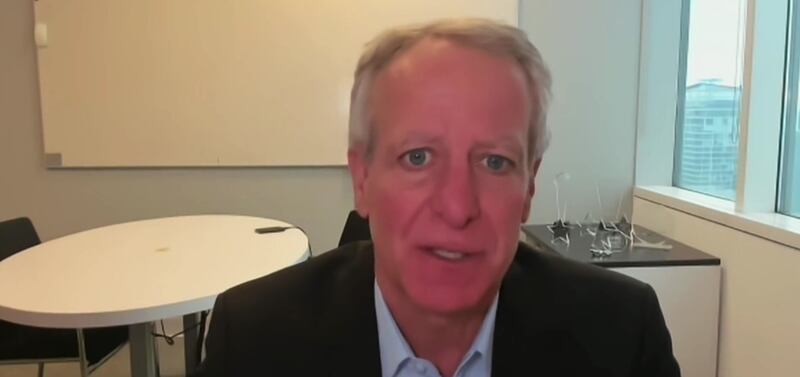
Read the full transcript below:
ROGER: New data from Statistics Canada show that back in October, Canada reported the lowest level of exports to the U.S. since 1997. Here to discuss how this impacts the upcoming CUSMA talks this year is Marc Gilbert, managing director at BCG Centre for Geopolitics. Marc, thanks very much for joining us.
MARC: Pleasure to be here, Roger.
ROGER: We’re still a few months away, but is this starting to give people an idea of how these talks might unfold when we look at trade flows in each direction and the fact that they’ve been dropping?
MARC: Yeah, well, let me unpack this for a second. If I step back, and you may have seen this, we released a report today that looks out 10 years at forward-looking trade in goods. Of course, CUSMA is part of this, and I’ll get to that in a second. What we really see is a multi-nodal assemblage that is going to emerge. You’ve got one node, the U.S., one node, China, and another node, which is really important because this is where Canada sits, the plurilateralists. Think the EU, the U.K., South Korea and Asian countries, mainly members of the CPTPP.
In essence, these plurilateralists, of which Canada is part, are looking to diversify trade away from the U.S. through the rule of law and through established trading norms. They’re expanding. Then you’ve got BRICS-plus as a final node.
On your question of CUSMA, it is very clear there are multiple scenarios for where this may land, knowing that it may not land at all. Canada is trying to build out trading relationships with other nations, hence the bookends on CUSMA. One bookend is no agreement — it’s forfeited, it’s closed, it’s gone. The other bookend is a complete overhaul. We do not expect tweaks on the margin.
In our last interaction with the USTR, the direction of travel was toward a refresh, a revisit, an overhaul of CUSMA. Your guess is as good as mine where we land in the middle of those two bookends. It could also be two agreements — one between Mexico and the U.S. and one between Canada and the U.S. — because the demands and expectations are very different. For now, the cards are on the table for an agreement to be struck. In what shape and form remains unknown.
ROGER: Through all of this, it’s a complicated time. You’re trying to do CUSMA, but also trying to reach out to China. We have the prime minister heading there, right? And the other node you talked about. Can Canada reposition easily from the U.S. toward those other directions?
MARC: In short, nothing is easy. However, you saw the recent trade data from Statistics Canada. You just mentioned it. I saw it this morning. It shows some of this can move. Of course, some goods are easier to move than others.
The reality is the Global South, BRICS-plus and China are still trading, and they’re trading heavily. At least 60 per cent of global trade is not directly or indirectly affected by the U.S., and Canada is well positioned to lean into that. Now, things have to happen — pipelines and infrastructure — but it can be done. It’s just not as easy as heading south has been for a long time.
In our forecast 10 years out, U.S. trade growth slows to about one per cent. China’s trade growth is around two per cent because China is trading more with the Global South, BRICS and the rest of the world. Plurilateralist trade growth is about three per cent because they’ve realized they need to diversify, having been fairly dependent on the U.S.
The last point is global trade is still growing. It’s growing at about 2.5 per cent, roughly 0.1 points above GDP. Canada is a trading nation. It stands to gain from trading with others. The feasibility depends on how fast we mobilize.
ROGER: It feels like we might be a little late to the table after relying so heavily on the U.S. What does Canada bring that other countries want?
MARC: Stability. The norms of global trade. Rules-based trade. Whether it’s the U.K., South Korea, many Asian countries, Cambodia or the EU, they still operate with stable, rules-based trade, and Canada is part of that. Stability, quality and a guarantee of supply chains.
I don’t know if we’re late to the game. I think we’re converging on the reality that it’s time to act, and to act faster.
ROGER: And you think Canada can make that pivot?
MARC: Absolutely, on certain goods. On others, it will be harder because some goods don’t travel easily or don’t have demand. But there’s no reason Canada shouldn’t be more exposed to exports to the Global South, which is growing much faster than the U.S. The consumption rate and wealth per capita are different, but the growth rate is enormous. There’s no reason that opportunity should be left to other nations.
ROGER: Are we starting to see any trends? It’s been about nine months since Liberation Day and the election of Mark Carney. Are we seeing early signs of a shift?
MARC: Early signals, yes. You saw the data today — it’s indicative. Beyond that, some of what I’m seeing is anecdotal. Canadian leaders are embedding geopolitics into capital and strategic decisions. They’re working to enhance supply-chain resilience, whether by becoming the supplier of choice or strengthening their own supply chains.
There’s a cost to that, and everyone is trying to reduce costs at the same time, because no matter what happens in the new world order, you need to be cost-productive. Canada stands to gain. Leaders are acting on this, and I think they’re coming to the table ready to move.
ROGER: We’ll have to leave it there. Marc, thanks very much for joining us.
MARC: Thank you, Roger.
ROGER: Marc Gilbert is managing director at BCG Centre for Geopolitics.
---
This BNN Bloomberg summary and transcript of the Jan. 8, 2026 interview with Marc Gilbert are published with the assistance of AI. Original research, interview questions and added context was created by BNN Bloomberg journalists. An editor also reviewed this material before it was published to ensure its accuracy and adherence with BNN Bloomberg editorial policies and standards.

