Private and venture capital firms are increasingly extending how long they hold companies, reshaping the traditional path from private ownership to public listings. New structures such as continuation funds are allowing firms to delay exits while maintaining access to capital.
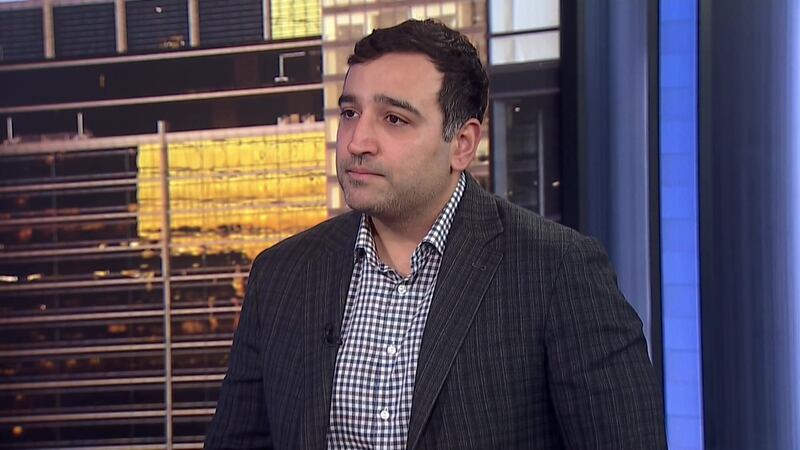
BNN Bloomberg spoke with Dan Rohinton, portfolio manager at iA Global Asset Management, about how these shifts are changing capital formation, blurring the line between public and private markets, and altering the role of exchanges.
Key Takeaways
- Continuation funds allow private equity firms to extend ownership of assets beyond traditional fund timelines.
- Slower IPO and merger activity is encouraging companies to remain private for longer periods.
- Large, late-stage companies that once would have gone public are now staying private with institutional backing.
- The distinction between public and private markets is increasingly blurred through crossover and hybrid structures.
- Strategic sectors such as artificial intelligence and defence are attracting sustained private capital investment.
Read the full transcript below:
ANDREW: There is still a lot of money flowing into artificial intelligence. U.S. venture capital firm Andreessen Horowitz, a Silicon Valley heavyweight, drew attention after raising more than US$15 billion to invest in AI, defence and biotech. Closer to home, Canadian firm Onex is extending the life cycle of public markets. What does that mean? Let’s get more from Dan Rohinton, portfolio manager at iA Global Asset Management. Dan, thanks very much for joining us.
DAN: Thanks for having me.
ANDREW: What should investors keep in mind when it comes to Onex?
DAN: I want to tie this back to what you mentioned about Andreessen Horowitz, because it is part of a broader story that does not get as much attention as it should. The role that private markets play in capital formation today is far more significant than it was a generation ago. Onex is one part of that conversation. Its fundraising story is really about retrenching and returning to its industrial roots. What stood out to me was the continuation fund — the US$1.6 billion vehicle.
Private equity funds typically have a clear life cycle: about seven years, with several years to deploy capital. If you wanted to hold an asset for a decade, the traditional route was to take it public. What is being normalized now is holding assets longer through continuation funds, often with the support of large institutional partners.
Andreessen Horowitz fits into that same continuum. A significant portion of its recent fundraising is going into late-stage companies. These are not early seed or Series A businesses. These are very large companies that, in previous cycles, would likely already be public.
ANDREW: One example people point to is defence-related technology.
DAN: Exactly. You are seeing venture capital backing companies involved in areas like defence technology and artificial intelligence at very large scales. You also have companies such as Databricks, which is valued well into the tens of billions of dollars, remaining private. These are effectively mid- to large-cap businesses that would traditionally have been public by now.
ANDREW: When you talk about extending the life cycle, it really challenges the traditional model.
DAN: It does. The classic path was venture capital funding early growth, followed by an IPO. Private equity would take companies private, restructure them and eventually return them to public markets. Those lines are now blurred. There is a large backlog of private companies waiting to go public, and this may be the year when we see whether major AI firms choose IPOs or continue raising private capital indefinitely.
ANDREW: Some executives argue that going public can hurt if share prices fall quickly.
DAN: That is part of the dynamic, but transparency also matters. Public markets provide daily price discovery and accountability to a broad base of investors, including institutions and retail investors. That scrutiny can be healthy. I often think of public markets as the moment when companies truly put their fundamentals to the test, rather than relying on a small group of private backers.
ANDREW: We have also seen a long-term decline in the number of listed companies, particularly in Canada.
DAN: That is true. Canada’s market structure is unique, especially with the TSX Venture Exchange. Outside of capital-intensive sectors such as resources and large industrials, public markets have struggled to maintain their share of corporate financing. That trend is part of the broader shift we are discussing.
ANDREW: You describe this as a “gray zone.” What do you mean by that?
DAN: The distinction between public and private markets is increasingly blurred. You have crossover funds, continuation vehicles and private firms operating in ways that resemble public companies. Even firms like Apollo are building investment banking capabilities. Over time, the question will be whether founders see value in going public or whether exchanges can adapt to remain relevant earlier in a company’s life cycle.
ANDREW: Let’s go back to Andreessen Horowitz. You argue national interest is increasingly shaping its strategy.
DAN: Yes. Venture capital historically played a role in funding strategically important industries. That shifted during the tech boom, when many firms distanced themselves from government priorities. What we are seeing now is a return to that earlier model. In 2026, venture capital is once again aligning itself with national competitiveness, particularly in AI, defence and critical technologies. Andreessen Horowitz is at the forefront of that shift.
ANDREW: Dan, thanks very much.
DAN: Thank you.
ANDREW: Dan Rohinton, portfolio manager at iA Global Asset Management.
---
This BNN Bloomberg summary and transcript of the Jan. 9, 2026 interview with Dan Rohinton are published with the assistance of AI. Original research, interview questions and added context was created by BNN Bloomberg journalists. An editor also reviewed this material before it was published to ensure its accuracy and adherence with BNN Bloomberg editorial policies and standards.

