Canadian stocks are trading near record highs following a strong start to the year, even as valuations appear stretched and leadership within the TSX remains uncertain. Seasonal trends and persistent risk appetite are helping keep momentum intact despite macroeconomic and political headwinds.
BNN Bloomberg spoke with Jerome Hass, partner at Lightwater Partners Ltd., about why mid-cap stocks remain an overlooked opportunity in Canada, how structural factors have driven capital away from the segment, and where selective stock ideas could benefit from shifting investor sentiment and policy-driven catalysts.
Key Takeaways
- Canadian equities entered the year in risk-on mode despite stretched valuations and uncertainty around future leadership within the TSX.
- The January effect has been muted, with banks and gold continuing trends seen in 2025 rather than sharp reversals in last year’s laggards.
- Structural barriers and compliance constraints have driven long-term capital outflows from Canadian mid-cap stocks, creating valuation inefficiencies.
- Bottom-up stock selection remains critical in mid caps, where upside is often underappreciated by analysts and investors.
- Policy and geopolitical shifts, rather than fundamentals alone, can act as powerful catalysts in out-of-favour sectors.
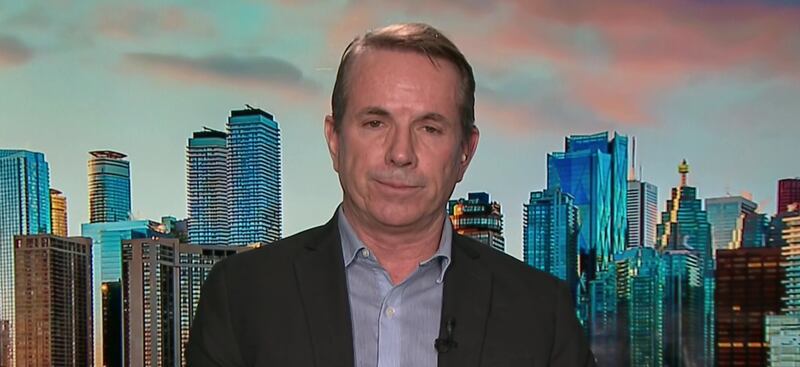
Read the full transcript below:
ROGER: Stock markets are trading around record highs, if not at record highs. Let’s get more on this and an overall outlook for the markets as we’re joined by Jerome Hass, partner at Lightwater Partners Ltd. Jerome, thanks as always for joining us.
JEROME: Thanks for having me, Roger.
ROGER: Let’s talk about the TSX right now. Great year, outperformed south of the border and again this year. It’s off to quite the start.
JEROME: Yeah, it’s been a very punchy start to the year. I think we’re up about three-and-a-half to four per cent in Toronto, a little less so south of the border. But, you know, as January goes, so goes the year, and so it bodes very well for 2026 going forward.
ROGER: Now, I mean, I know we like to say that with January, but this last year has kind of been a year where the sayings don’t necessarily hold true. Sometimes we saw in September we didn’t really see much of a Christmas rally, or maybe a late one. Are there reasons to believe we can follow that one this time?
JEROME: Well, it has been a more muted January effect in that some of the losers or laggards from last year have not vastly outperformed this year. We’ve seen continued performance from gold, and the banks have done reasonably well this month too. So it’s continuing what we saw in 2025. That being said, I think the banks are at about 14 times valuation on average, and analysts are looking for about seven per cent growth this year ahead. So that’s a relatively muted outlook for the banking sector, which is a big sector within the TSX. Gold continues to show strength, but you kind of go, where’s the leadership going to come from in the TSX? And that’s the interesting question.
ROGER: And where are you looking then?
JEROME: We always look at the mid caps. We honestly don’t own anything in the TSX Composite. We tend to look at the mid caps, which tend to be undervalued and under-researched, as far as we’re concerned. They were laggards last year, and so we continue to see some value within those names.
ROGER: Now, when you say laggard, what were they behind last year?
JEROME: I think the TSX was up about 28 per cent. We were probably up about half that. It’s still a reasonable year, but it clearly lagged the main index.
ROGER: And are you seeing opportunities then this year because of that?
JEROME: Yeah, we always see opportunities within the mid-cap space, because we just think it’s a very inefficient segment of the market. So we’re always touting mid-cap stocks.
ROGER: And what are you using to help with your decision-making on the mid caps? What are you looking for in them?
JEROME: Well, sometimes it’s valuation. Sometimes it’s just a compelling bottom-up story. Sometimes you think there’s a situation where the analyst or investment community hasn’t fully embraced the upside of a stock. So sometimes a stock that may seem overvalued actually still has huge potential upside. Other times, there’s a stock that trades well below its analyst target price, and there’s value in that too. It really depends on the individual stock.
ROGER: And what is it you think people shy away from with the mid caps?
JEROME: Well, it’s structural within Canada, to be honest. Every bank has a compliance department, and if you’re an investment adviser and you invest in something that’s not on the official compliance list, you’re going to be harassed by compliance until you throw up your hands and say it’s not worth it. That’s why we’ve seen outflows for the last two decades in mid-cap and small-cap stocks within Canada.
ROGER: And is that making it harder for you? Are they going south of the border then?
JEROME: Yeah. I mean, when we were younger and graduated from university, if you wanted to make your money you got excited about micro caps and small caps. You’d hear friends talk about five-baggers or 10-baggers. Nowadays, kids graduate from university and start investing, and they want a sliver of mega-cap tech in the U.S. They view Nvidia, Google or Tesla as the place to invest, and they’re not that interested in the Canadian market, especially the small- to mid-cap space.
ROGER: Which offers up some opportunities. Are there certain sectors you’re focusing on, or just across the board?
JEROME: We look at everything. We tend to avoid the resource space, but we do like oil and gas, so we have exposure there. But it really tends to be bottom-up rather than focused on any particular sector.
ROGER: And you’ve got a couple of ideas you’re liking right now. Kraken Robotics — what are you liking with that?
JEROME: Yeah, this is a case where the stock trades around $8.50. I think the average analyst target is about $6.50. What’s really missing from the story, from the analyst point of view, is what the upside looks like. This is a defence-related stock, which is a real rarity in Canada. They’re known for the batteries used in what they call UUVs, unmanned underwater vehicles — essentially underwater drones. They’re the leading supplier of this in the world. They’re tied to Anduril in the United States, which is a major defence disruptor. They’ve recently launched a product in Australia with Anduril called the Ghost Shark. That shows what they can do in the short term. What’s exciting is Canada is going to be investing another $82 billion in its defence budget this year. On top of that, Canada has joined the EU’s SAFE defence procurement program, which has about $240 billion to invest. Kraken is an obvious beneficiary of that.
ROGER: All right, we’re almost out of time. I want to get Trulieve in quickly — cannabis. It’s kind of gone over to the corner somewhere, hasn’t it?
JEROME: Yeah, no one ever talks about cannabis anymore. It’s no longer of interest to retail investors, and it’s certainly not interesting to institutional investors. Sometimes that’s when you can get oversized returns. What’s interesting right now is that in mid-December, Trump signed an executive order instructing the U.S. attorney general to reschedule cannabis from Schedule I to Schedule III. That would have profound changes for the sector. When the attorney general gets around to executing that — which could be any day — you’ll see a pop in the stock and the whole sector. We think Trulieve is the best of the cannabis names out there for those who bother to focus on fundamentals.
ROGER: We have to wrap it up there. Jerome, thanks as always for joining us.
JEROME: Thanks for having me.
ROGER: Jerome Hass, partner at Lightwater Partners Ltd.
---
This BNN Bloomberg summary and transcript of the Jan. 13, 2026 interview with Jerome Hass are published with the assistance of AI. Original research, interview questions and added context was created by BNN Bloomberg journalists. An editor also reviewed this material before it was published to ensure its accuracy and adherence with BNN Bloomberg editorial policies and standards.

