Canada’s main stock index has started the year strongly, outperforming U.S. equities as gains in gold, copper and other commodities lift resource-heavy sectors.
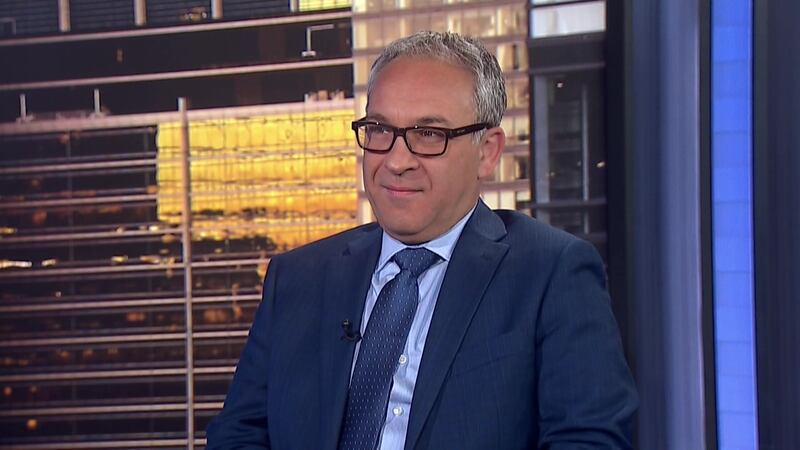
BNN Bloomberg spoke with Mike Vinokur, portfolio manager and senior wealth advisor at Propellus Wealth Partners with iA Private Wealth, about stretched valuations on the TSX, shifting sector leadership, and where selective stock opportunities remain.
Key Takeaways
- Commodity strength has been a major driver of TSX performance, reflecting years of underinvestment in basic inputs such as metals and energy.
- Sector rotation has favoured financials, industrials, basic materials, precious metals and health care, while technology has lagged.
- Valuations in Canadian banks and other financials appear stretched as markets price in minimal recession or credit risk.
- Energy remains under-owned despite steady global oil demand and limited capital investment in reserve replacement.
- Select opportunities still exist in technology where valuations are low and cash flow remains strong.
Read the full transcript below:
ANDREW: The TSX is outpacing the U.S. once again this year. That’s after outperformance in 2025. Can this run continue? We’re joined by Mike Vinokur, portfolio manager and senior wealth advisor at Propellus Wealth Partners with iA Private Wealth. Mike, great to see you. Thanks for joining us.
MIKE: Great to see you. Happy New Year.
ANDREW: Happy New Year. Obviously, any index can be a little misleading because some groups are strong and others can be weak, but generally, the Canadian market is doing well again.
MIKE: Absolutely. This reminds us a little bit of the 2000 period. If you recall, we had this 2000-to-2006 period when commodities really took off.
ANDREW: As China went gangbusters.
MIKE: Yes. It was also the time when oil hit US$10, and Warren Buffett was investing in energy and commodities, and everybody called him a dinosaur because it was all about tech and not about the things that make the world go around. It sort of reminds us of that era because everybody has been chasing tech and semiconductors and a whole bunch of other very exciting industries, absolutely. But the thing that makes the world go around is the basic inputs. We feel the world has not invested enough in those basic inputs, and you’re seeing that come back into the fray. Now, with all of these commodity prices going up, the market is telling you that we need more of this stuff, and we need the producers to make those long-term investments.
ANDREW: Certainly, we keep hearing dire predictions when it comes to copper.
MIKE: Dire in terms of shortages? Yeah, absolutely. We wouldn’t be surprised to see copper in the US$8 range. I think that’s US$14,000 to US$15,000 a tonne. I think it’s now around US$13,000 a tonne, and it’s going higher because the electrification of the economy and the massive power demand are going to require many more tonnes of it.
ANDREW: You do say, though, that some valuations on the TSX, in certain sectors, are getting a bit rich. What areas of the market?
MIKE: It’s not that they’re necessarily getting rich, but they are a little bit extended and overbought. Nothing goes up like a hockey stick. We like to see a little bit of pullback and consolidation before you go higher. Having said that, if you look at the banking index, we’re getting a little bit concerned that some of the multiples on the Canadian banks and some of the other financials may be getting ahead of themselves. Historically, banks have traded in the 10 to 14 times forward multiple range. We’re sort of in that area now, and we think the market is pricing in a no-recession, no-slowdown, no-credit-risk era. We think there may be a little bit more risk that needs to be priced in.
ANDREW: What about energy? How are you playing that these days?
MIKE: We’re very excited about energy. We think energy is the one commodity that really hasn’t gotten much love in the last little bit. We are not decarbonizing, unfortunately, meaning the world still needs oil. Maybe demand growth is no longer the heady two to three million barrels a day. Maybe it’s closer to one million barrels a day, but the reality is the energy industry has not invested the vast amounts of capital needed to replenish reserves ready for production. We are focused on producers we think are trading at extremely compelling levels, that can pay dividends, not take on too much debt, return capital to shareholders and even grow production at these low prices. They have significant torque if we’re right and prices over the next 12 to 24 months move materially higher.
ANDREW: And Cenovus is one stock that meets your expectations?
MIKE: Absolutely. Cenovus is a very well-run company, in our view. They’ve made some really good acquisitions. The most recent one was MEG Energy, which is a very interesting acquisition because the land package is contiguous to what they already own. We think they’ll be able to unlock synergies. The management team is very shareholder-focused but also focused on leading the company along a growth trajectory. It’s integrated, similar to Suncor, in that it has refinery capacity, which helps shield them by having downstream business alongside the upstream business.
ANDREW: And another stock, Hewlett-Packard. What attracts you there?
MIKE: It’s Hewlett-Packard, not Hewlett Packard Enterprise.
ANDREW: Oh, I’m sorry.
MIKE: This is the old personal computer and enterprise computer systems business, printing, things of that nature — HPQ — before the split.
ANDREW: So this is HP Inc., I think?
MIKE: Yes, HP Inc. It’s gotten no love, and you can see that in the stock price. It’s down from the $30 range last year to around $20. At $20, the market is pricing in a stock paying a five-and-a-half to 5.7 per cent dividend, generating significant free cash flow. We believe there’s a rejuvenation cycle happening in computing. You see it in semiconductors, but the average worker needs faster RAM, faster chips and more processing power to be more efficient. Hewlett-Packard is one of a handful of companies in that business. Margins are not huge — around five to six per cent — but if they can improve margins even modestly through cost-cutting or incorporating artificial intelligence, that flows straight to the bottom line. When you’re looking at a stock trading at about seven times free cash flow, that’s not asking much from a valuation perspective and provides, in our view, a margin of safety to the upside, with limited downside.
ANDREW: Thank you very much, Mike.
MIKE: Pleasure to be here.
ANDREW: Mike Vinokur, portfolio manager and senior wealth advisor at Propellus Wealth Partners with iA Private Wealth.
---
This BNN Bloomberg summary and transcript of the Jan. 13, 2026 interview with Mike Vinokur are published with the assistance of AI. Original research, interview questions and added context was created by BNN Bloomberg journalists. An editor also reviewed this material before it was published to ensure its accuracy and adherence with BNN Bloomberg editorial policies and standards.

