U.S. inflation cooled more than expected in December, with core price pressures easing and reinforcing signs that underlying inflation is moderating. Even so, the data does little to change expectations for near-term Federal Reserve policy.
BNN Bloomberg spoke with Blake Gwinn, head of U.S. rates strategy at RBC Capital Markets, about why markets have largely ruled out a January rate cut and why recent political pressure on the Fed may have unintentionally reinforced its independence.
Key Takeaways
- December’s core CPI rose less than forecast, reinforcing evidence that underlying U.S. inflation is gradually cooling.
- Markets have almost fully priced out a January rate cut, with expectations shifting decisively after strong recent labour data.
- Interest rates appear close to neutral, though policy may still be slightly restrictive by the Fed’s own estimates.
- Renewed political pressure on the Federal Reserve triggered pushback from lawmakers and a rare public defence from Chair Jerome Powell.
- Bond markets quickly shrugged off concerns over Fed independence, suggesting investors see institutional safeguards as intact.
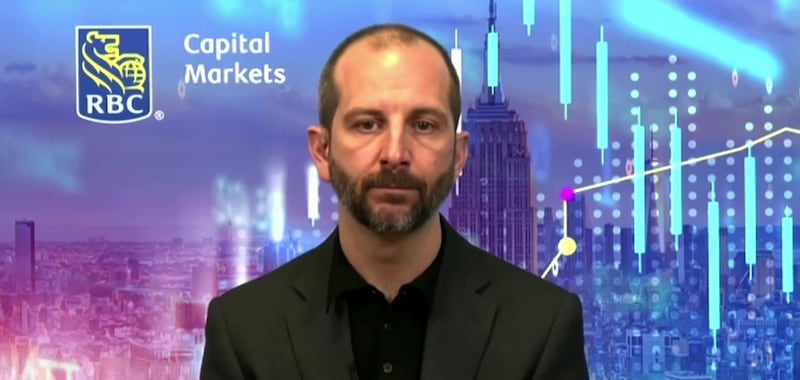
Read the full transcript below:
ANDREW: U.S. inflation data for December shows underlying inflation rose, but the core rate came in lower than economists expected. Our guest says there is nothing in this report that would revive speculation about a rate cut this month. Let’s get the latest from Blake Gwinn, head of U.S. rates strategy at RBC Capital Markets. Blake, thanks very much for joining us. Just to confirm, markets are not expecting a rate cut from the Fed this month, correct?
BLAKE: No, they’re not. Markets have almost completely priced that out. We’re now at less than 10 per cent, and this morning it was closer to five per cent, which is about as close to zero as you can get this far out from a meeting. Markets are really not expecting anything.
We actually changed our call. We had been expecting a January cut, but we pulled that out after last week’s nonfarm payrolls report. It would have taken further weakening in the December data compared with November to keep that January cut on the table, and that didn’t happen. So we removed it, and that’s broadly in line with consensus.
ANDREW: At the current level, are interest rates administered by the Fed stimulating the economy or slowing it, or is it hard to generalize?
BLAKE: I would say we’ve generally been a bit more on the hawkish side. Based on what we’ve seen in the economy over the last few years, the neutral rate coming out of the pandemic has probably been a bit higher than many policymakers expected. By its nature, neutral is something you infer from how the economy behaves.
When you look at the growth and positive outcomes we saw in 2023 and into 2024, even after the Fed delivered those rate hikes, that suggests policy wasn’t quite as restrictive as many had anticipated. Some of those factors have eased a bit, but I would broadly agree with Chair Powell’s assessment that we’re closer to the neutral range now. That said, I still think we’re probably slightly above it, based on how the Fed is looking at things.
ANDREW: I was reading a beginner book about pickleball last night, and it warned against launching an attack prematurely. That’s a long way of getting to the latest attacks on the Fed from President Trump. You’ve suggested they may have had the opposite effect and could actually strengthen Fed independence.
BLAKE: To be clear, I would much prefer that these attacks weren’t happening at all. It’s far better for the Fed to make policy independently. But given that they are happening, I think what we saw over the last couple of days was something of an immune response.We saw pushback from senators, particularly Senator Thom Tillis on the Banking Committee, who has the ability to stall Fed nominations. He made it clear that until the situation involving Chair Powell is resolved, he would not move those nominations forward.
We also saw the administration pull back fairly quickly. Several officials, including the President, distanced themselves from the subpoenas and pointed questions to the Justice Department. And we saw the strongest response we’ve heard yet from Powell himself.
Before the past 48 hours, you could reasonably have thought Powell might step aside quietly to protect the institution. I think the odds of that have fallen sharply. In fact, the likelihood that he stays on the Board after his term as chair ends has increased.
So if I compare how I feel about Fed independence today versus a week ago, I actually feel a bit more confident that the institutional guardrails will hold.
ANDREW: And Bill Pulte, one of the President’s advisers and a vocal critic of Powell, also said he knew nothing about the subpoenas.
BLAKE: Yes, and reporting suggests he may have been involved earlier. The fact that he distanced himself from it tells you something about the pushback the administration is facing. I’d rather we weren’t testing these fences at all, but if we are, it’s reassuring to see they may be stronger than many assumed.
ANDREW: We can see that calm reflected in the bond market. Looking at a one-week chart of the U.S. 10-year yield, markets seem fairly relaxed about all of this.
BLAKE: That’s right. When markets opened on Monday after the headlines, the curve did steepen, which is the kind of move you’d expect if investors were pricing in higher inflation risk or reduced Fed independence. But by midday, most of that move had faded.
I think the political pushback, the Senate comments and Powell’s response all helped calm markets and remove that risk premium fairly quickly.
ANDREW: Blake, thanks very much. Blake Gwinn, head of U.S. rates strategy at RBC Capital Markets.
---
This BNN Bloomberg summary and transcript of the Jan. 13, 2026 interview with Blake Gwinn are published with the assistance of AI. Original research, interview questions and added context was created by BNN Bloomberg journalists. An editor also reviewed this material before it was published to ensure its accuracy and adherence with BNN Bloomberg editorial policies and standards.

