As investors face ongoing economic and geopolitical uncertainty, questions around portfolio construction and risk management are taking centre stage. Volatility across equities, bonds and alternative assets is forcing investors to reconsider concentration risks and the limits of traditional asset allocation models.
BNN Bloomberg spoke with Michael Landsberg, chief investment officer at Landsberg Bennett Private Wealth Management, about why diversification remains essential, how investors should approach artificial intelligence exposure, and what earnings trends, inflation and labour market shifts could mean for portfolios.
Key Takeaways
- Recent market volatility underscores the risks of portfolio concentration and reinforces the value of diversification across asset classes.
- Small-cap stocks and select health-care segments may benefit from improving earnings growth after extended periods of underperformance.
- Artificial intelligence investing should extend beyond a few U.S. mega-cap stocks to include global infrastructure, power and industrial beneficiaries.
- Wall Street’s repeated underestimation of earnings highlights the importance of focusing on reported data rather than market narratives.
- Bonds remain part of portfolios, but investors are increasingly complementing fixed income with liquid alternatives to protect purchasing power.
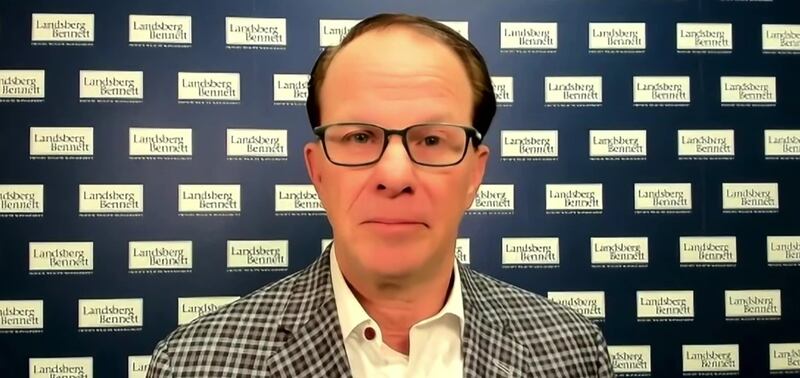
Read the full transcript below:
ANDREW: Our guest says whatever happens on the geopolitical front this year and in the global economy, diversification is always a good idea. Let’s bring in Michael Landsberg, chief investment officer at Landsberg Bennett Private Wealth.
Michael, thank you very much for joining us. As human beings, I think we want to make bets. We have a natural propensity to gamble, so we might be tempted to put our assets overwhelmingly in one area, but that always carries a cost.
MICHAEL: It does, Andrew. I think what happens oftentimes is it works until it doesn’t. Certainly, there have been times when putting all your eggs in one basket has worked for a while, and you’ve seen people accumulate great wealth. But for most of us, you’re trying to achieve goals, and the outside risks are pretty significant when you get those wrong.
We also think you want to be able to go where the puck is going, not where it currently is. That’s one of the reasons diversification seems to work so well.
ANDREW: We’ve certainly seen small-cap stocks in the United States that languished for so long come back to life. The Russell 2000, for example, has hit record highs.
MICHAEL: Part of that is the fact that, one, it’s been unloved for a long time, but two, at the same time, you’re seeing earnings growth really show up in small- and mid-cap stocks. That’s what drives stock prices at the end of the day. We think that continues and that small caps are going to have a very good year.
ANDREW: Health care as well. That sector has had a tough go, particularly health insurers. Do you have money in that area?
MICHAEL: Health insurers are not one of our favourite areas, but we try not to bet against insurance companies by and large because they tend to always make money. It’s been an area that has done reasonably well, given that premiums in the United States continue to rise. Health care is interesting because of that.
ANDREW: And AI. You’ve said investors could be at risk of not having enough AI exposure, but one mistake is owning just a few AI stocks instead of having broader exposure.
MICHAEL: Absolutely. There are two problems we see. One is that people have too much exposure in too few names. They’re not looking at the entire AI ecosystem, which includes HVAC, electrical systems and data centre construction.
The other mistake is thinking it’s a U.S.-only story. You saw that recently in earnings from ASML and Taiwan Semiconductor. AI is a global story, and you want to play it from a global standpoint, spread your risk and not have money in just a few names in one country.
ANDREW: ASML, the Dutch maker of chipmaking equipment, was upgraded today. You might think the U.S. is where you should be, but ASML has nearly doubled over the past year.
MICHAEL: Absolutely. Taiwan Semiconductor, which makes chips for companies like Nvidia and Broadcom, is another way to play this outside the U.S. There are also energy companies in Europe, such as Siemens Energy, which supply power for data centres under construction.
You still want a large component of your portfolio exposed to AI, but not all in one country or two or three names.
ANDREW: Wall Street has underestimated earnings growth over the past few years. What lesson should investors draw from that?
MICHAEL: When we look at earnings data, we focus on the numbers rather than the narrative. Last year there was a lot of talk about tariffs hurting earnings, and many of those assumptions were baked into Wall Street forecasts.
We don’t focus on narratives. We look at what companies are reporting and what underlying growth looks like. Earnings have surprised to the upside for the past three quarters, and I think people may be surprised by small-cap earnings growth this year. That should also be helped by falling rates. The key is to focus on the data and insulate yourself from political noise.
ANDREW: What about bonds? How are you positioning fixed income right now?
MICHAEL: Bonds still play an important role from an allocation standpoint, mainly as diversification away from stocks. But over the past three or four years, starting in 2022 when bonds had a very poor year, we’ve adjusted how we use them.
We’ve taken roughly half of our bond allocation and moved it into alternatives such as gold, silver, the U.S. dollar and commodities excluding oil. These have similar risk levels to bonds in terms of standard deviation, but offer diversification benefits.
Bonds still matter, but their role is smaller now because returns are likely to be lower as rates come down. There isn’t much money to be made just clipping a coupon.
ANDREW: Is a 40 per cent allocation to fixed income still reasonable?
MICHAEL: It depends on the client. If you were 60-40 with us five years ago, you’re closer to 60-20 now, with added exposure to alternative asset classes that don’t increase volatility but help protect purchasing power.
Bonds generate income, but they don’t grow. A mix that includes assets like gold, real estate and liquid alternatives can provide better long-term protection. We still hold bonds, just less than in the past.
ANDREW: We’re tight for time, but there was an interesting Wall Street Journal interview with a U.S. CEO who warned against putting retirement assets into private equity due to liquidity issues and fees. Is that a concern?
MICHAEL: One hundred per cent, Andrew. When we talk about alternatives, all of our alternatives are liquid. They trade as ETFs or mutual funds.
Many private equity and private credit products have high fees, limited transparency and liquidity issues. Clients often don’t know what they’re worth. We believe in alternative assets, but we strongly favour liquidity so clients can access their money when needed. Some of the riskier private products are things we want to avoid.
ANDREW: Michael, thank you very much.
MICHAEL: My pleasure, Andrew.
ANDREW: Michael Landsberg, chief investment officer at Landsberg Bennett Private Wealth.
---
This BNN Bloomberg summary and transcript of the Jan. 16, 2026 interview with Michael Landsberg are published with the assistance of AI. Original research, interview questions and added context was created by BNN Bloomberg journalists. An editor also reviewed this material before it was published to ensure its accuracy and adherence with BNN Bloomberg editorial policies and standards.

