Exchange-traded funds continued to gain momentum last year as investors poured record sums into the sector and issuers rolled out a wave of new products. Innovation expanded well beyond traditional index strategies, reflecting growing demand for income, diversification and targeted exposure.
BNN Bloomberg spoke with Aniket Ullal, senior vice-president and head of ETF research and analytics at CFRA, about the outlook for ETF flows and launches, as well as several segments gaining traction heading into 2026.
Key Takeaways
- U.S.-listed ETFs attracted roughly $1.4 trillion in inflows last year, supported by strong returns and continued investor preference for the structure.
- More than 1,100 new ETFs launched in the U.S., including auto-callable strategies, 2a-7-compliant money market funds and multi-coin crypto products.
- Bank-focused ETFs are positioned to benefit from resilient fee income tied to capital markets activity and wealth management growth.
- Emerging markets ETFs are gaining support from a weaker U.S. dollar, strong semiconductor performance in South Korea and export resilience in China.
- Pharmaceutical ETFs have seen improving sentiment following policy developments on drug pricing and a broader turnaround in the sector.
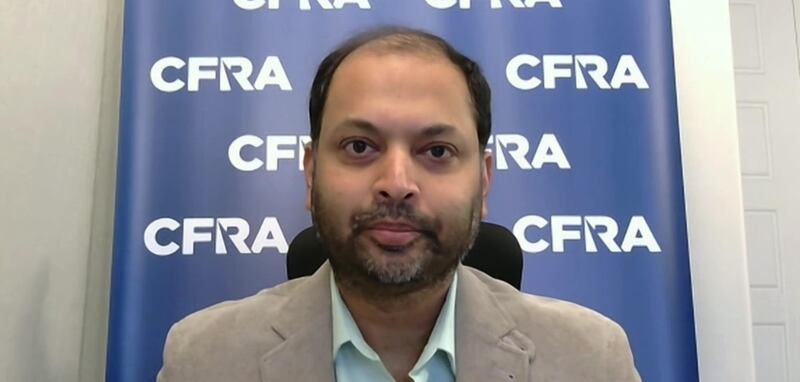
Read the full transcript below:
ANDREW: We know there’s a boom in the ETF space. More than 1,000 new ETFs were listed last year in the U.S., and our guest thinks that trend will continue. Joining us is Aniket Ullal, senior vice-president and head of ETF research and analytics at CFRA. Aniket, thank you very much for joining us.
ANIKET: Thank you for having me.
ANDREW: What trends jumped out for you with ETF issuance in the U.S. last year? We saw a whole range of new product categories.
ANIKET: You’re absolutely right. It was a very good year for ETF investors and for the industry, both in terms of flows and returns. We saw more than 1,100 new ETFs launched in the U.S. As you mentioned, there were some interesting new categories. One was auto-callable ETFs. These are essentially ETFs of notes that offer higher yields than traditional bond instruments, although there are some caveats, and they are probably more designed for a sideways market. We also saw 2a-7-compliant money market fund ETFs launch in the U.S., as well as multi-coin crypto ETFs. Overall, the ETF ecosystem in the U.S. is expanding beyond traditional low-cost beta indexing. That approach is not going anywhere, but we are seeing more innovation in new pockets.
ANDREW: Tell us a bit more about these auto-callable ETFs. Can you remind us what they are?
ANIKET: Sure. These are notes that offer higher yields than traditional bonds. They pay out a high coupon unless they hit a certain threshold. If the underlying assets fall below that threshold, the notes stop paying out. If they stay within a certain range, investors receive the higher yield. These ETFs hold a series of these notes, so investors don’t need to keep rolling individual positions. It’s essentially laddered exposure to auto-callable notes. You can think of it as another way to access derivative income through an ETF vehicle.
ANDREW: You also have some ETF ideas for investors. Let’s start with a financial ETF you like, the Invesco KBW Bank ETF, ticker KBWB. It’s down today in a weak session, but it has had a strong run over the past year. What stands out to you?
ANIKET: The key point is that most of the large U.S. banks have now reported fourth-quarter earnings, and results have been quite strong. This is really a fee-income story. We’re seeing resilience in capital markets activity, including mergers and acquisitions, as well as in wealth management. With markets generally higher, despite some pullback today, assets under management have grown. That supports both wealth management revenues and trading activity, so overall we see strong fee-income fundamentals for U.S. banks.
ANDREW: Another one you’ve highlighted is the Schwab Fundamental Emerging Markets Large Company Index ETF, ticker FNDE. What’s the appeal there? We’ve seen money flowing into places like South Korea and China.
ANIKET: Absolutely. We talk a lot about the AI trade in the U.S., and U.S. equities were strong in 2025, but they actually underperformed many emerging markets. A big driver here is a weaker U.S. dollar, particularly with pressure to lower rates in the U.S. We think a weaker dollar could persist, which tends to help emerging markets. Some countries also have their own drivers. In China, exports have remained strong despite tariffs. In South Korea, semiconductors have driven returns. We think emerging markets could have another solid year in 2026, which would benefit an ETF like FNDE.
ANDREW: Finally, VanEck Pharmaceuticals, ticker PPH. Is this mainly about growth in semaglutide drugs?
ANIKET: That’s certainly a big part of the story. The largest holding is Eli Lilly, which is a major player in that space. More broadly, pharmaceuticals have seen a turnaround over the past six months. We’ve seen several companies reach agreements with the U.S. government to offer most-favoured-nation pricing to Medicaid in exchange for more predictability around tariffs. That has helped sentiment. Healthcare is a sector we upgraded in October, and within healthcare we favour pharmaceuticals and biotech. This is an ETF we currently rate highly.
ANDREW: Aniket, thanks very much. Really appreciate it.
ANIKET: Thank you.
ANDREW: Aniket Ullal, senior vice-president and head of ETF research and analytics at CFRA.
---
This BNN Bloomberg summary and transcript of the Jan. 20, 2026 interview with Aniket Ullal are published with the assistance of AI. Original research, interview questions and added context was created by BNN Bloomberg journalists. An editor also reviewed this material before it was published to ensure its accuracy and adherence with BNN Bloomberg editorial policies and standards.

